Home to any number of outcasts, vagabonds and folks who like life on the fringes, the past 50 years of Whistler history have seen a number of ideas and innovations, some that would change mountain culture far beyond these valley walls.
As Whistler celebrates 50 years of being an official municipality, The Whistler Insider digs up some of the bolder ideas of the past five decades, and what they mean in the broader context.
1. Whistler Mountain Bike Park
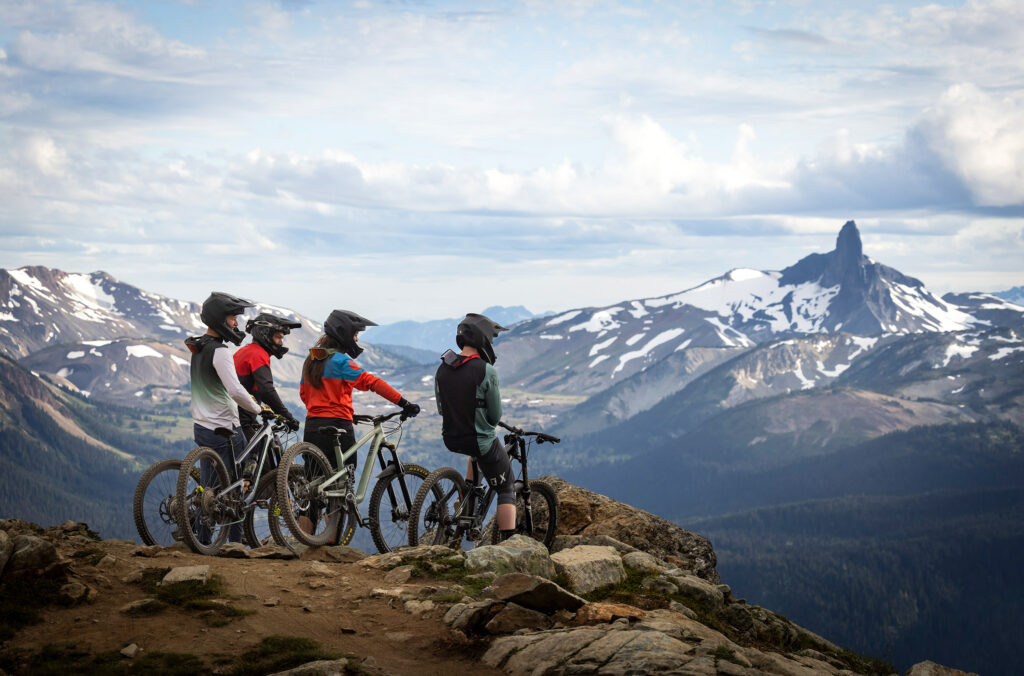
Though the history of mountain bikes seems to have the deepest roots in the sunny hills of California, the rebellious (and glorious) subgenus of “Freeride” evolved right here in British Columbia, so it makes sense that Whistler, which had been allowing mountain bikes (and guided bike tours) on the ski hills since the early 1980s, opened the first lift-accessed bike park in the world in 1999 (though locals had been riding and building trails on Whistler since at least 1996).
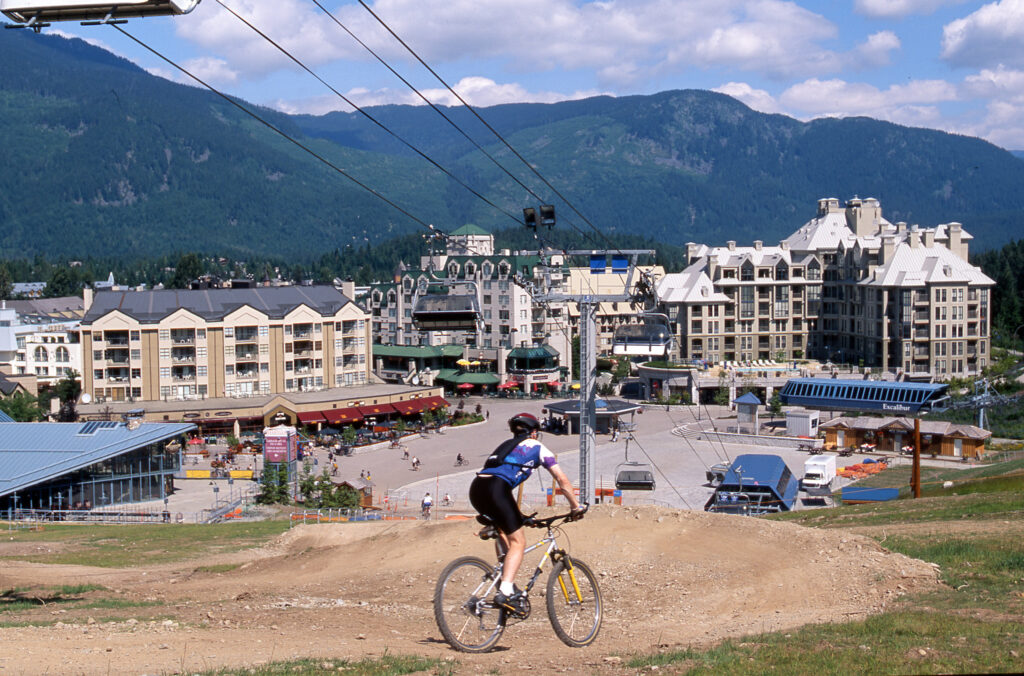
This is actually a really big deal. Consider Crankworx—the world’s largest mountain bike festival literally evolved from the bike park. That event, combined with the increasingly popular bike park, changed Whistler just as quickly as it changed the sport of mountain biking—North America’s favourite ski town was a giant summer destination as well. Then, as dozens (then hundreds) of other communities took notice, bike parks changed the world.
Read more about the rise and development of the Whistler Bike Park in the blog, 25 Years of Progression.
2. The Squamish Lil’wat Cultural Centre
The lands, rivers, mountains, lakes and forests that make up Whistler have long been the shared territory of the Sḵwx̱wú7mesh (Squamish) Nation to the south and the Líḻwat7ul (Lil’wat) Nation to the north. Building on a historic protocol agreement signed in 2001, giving both nations a seat at the table for land use and stewardship decisions made on their traditional lands, the Sḵwx̱wú7mesh Líḻwat7ul Cultural Centre (SLCC) opened in July 2008 to share both nations’ cultural knowledge and inspire understanding and respect amongst all people.
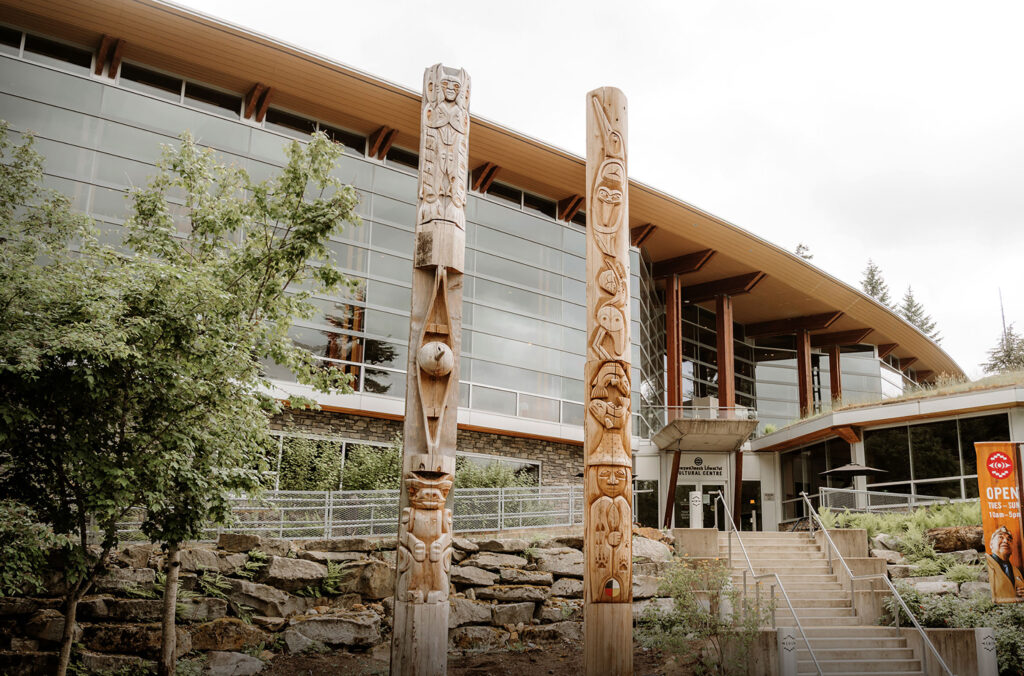
Indigenous owned and operated, the SLCC was the first shared Indigenous cultural centre in Canada, and remains Whistler’s premier venue for educating guests and locals alike on the traditions, language, art and culture of the Squamish and Lil’wat peoples.
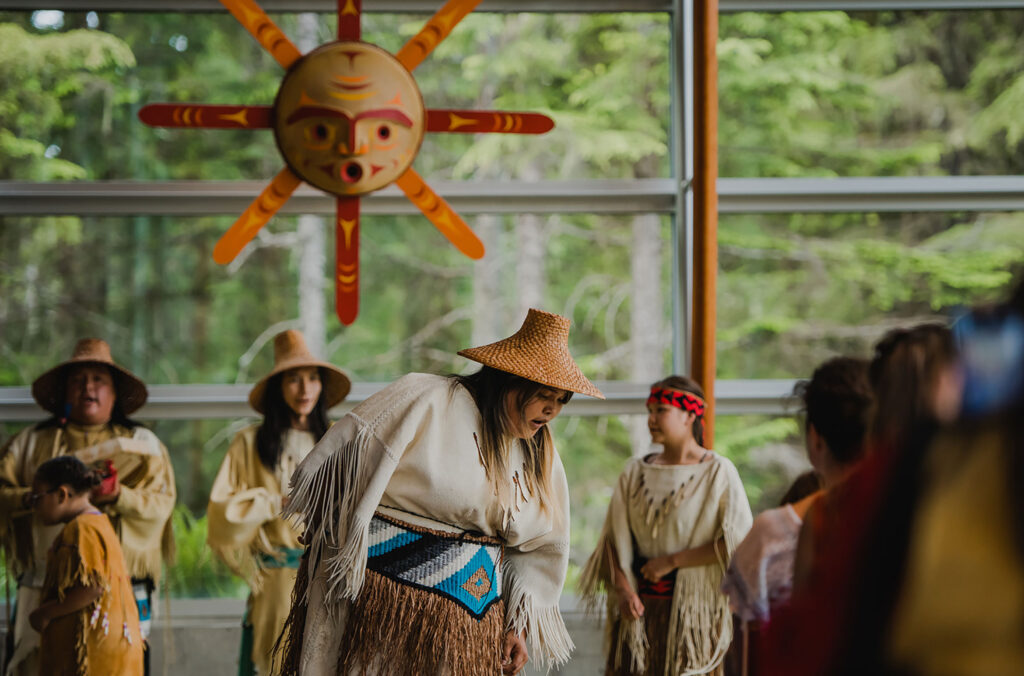
The centre’s Indigenous Youth Ambassador program provides job training and opportunity for future generations of both nations to ensure the area’s original locals continue to have a voice on what happens on their lands, and beyond.
3. The PEAK 2 PEAK Gondola
Truth be told, not every Whistler local was excited when Whistler Blackcomb announced plans for a gondola linking the two mountains. “Why would I want a gondola with no elevation gain?” some naysayers cried.
Others feared the gondola line, spanning from the Roundhouse on Whistler to the Rendezvous on Blackcomb, would spoil the views of Singing Pass from the valley. And then they built it and finished it, on time and under budget, and people quieted down right quick.
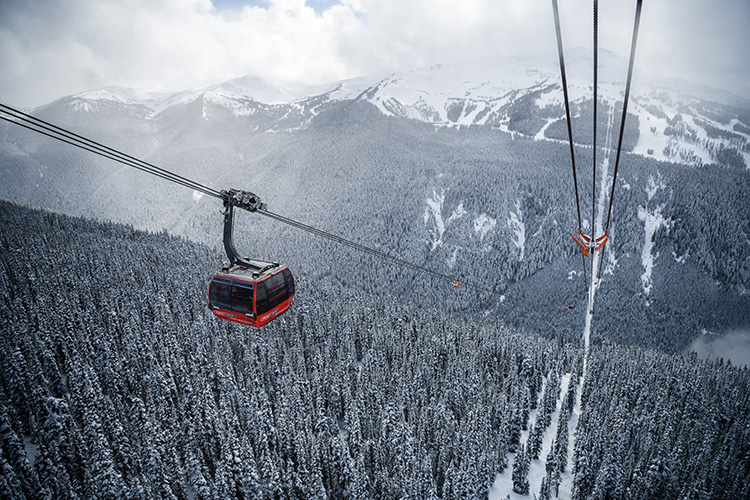
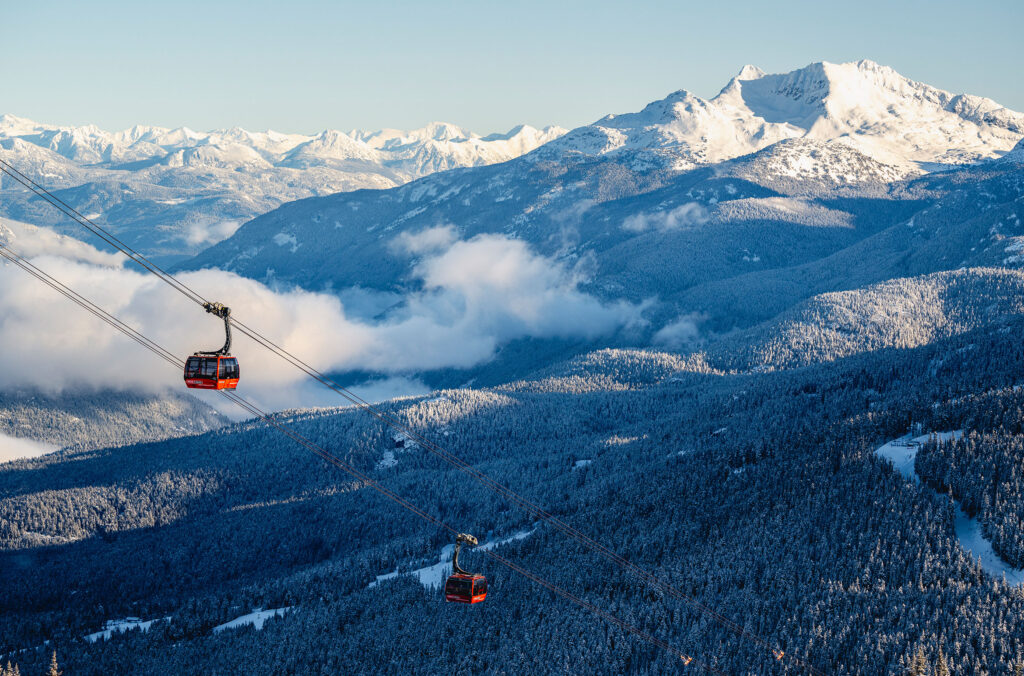
The stats were (and remain) impressive: a world record for the longest free span between towers (3.024 kilometres/1.88 miles) for a lift of its kind. The first lift to join two side-by-side mountains. The highest point above ground in a gondola cabin (436 metres/1427 feet), another world record. And, combined with the Whistler Gondola and the Blackcomb gondola on the other side, the world’s longest continuous lift system (read more about those records in this post).
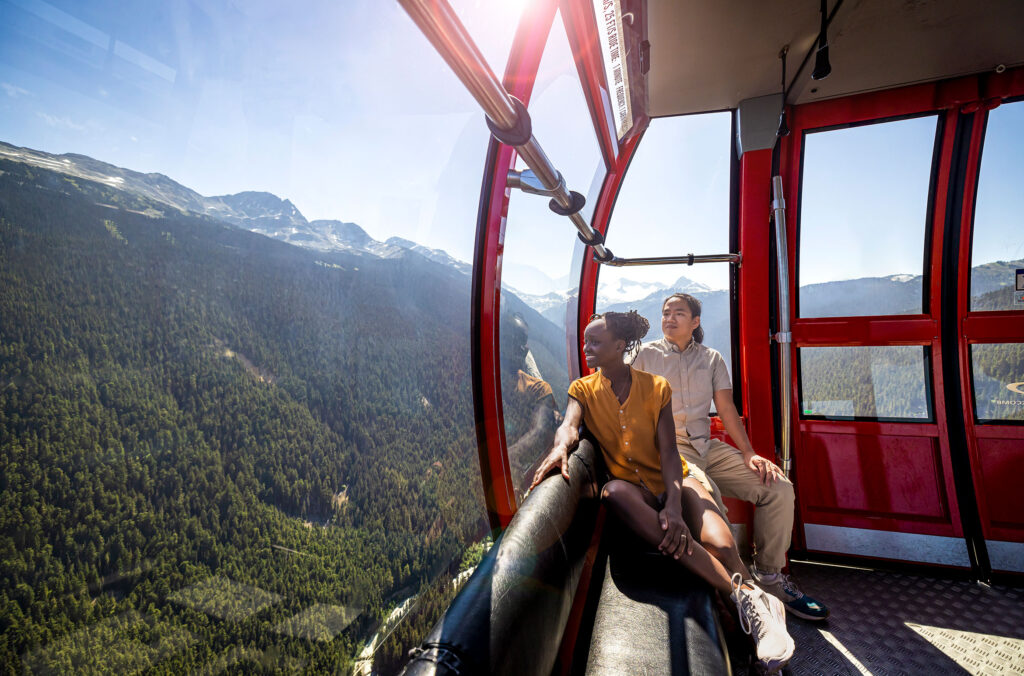
But the most important thing is skiing. Spanning 4.4 kilometres from mountain to mountain, the PEAK 2 PEAK suddenly opened up new possibilities to shred both ski hills within minutes of each other, to easily meet friends on the other side, or show people a favourite run regardless of what ski mountain you started on.
What used to take as much as an hour—to ski down one hill and ride up the other—was now boiled down to 11 minutes. And the views, looking down onto Fitzsimmons Creek or back out over Whistler Village, were bonkers. The PEAK 2 PEAK is a sightseeing marvel, and an incredible feat of engineering and vision, but what silenced the critics was what it could do for their ski day.
4. A Resort Municipality
Did you know that the Resort Municipality of Whistler (RMOW) turns 50 this year? Whistler was named the first “resort municipality” in Canada on September 6, 1975. But what does that even mean?
“The main difference between a resort municipality and a regular municipality is that a resort relies on tourism and is designed to accommodate tourists,” explains Jessie Morden, a born-and-raised Whistler kid elected as a town councillor in 2022. “Basically, everything that the government plans is planned around tourism so our economy and locals can thrive as we rely on tourism to keep on truckin’.”
Resort municipalities also have a high ratio of accommodation to resident housing, and in British Columbia, they also receive funding from the provincial government to support tourism and tourism infrastructure.
After Whistler’s success, a number of other resort municipalities began popping up across BC and Prince Edward Island (including Sun Peaks, Tofino, Osoyoos and Hope River), but the mould was created right here. (And anyone partaking in those incredible free concerts at the Whistler Olympic Plaza this summer can thank those provincial funds!)
5. The Wind Lip
For a while there, in the mid-late 1990s, the Blackcomb Wind Lip was probably the most famous snowboard jump in the world. By 1999, terrain park and summer camp tabletop construction were starting to get pretty dialled in, but before that, if you were looking to get 30, 50, maybe even 100 feet of airtime and still have a chance at landing it, the Wind Lip was the place.
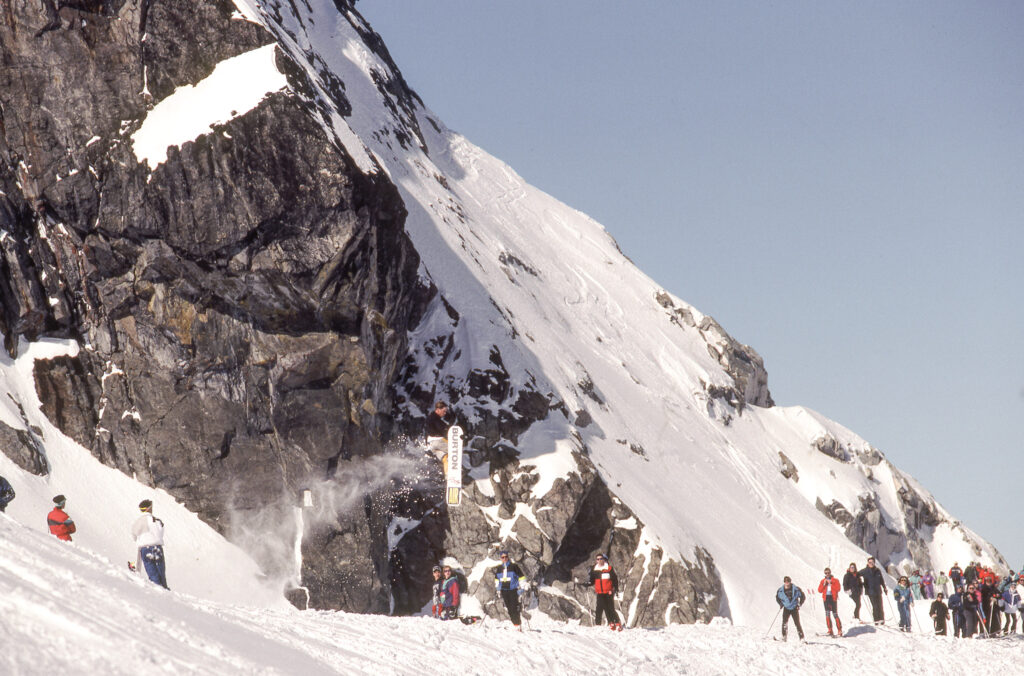
Formed naturally by the elements above the entrance to the Blackcomb Glacier, the Wind Lip was a gift from Ullr—a steep, long in run flowing directly into a perfect (and easily shapable) firm ridge with an endlessly sloped landing area. The Wind Lip was good all winter long, but the real action always seemed to happen in late spring and during the summer camps on Blackcomb’s Horstman Glacier.
For a sport looking to make its mark (snowboarding) or one looking to catch up (freeskiing), summer camp was a hotbed of innovation and excellence, and the Wind Lip was a playground and a proving ground for the future.
6. Whistler Bear Smart
Let’s get one thing straight: the bears were here before any of us. And while the Squamish and Lil’wat Indigenous peoples have long figured out how to live harmoniously with them, as more and more settlers arrived in the valley, it began to create problems.
Attracted by human food waste (primarily a giant garbage dump buffet and, later, a village with 90+ eateries creating food waste) and affected by developments increasingly pushing into their habitat, Whistler bears were at risk, and Whistler humans had to sort some things out.
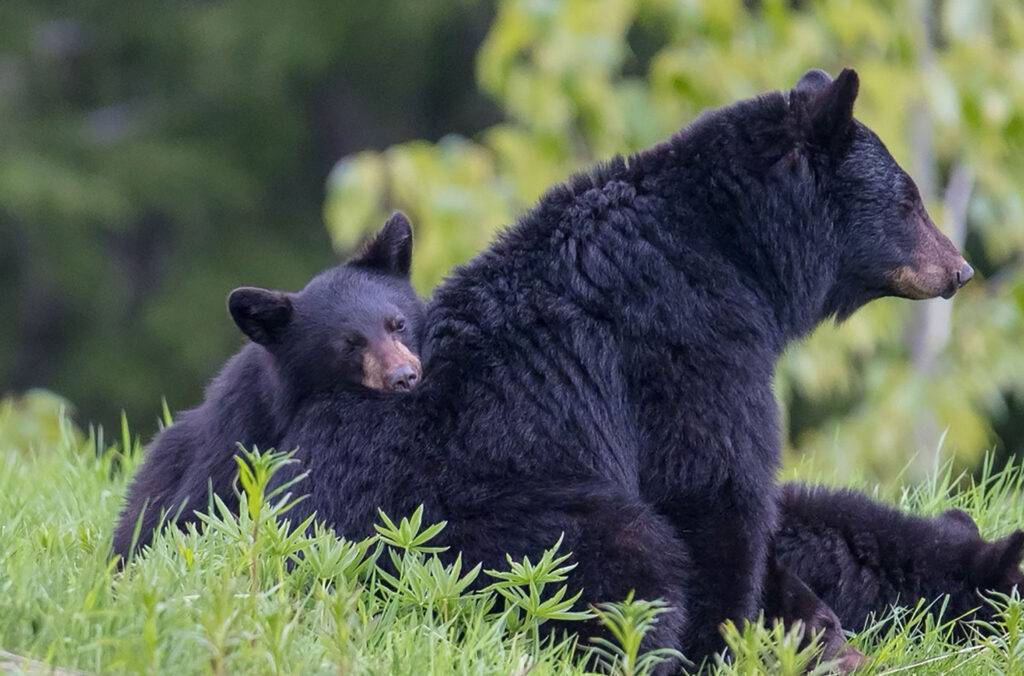
By the mid-1990s, Whistler residents had grown concerned enough about their ursine neighbours that they began officially organizing. In January, the Delta Whistler Resort launched the Jennifer Jones Whistler Bear Foundation with a fundraising effort in honour of one of their bear-loving colleagues who’d tragically perished in a car accident.
Riding a groundswell of local support, the society officially registered later that year as the Bear Smart Society, which would go on to heavily inspire the Get Bear Smart Society, which now guides bear-conscious communities across Canada and the United States.
As a community, Whistler didn’t get our official Bear Smart designation until 2011, and the work is never done to help everyone—guests and locals alike—live more harmoniously with the bears of Whistler. Check out this guide for bear smart tips, or read this blog from 2013 about longtime Whistler resident and bear photographer/activist Sylvia Dolson for more local bear history.
7. Fitzsimmons Independent Power Plant
In 2000, Whistler became the first municipality in North America to commit to the Natural Step Framework, a global initiative to accelerate the transition towards a sustainable society through concrete, science-based actions towards ecological, social, and economic sustainability.
As an early local adopter of the framework, Whistler Blackcomb began working on the preliminary studies and planning for a run-of-river hydroelectric power plant on Fitzsimmons Creek to offset its energy use.
“We wanted to be zero operating footprint right out of the gate,” says Arthur De Jong, WB’s manager of mountain planning and environmental resources at the time. “The math showed that the project could generate as much energy as we consumed annually—lifts, snowmaking, and all other operations.”
Developed in partnership with Innergex Renewable Energy Inc. and Ledcor Power Group, the plant diverts water from Fitzsimmons Creek to turn turbines that produce electricity. This is fed back to the public grid, from which Whistler Blackcomb draws a significant amount of its energy.
“We wanted to be the best so let’s learn from the best and bring it home,” De Jong says of the plant and other WB environmental initiatives such as developing runs with greatly reduced tree removal to support natural diversity, the removal of potential forest fire fuels, glading to create better habitat for bears, and the use of helicopters to instal lift towers with minimal ground disturbance. “We had shortfalls, but we learned. Our approach was to protect, share, and inspire. Our success means nothing unless we become a benchmark for others to build from. Then it matters. And that happened.”
8. Four-Season Success
By the 1980s, ski towns across North America were faced with two unique challenges: a distinct lack of women living in them, and “slow” seasons in the spring and fall with very few guest visits and very little economic activity.
Set in coastal rainforest, autumn and spring in Whistler can be wet and dreary, making it challenging to enjoy the incredible wilderness and adventure so easily accessible in winter and summer. The rise of mountain biking certainly helped (Whistler’s valley bike trails are rideable from April right into late October), but a community focus on indoor or niche activities through festivals and events slowly filled those empty spaces and turned Whistler into a reliable place to have a good time every month of the year.
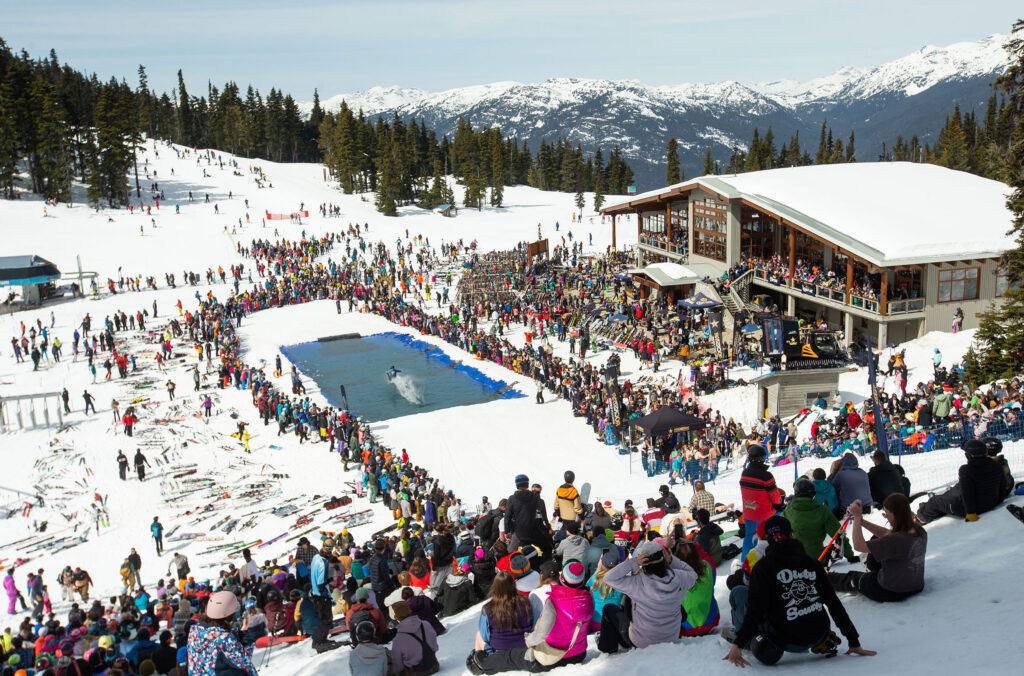
With big sports competitions, live music and a focus on mountain arts and culture, the World Ski & Snowboard Festival quickly became a very good reason to visit Whistler in the spring. Cornucopia, a celebration of wine, food and Whistler’s culinary scene, did the same in the fall.
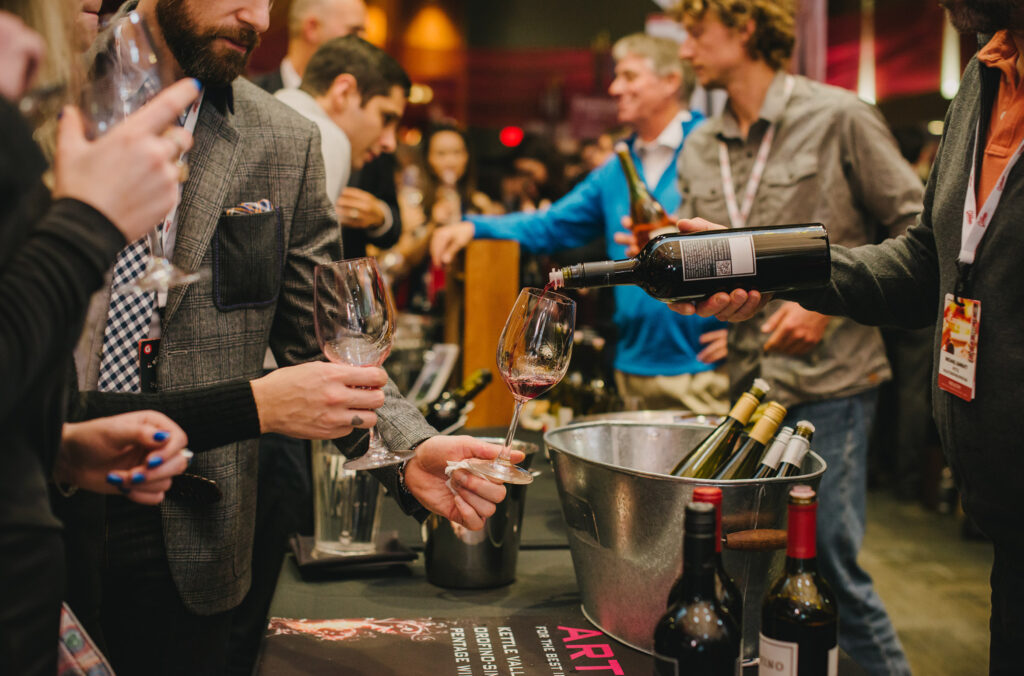
Alongside the Whistler Film Festival, Whistler Writers Festival, Whistler Village Beer Festival, Whistler Half Marathon, and the Whistler 50 Relay and Ultra, and homegrown events focused on local art, music and theatre, Whistler’s calendar is packed with good times, and the locals no longer have to survive the “slow” seasons eating only macaroni and cheese for two months.
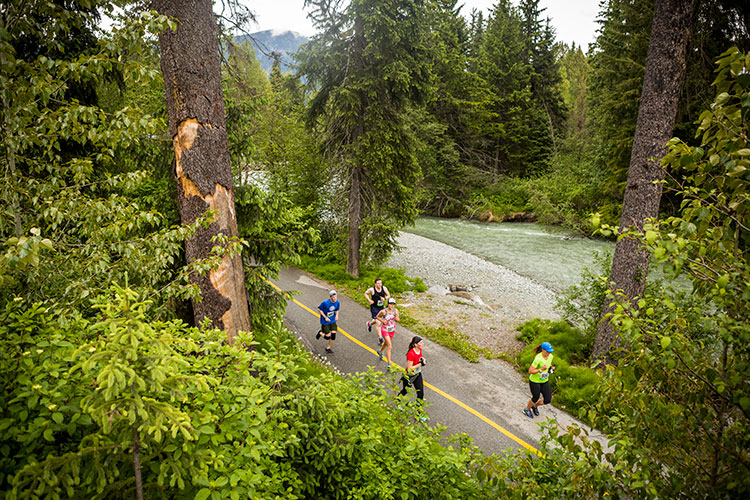
Read about more of Whistler’s running events in Going the Distance, and to get a feel for what Cornucopia is like, read our Insider Guide.
9. Whistler Housing Authority
Nearly every mountain town struggles with accommodation and affordability issues, and while public housing is not a new concept, Whistler’s solution was to establish The Whistler Housing Authority (WHA), an independent arm of the municipality created to oversee the development and management of price-controlled employee housing for Whistler’s workforce and retirees.
Basically, residents who want to put down roots in Whistler but have difficulties entering the (admittedly bonkers high) local real estate market can get on a list to buy, build, or rent WHA homes at more humane prices. These homes do not appreciate at the same rate as market housing, and if WHA homeowners decide to leave town, their home goes up for sale to the next group of locals on the list.
And it works! The WHA currently oversees 988 ownership and 327 rental homes, producing more than 7,300 beds of affordable rental and ownership housing for Whistler workers. In a community of 16,000, that’s a very impressive feat!
10. Strawberry Sake Margaritas
Maybe not as integral to the community as 1000+ local homes, Strawberry Sake Margaritas are still a true (and tasty) Whistler innovation that came from the hallowed halls of Sushi Village, one of the locals’ favourite restaurants for the past four decades.
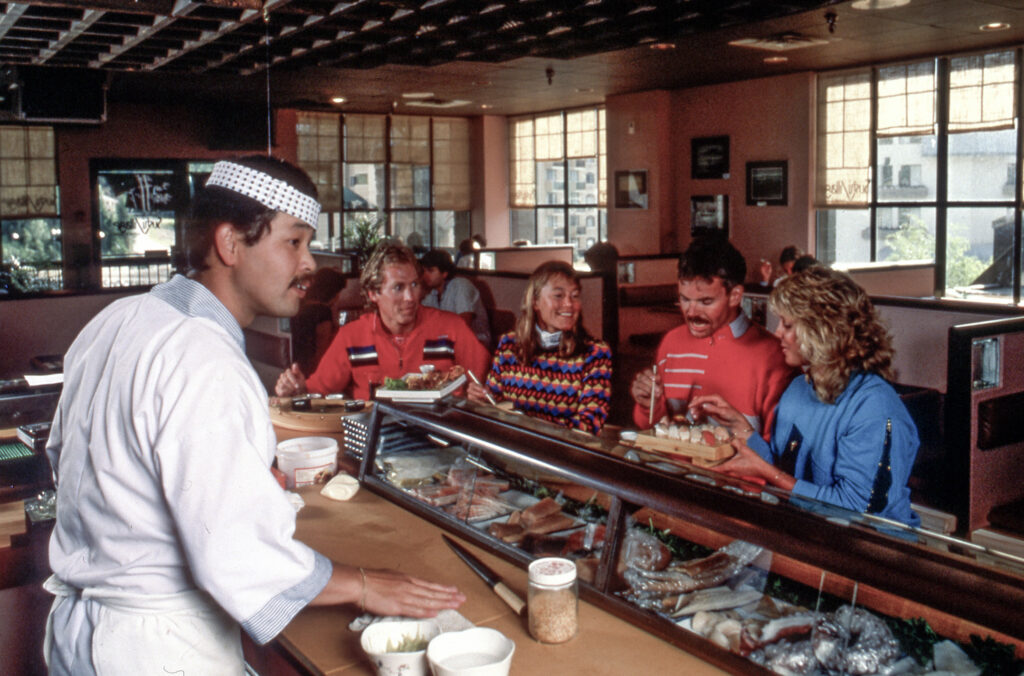
“We picked strawberries in Pemberton and just tried a few things until it worked out,” says Sushi Village co-founder Koji Shimizu of the frozen, blended beverage. “They became very popular very quickly.”
But when a key ingredient—strawberry schnapps—was suddenly discontinued, Sushi Village had to act fast. Freeskiing legend, filmmaker, and longtime local Mike Douglas was bartending at the time.
View this post on Instagram
“We had to come up with a new recipe fast,” Douglas recalls, adding that he and (Sushi Village co-founder) Miki Homma essentially just grabbed all kinds of ingredients and “started trying things. The goal was to re-create the taste of the previous margs, and I know it took us a few tries. We were many jugs deep by the time we figured it out.”
That was back in 1991, and as Sushi Village celebrates their 40th anniversary this year, the strawberry sake margarita is still a local’s favourite and a must-try for visitors. (The sushi is amazing there, too.)
Dreams Take Flight – 50 Years of Whistler
Whistler is a place where everyone belongs, a community built on daring dreams, open hearts, and a round of sake margaritas. But before we tackle our next big idea, we pause to honour our past and the place we’re proud to call home. Check out our video…
Celebrating Trailblazers to Tomorrow Makers – You’re Invited!
Who doesn’t like a birthday party? With the Municipality of Whistler turning 50 in 2025, they’re inviting the community and guests to celebrate with a four-day kick-off event from August 21 to 24, 2025.
The August weekend will feature concerts, cultural activations and activities for everyone—including family-friendly experiences in Olympic Plaza, throughout Whistler Village and beyond.
RMOW 50th Anniversary Highlights
- Thursday: PINEO & LOEB and special guests with opening by DJ Foxy Moron at Olympic Plaza from 6:30 PM onwards.
- Friday: The legendary Sam Roberts Band concert starting at 7:30 PM
- Saturday: A Community Picnic in Olympic Plaza (1 to 5 PM) with lawn games, hands-on activities, music and art. The day closes with an audience participation sing-along led by Choir! Choir! Choir!.
- Sunday – Try something new with drop-in social sports and lawn games happening at Rainbow and Lost Lake parks during the day. When the stars come out, head to Lost Lake for Sunset Socials, featuring illuminated activations, pop-up cinema and DJs.
To find out more about what’s happening for the 50th anniversary celebrations in August and beyond, visit Whistler.com. WAGFest and Magic at the Museum are also happening that weekend, so it’s going to be a fun one!