Whistler has a distinct vibe. It’s an exhilarating and magnetic resort destination that’s known for its big mountain skiing, trailblazing biking scene, and stunning alpine vistas. And a lot of people will tell you they came here for these things. BUT if you dig a bit, they’ll usually tell you that the reason they stayed is that they found a deeper connection, a sense of community.
And that doesn’t always happen by accident. There are people, organizations and businesses that deliberately cultivate community, and that’s who we want to showcase in this series. Join our host, Mike Douglas, a member-at-large of Protect Our Winters Canada, pro skier, enviro nerd and Whistler local, as he shines a light on how Whistler cultivates its unique sense of community.
In video #5, we join Elyse Feaver, Engagement Manager at the Audain Art Museum. Elyse discusses how art brings people together, the value of a change of pace, and that you never really know where a moment of inspiration will lead.
What is the Audain Art Museum?
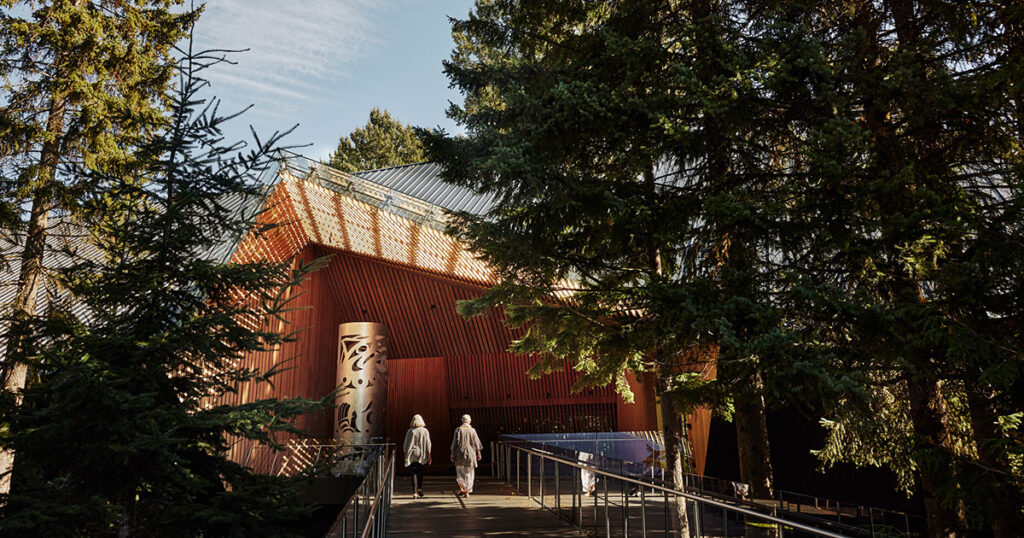
When the Audain Art Museum opened its doors in Whistler in March 2016, it brought something new to the community: a dedicated home for the art and cultural heritage of British Columbia. Founded by Michael Audain and Yoshiko Karasawa, the Museum was designed by the award-winning firm Patkau Architects. Its 56,000-square-foot building was carefully designed for its setting in the forest, creating a quiet, contemplative space for the Museum’s Permanent Collection and Special Exhibitions.
The Permanent Collection now includes more than 300 works spanning centuries of British Columbia’s artistic history, including Indigenous art, Emily Carr, contemporary artists and the Vancouver photo-conceptualists. But the Museum was envisioned as more than a place to house great art. Its founders imagined a place for people of all ages and backgrounds to experience art—a place for contemplation, connection and appreciation.
Why was Whistler receptive to the Audain Art Museum?
A Change of Pace in Whistler
One of the most wonderful things about the Museum is that it offers a different pace from much of life in Whistler.
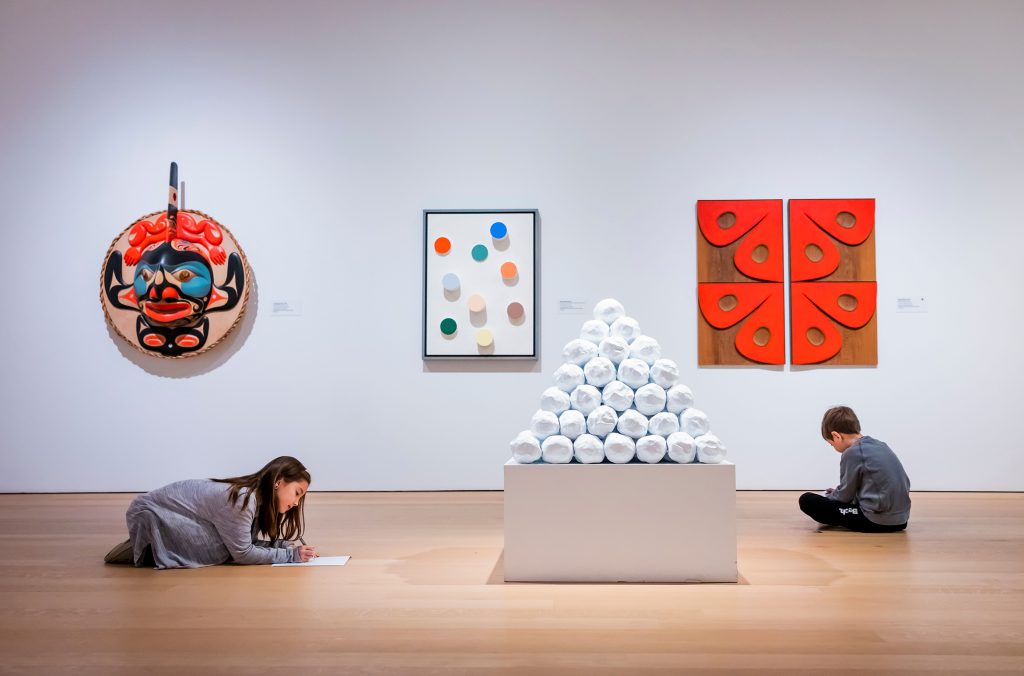
You can spend the morning skiing, biking or hiking and then walk into the Museum and suddenly find yourself slowing down. Instead of looking toward the next run or checking the weather, you are standing in front of a painting, a photograph, a carving or a mask and simply looking. Really looking. That change of pace is valuable.
The Audain Art Museum’s Collection tells stories about British Columbia through Indigenous art, historic and contemporary works, and artists who have helped shape our understanding of this place. Its educational programs are designed not simply to tell visitors what they are looking at, but to encourage conversation, curiosity and deeper understanding.
The Impact of Youth & Family Programming
The Museum’s youth and family programs are intentionally designed around that kind of participation, combining looking, making, experimenting and conversation. One of the most meaningful reminders of why the Museum matters to our community came years after an Architecture and Design workshop.
A teenager had taken part in the workshop; at the time, it was simply one of the many programs we offered—a chance for young people to explore ideas, experiment, build, design and think creatively about the world around them. But something clicked for this particular student. The workshop opened up a new way of thinking about architecture and design. Perhaps it was the freedom to imagine something that didn’t exist yet, or the opportunity to turn an idea into something tangible. Whatever it was, the experience stayed with her.
Years later, I received a note from that same young person. She was now attending architecture school and wanted to tell me that she remembered the workshop at the Museum and that it had helped inspire her interest in architecture. I have to admit that note stayed with me.
We often think about the impact of a museum in terms of what happens inside its galleries—the exhibitions people see, the artists they discover, the conversations that take place. But sometimes the most important impact happens much more quietly. A child or teenager walks through the door, tries something new, discovers an idea that excites them, and then carries that experience into the rest of their life.
You never really know where a moment of inspiration will lead.
How do you draw people into the Audain Art Museum who might not think an art museum is “for them”?
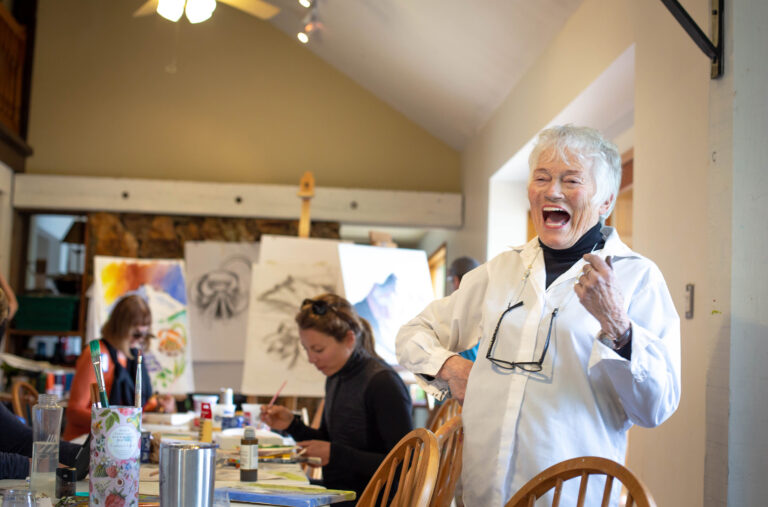
We spend time thinking about the different ways people can engage with art and the Museum. People can join us for a yoga class with the beautiful architecture as the backdrop; we have an alfresco long table dinner event that happens under the Museum in the summer; kids can try their hand at stop-motion animation or architecture and design, and teens gather here with their friends for a painting session.
Being Open to the Experience
I have always loved the idea that you don’t need to consider yourself an art expert to enjoy the Museum. You can walk through the doors knowing absolutely nothing about a particular artist or period and still have a reaction to something.
- Maybe a piece reminds you of somewhere you’ve been.
- Maybe it makes you uncomfortable or brings you to tears.
- Maybe you suddenly notice a colour or a detail that you would have walked past five minutes earlier.
- Maybe you start asking questions.
That, to me, is the beginning of the experience.
The Museum’s programming has increasingly created opportunities for people to go beyond simply looking at art. Family programs invite people to make things together. Youth programs combine close observation in the galleries with hands-on studio work. School programs connect art with learning, discussion, creativity and British Columbia’s cultural history.
Challenging Expectations
One of the things I have come to appreciate about having an art museum in Whistler is watching people arrive with one expectation and leave with another.
A family might come because they are looking for something to do on a rainy afternoon. A teenager might arrive because their class is visiting. Someone might come along with a friend who loves art and assume they won’t have much to say about it. Then something catches their attention. They stop. They ask a question. They start talking, and suddenly the visit becomes more than a walk through a gallery.
That is the kind of transformation that doesn’t necessarily announce itself. There isn’t always a dramatic “aha” moment. Sometimes inspiration is much quieter. It might be a child discovering that they can make art themselves. It might be a teenager realizing that their own creative ideas have value. It might be an adult discovering a British Columbia artist they had never encountered before.
The Art of the Cocktail
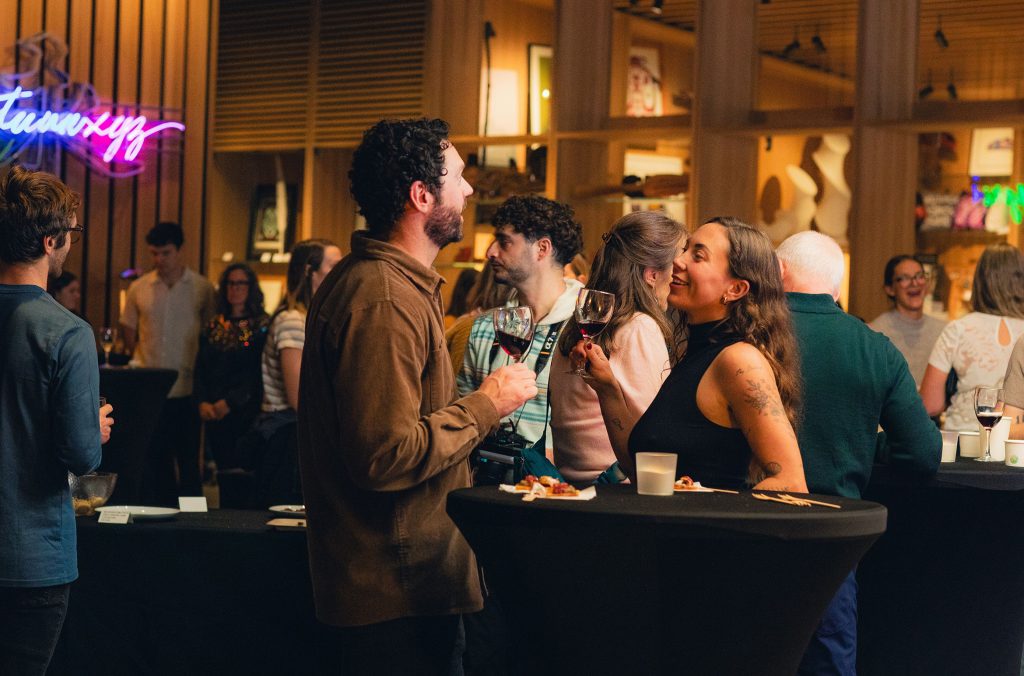
The Art of the Cocktail events have been really popular. We focus on a certain exhibition or artist and then work with a local bar or restaurant to develop a cocktail that reflects the artwork. We’ve also hosted special Halloween and holiday editions, toasted to the RMOW’s 50th anniversary, and celebrated Emily Carr’s birthday with cocktails inspired by her time in Paris in the 1920s. It’s another way to connect and celebrate with the local community.
How does the Audain Art Museum create a sense of community in Whistler?
The events and programs at the Audain Art Museum create community by giving people opportunities to come together, connect and share experiences beyond the usual rhythms of Whistler life.
Whether it’s starting the day with yoga in the beautiful Cressey Hall, gathering for The Art of the Cocktail, celebrating an exhibition opening, or learning something new in an adult art class, each experience creates a chance to meet people and connect through a shared interest.
Our Artist Dinner Series, along with artist and curatorial talks, bring people closer to the stories behind the art, while public tours encourage conversation and discovery. And our member-exclusive events create an even stronger sense of belonging—bringing together people who share a genuine interest in the Museum and its role in the community.
Crossing Paths & Shared Moments
What I love is that these events attract people who might not otherwise cross paths. A local resident, an artist, a visitor, a longtime member or someone attending their first event can find themselves sitting together, talking and sharing an experience.
That is how a museum becomes more than a place to see art. It becomes a place to meet, learn, celebrate and belong.
I think that is particularly meaningful in Whistler. We are already a community built around shared experiences—sport, the outdoors and adventure. The Museum adds another dimension: a place to slow down, be curious, be creative and connect with one another through culture.
In the end, it is those shared moments—sometimes unexpected, sometimes lasting—that help create a true sense of community.