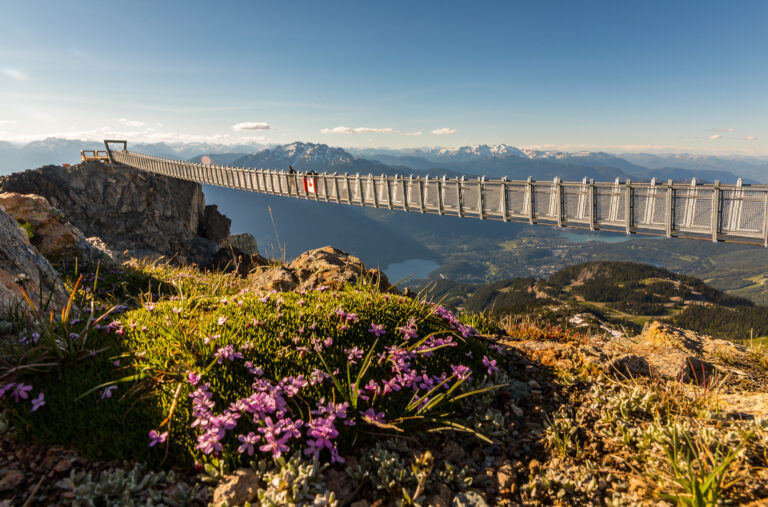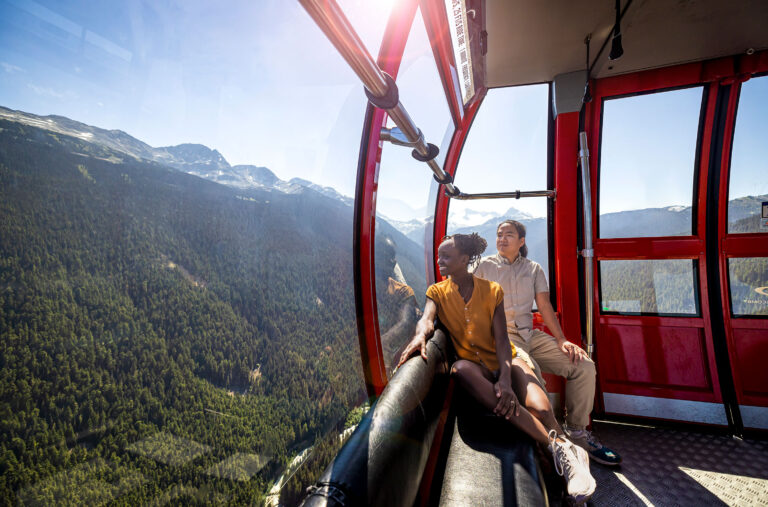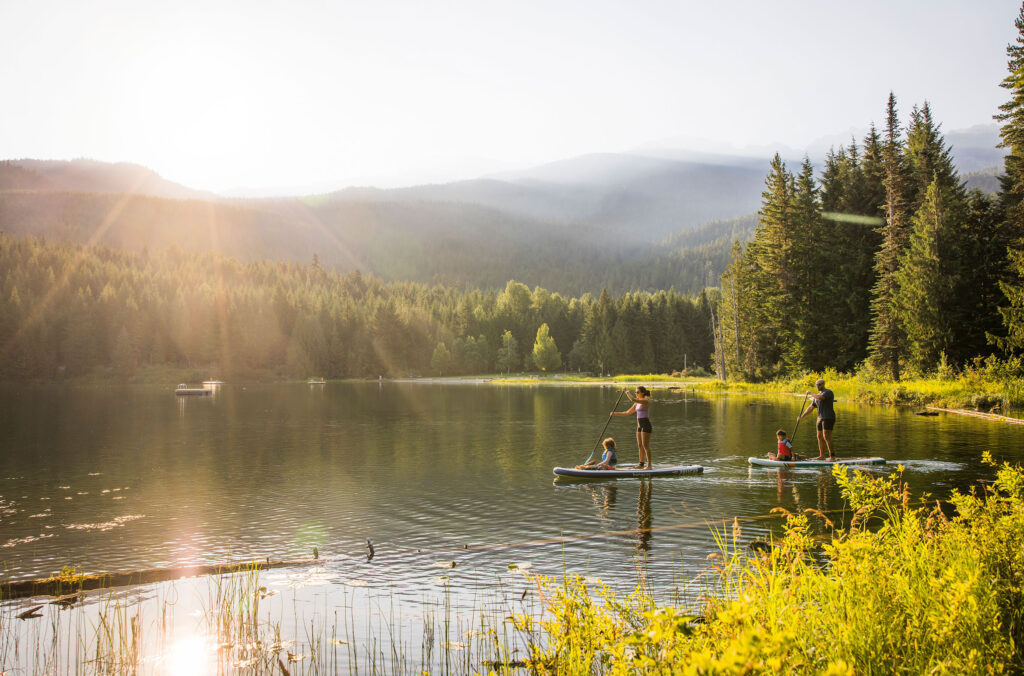
Summer proper is upon us, making for longer days we like to fill to the brim with adventure. Spending time in or on the water in Whistler isn’t just an effective way to beat the heat; it also allows us to see things from a different perspective.
Exploring untouched shorelines offers an authentically raw, natural experience, accessing places and views that can’t be reached on foot. Whether you want to swim in a glacial lake with a high alpine view, snag a quick dip while biking, spend the afternoon stand-up paddleboarding, experience an adrenaline-infused day on a whitewater rafting expedition or something in between, we’ve got all your Whistler water experiences covered in this blog.
Tranquil Waters: Whistler’s Lakes
Whistler has five main lakes that are easy to access along the Valley Trail. From south to north, they are Alpha Lake, Nita Lake, Alta Lake, Lost Lake and Green Lake. Each of these locations has limited parking (we suggest cycling or walking), docks, picnic tables, designated swimming areas and of course, incredible mountain views.
Canoe, Kayak and SUP
Alta Lake has multiple parks around its perimeter, and each one has its own characteristics. Lakeside Park has a sandy beach, grassy lawn, picnic tables with BBQ stands (you need to bring your own propane BBQ), small children’s play structure, docks, slackline posts and washroom facilities. You can also rent a stand-up paddleboard, kayak, canoe or pedal boat to explore the lake.
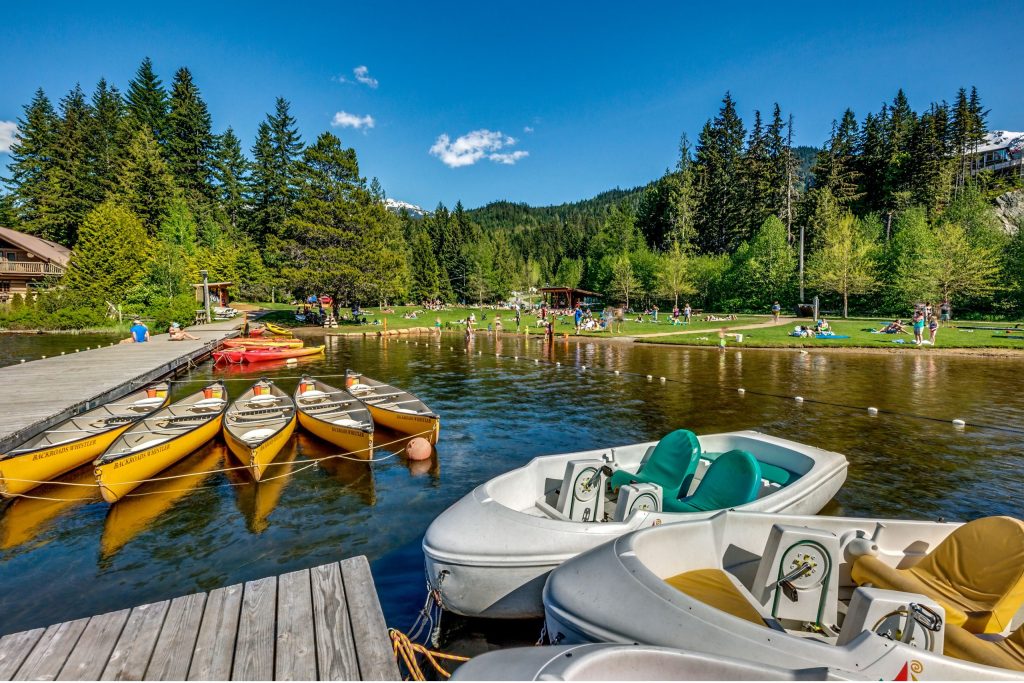
Wayside Park is slightly smaller with a more tranquil feel, enhanced by the trees surrounding it. It has a grassy lawn, small sandy beach, picnic tables, washrooms and water toy rentals.
Whistler Park Life
Rainbow Park is one of the more popular options on Alta Lake with volleyball courts, a dedicated dog area, a large grassy area for lounging and washroom facilities.
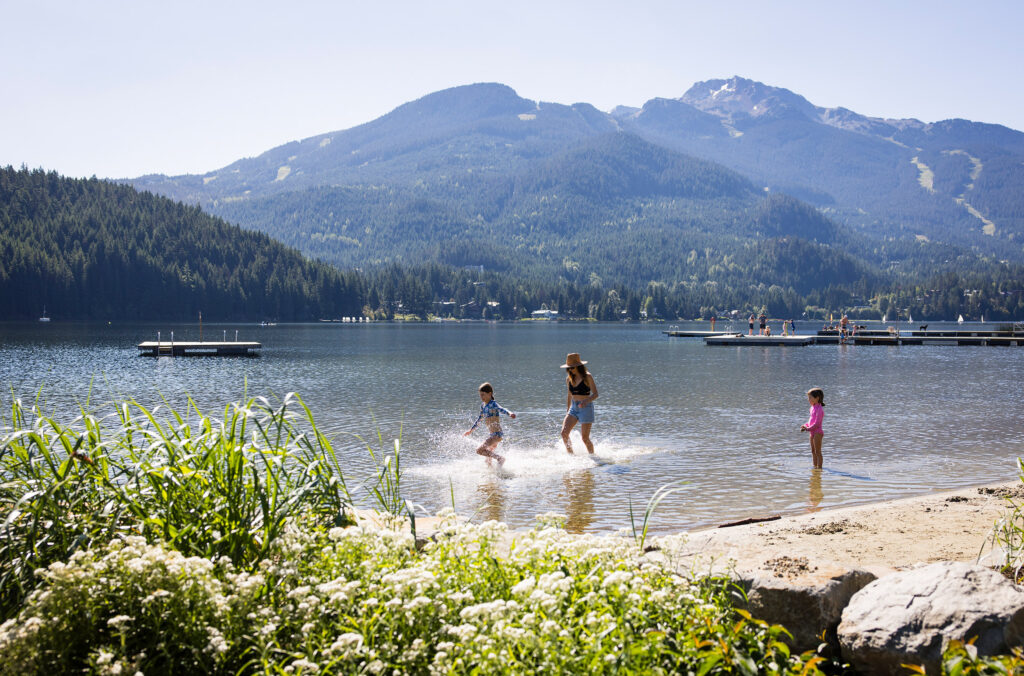
Take a short walk around the park grounds to learn about the historic Rainbow Lodge and its influence on the settlement of Whistler and the start of tourism in the area. If you want more history, visit the Whistler Museum when you’re back in the village.
Lost Lake is a tranquil option not far from Whistler Village. You can choose to get there on foot, via bike along the Valley Trail, or take the free shuttle service from two spots in the Village (read more about the park shuttles here, as you can get one to Rainbow Park too). Lost Lake offers winding, low-level hiking and biking trails, and at its centre, a cool, secluded lake.
There are a number of docks extending into or floating in the water, with one large beach and grass area, as well as a dedicated dog beach called Canine Cove and washrooms. During the summer, there’s a food truck program at both Rainbow and Lost Lake – yum!
Sailing
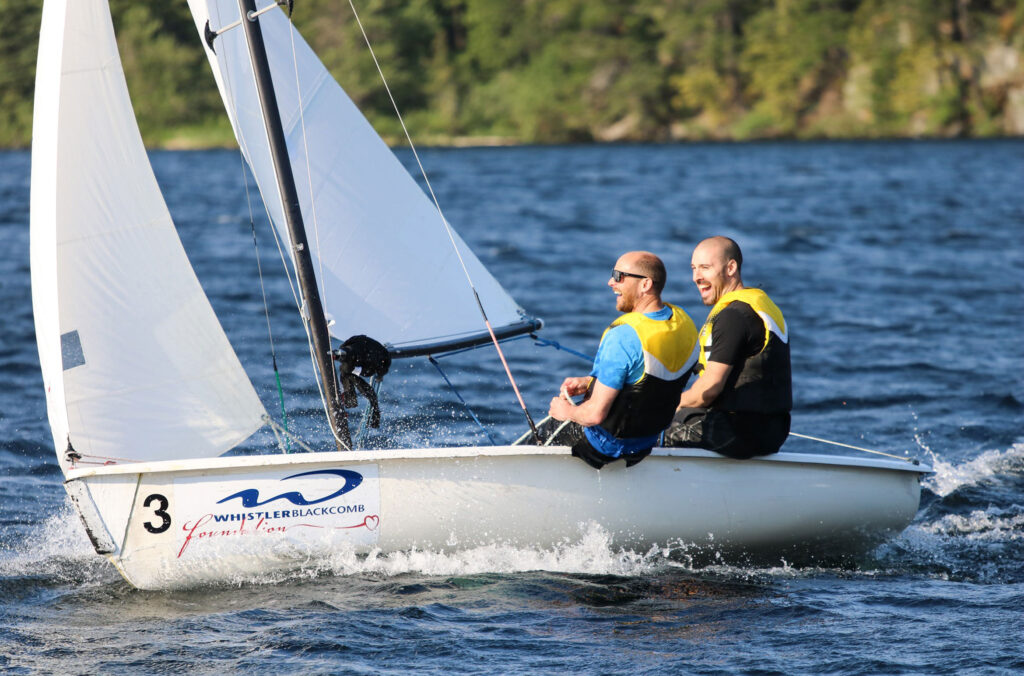
You might notice some small sailboats on Alta Lake; these dinghies likely belong to the Whistler Sailing Association. They operate out of the old youth hostel facility located on Alta Lake Road (just down from the turning for Rainbow Park).
You can get a lesson, guided tour, charter a boat, or, if you’re here for a longer stay, consider joining one of their programs for kids and adults. They also offer wing foiling.
Fishing
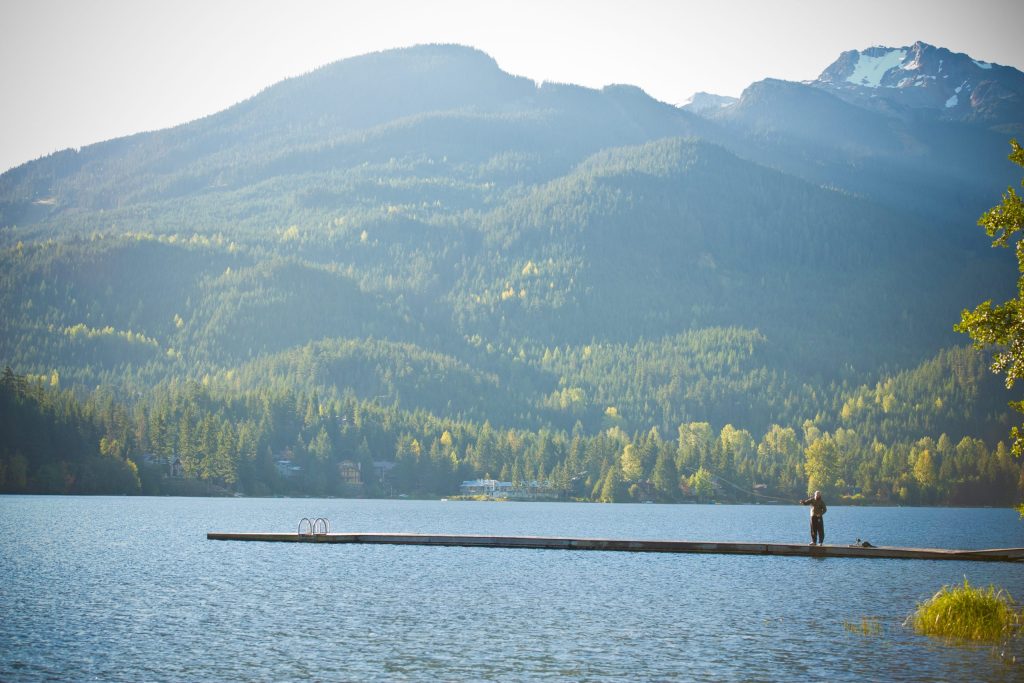
Fish any of Whistler’s stunning lakes and rivers (we’re known for our trout) with your own gear and a valid BC fishing license, or go with the fishing professionals for a few hours to perfect your cast and find the best spots. Read more on what a fishing experience in Whistler is like in How I Fell for Fishing in Whistler.
Green Lake
Farther north, you’ll find the Green Lake boat launch just off Highway 99 (look for Summer Lane on your right going north). It is just a boat launch, so you will have to rent your desired mode of water transport in Whistler Village or bring your own. Note that motorized boats and floatplanes use this lake too, so keep an eye out!
If you paddle to the north end of the lake, you’ll see the Parkhurst Trail and remnants of old logging equipment and cabins that made up the now-abandoned logging community on the edges of Green Lake.
How do you start on a lake, see lots of lakes, end on a lake, but never get wet or hold a paddle? On a Harbour Air floatplane tour. Take-offs and landings happen on Green Lake, and even if you’re not taking a tour, they’re definitely a sight to see.
Rushing Water: Rivers
Whitewater Rafting
One of the most exhilarating water experiences in Whistler is on board a whitewater raft tackling the Green River, located at the far end of Green Lake. This whitewater rafting tour is perfect for adrenaline junkies and families looking to get a bit wet and wild (minimum age 10 and weight 90 pounds for the Green River tour).
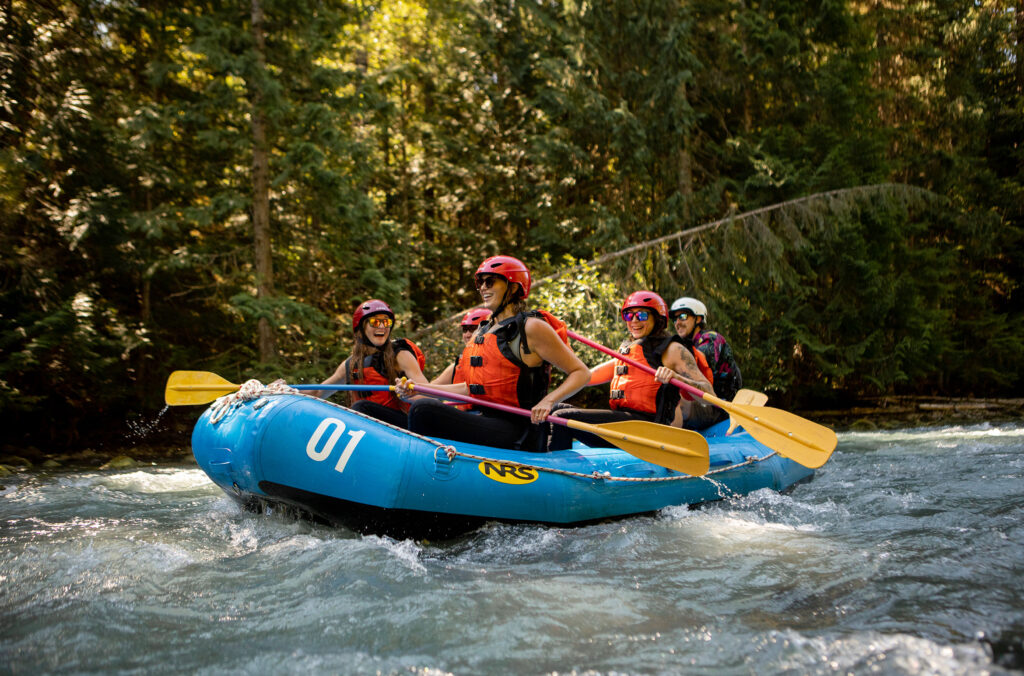
Bounce along the rapids of the Green River in Whistler. PHOTO THE ADVENTURE GROUP
River of Golden Dreams
The River of Golden Dreams is located on the north end of Alta Lake and winds its way to Green Lake. The difficulty of this trip depends a lot on water levels (there’s a lot of overhanging shrubbery to avoid, portages and beaver dams) and your level of experience.
We suggest taking a tour, which usually lasts around three hours. Not only do you get paddling tips, but you also get local knowledge on the lush flora and fauna that surrounds you, making for a deeper experience. Note that at the Green Lake end, you’ll be picked up and driven back. There is a twilight tour available if you’re looking for a unique evening activity when the local wildlife is out and about (bears like dusk).
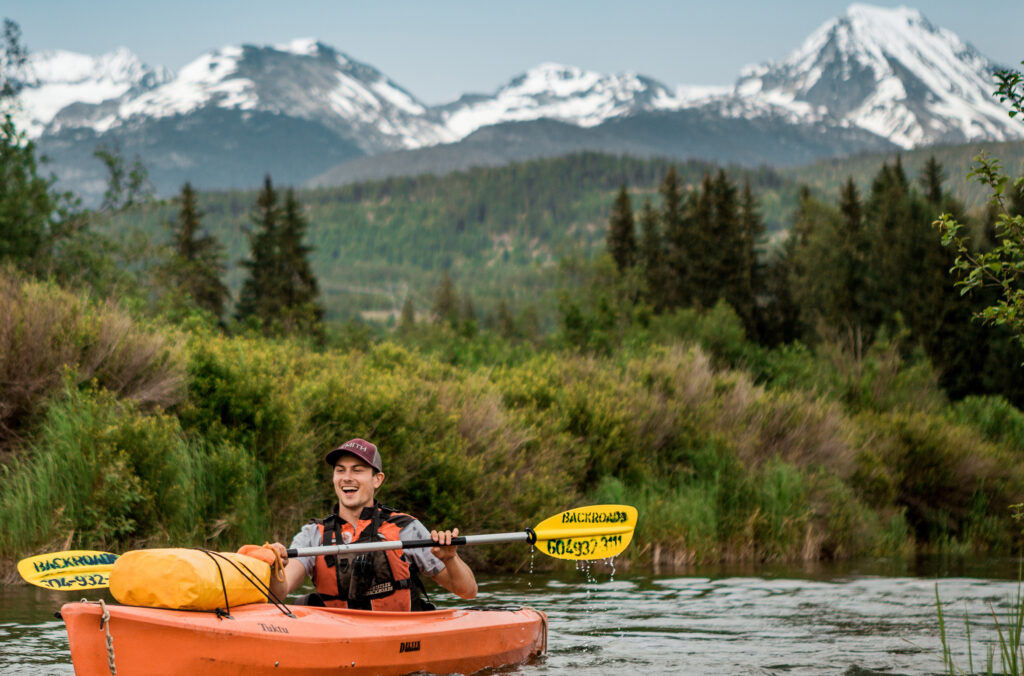
Some people like to head down this river using floaties or inflatable rafts. These often pop up as the foliage around the edges and the rocks along the river bottom can be sharp. The water is cold, and hauling yourself and a waterlogged inflatable (please don’t let it sink) out via the bushes is not a fun way to spend the day.
Farther Afield: Callaghan, Cheakamus and Rainbow
Adventurous paddlers should consider a trip to Callaghan Lake and Cheakamus Lake. You will need a vehicle with suitable clearance and four-wheel drive. Read more about exploring these areas in Insider’s Guide to Hiking and Adventure in the Callaghan Valley and Insider’s Guide: Hike or Bike to Cheakamus Lake. For paddleboarding-specific information, take a look at Insider’s Guide: Paddleboarding in Whistler.
If you’d like to earn your swim, a hike to Iceberg Lake or Screaming Cat Lake will do the trick! However, if you hike to Rainbow Lake, take note that swimming is not permitted there.
Whistler Water Etiquette
Whistler’s environmental group, AWARE, gave us some tips on how to protect Whistler waterways. Invasive species threaten biodiversity, alter habitats and have a serious impact on our health and economy. Some invasive plants, mussels and snails can be so tiny that we don’t see them, but they can have a huge effect on our lakes, rivers and streams.
To help stop the spread of invasive species, clean, drain and dry your water toys before moving from one waterway to another. Here are some other water etiquette pointers for when you’re in Whistler:
- There are no lifeguards at Whistler’s parks and beaches. Make sure you stay within your ability level and remember that mountain lakes can be cold.
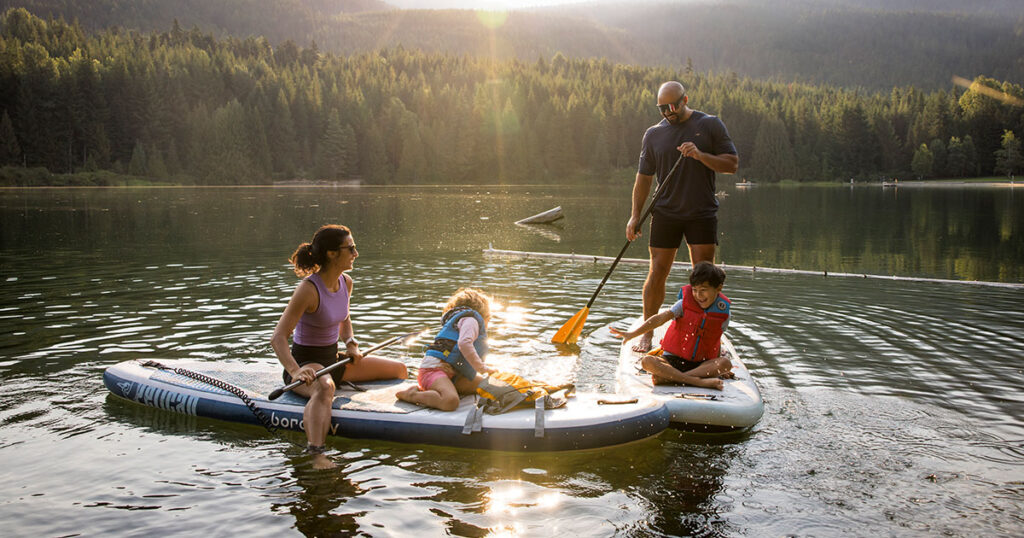
- Know that if you are paddleboarding, canoeing, kayaking or using an inflatable boat, you are required by Canadian law to have the right safety gear (like whistles and personal flotation devices). The Conservation Officer Service is actively doing patrols in Whistler to enforce this federal law, and non-compliance may result in a fine for each missing item (ouch). Find out more in Transport Canada’s Safe Boating Guide.
- Stay bear aware at all times and dispose of any food, recycling and garbage in the bins at the parks or take it with you.
- Speaking of water, be sure to fill your reusable water bottle and drink plenty – you can get it right out of the tap or water fountain.
- If you’re bringing your four-legged friend along for any adventures, read up on dog-friendly parks and hikes.
See you on or in the water!