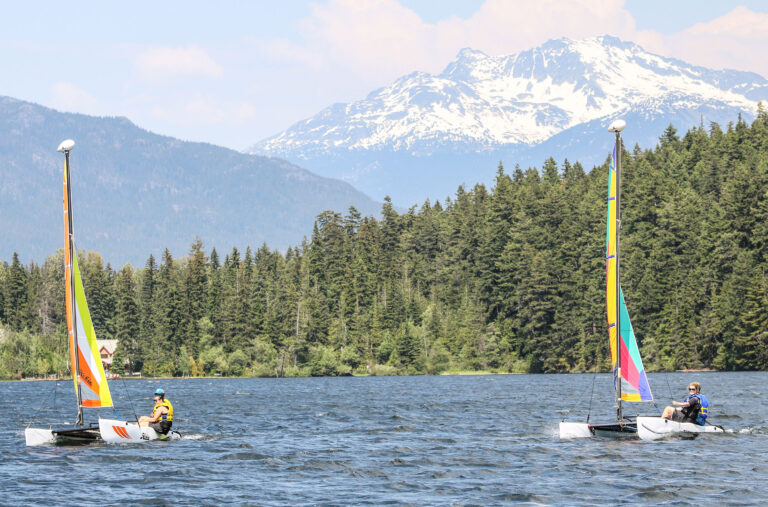
It’s a gorgeous summer evening on Alta Lake. Looking out across the water, a light breeze ripples the surface, and in the background, Whistler and Blackcomb mountains rise majestically into the sky. In contrast, as I make my way down the steep wooden stairs to Whistler Sailing, my stomach churns, a turbid mix of excitement and anxiety. Tonight, despite having zero sailing experience, I’ll be taking an introductory lesson on how to wing foil.
What is Wing Foiling?
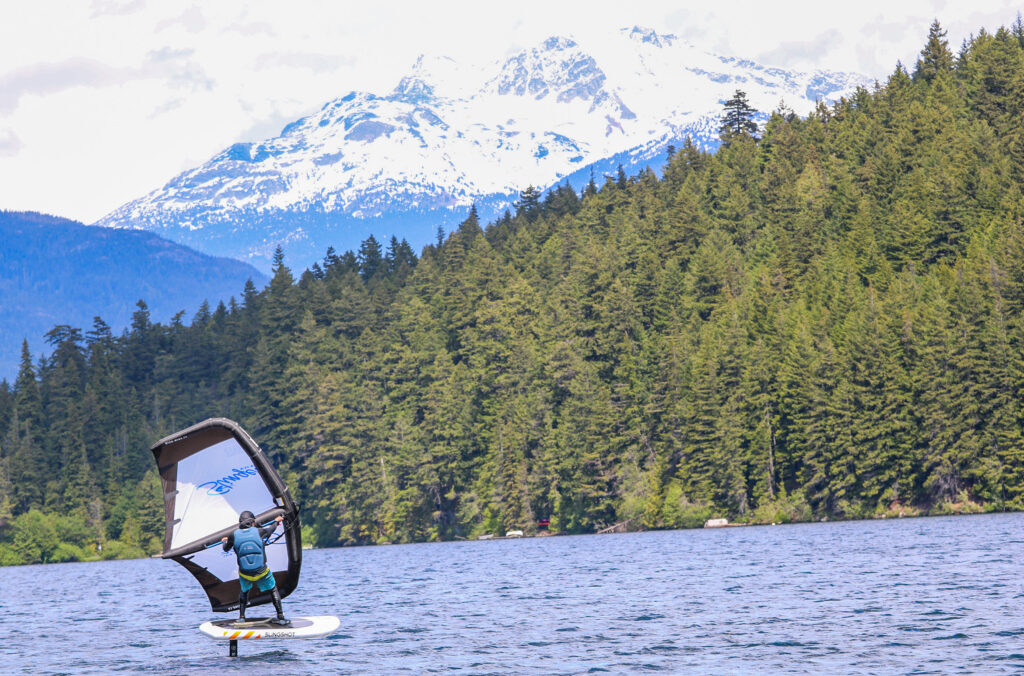
Wing foiling offers a unique blend of wind and water dynamics, combining elements of windsurfing, kiteboarding and surfing. The new sport is taking off right now, and what makes it stand out, literally, from other water sports is the aeroplane technology used to achieve vertical lift.
“You have a sail, that’s called a wing, that you control just with your hands, so there’s no mast like a traditional windsurfer. And you stand on what’s called a hydrofoil, so you’re essentially using two wings, and one of the wings is underwater,” says my guide, Whistler Sailing’s General Manager, Francois Hebert.
“This little aircraft wing that works under the water pushes you up until your board is flying about a metre above the surface. It’s extremely quiet and an amazing feeling, you really feel like you’re flying.”
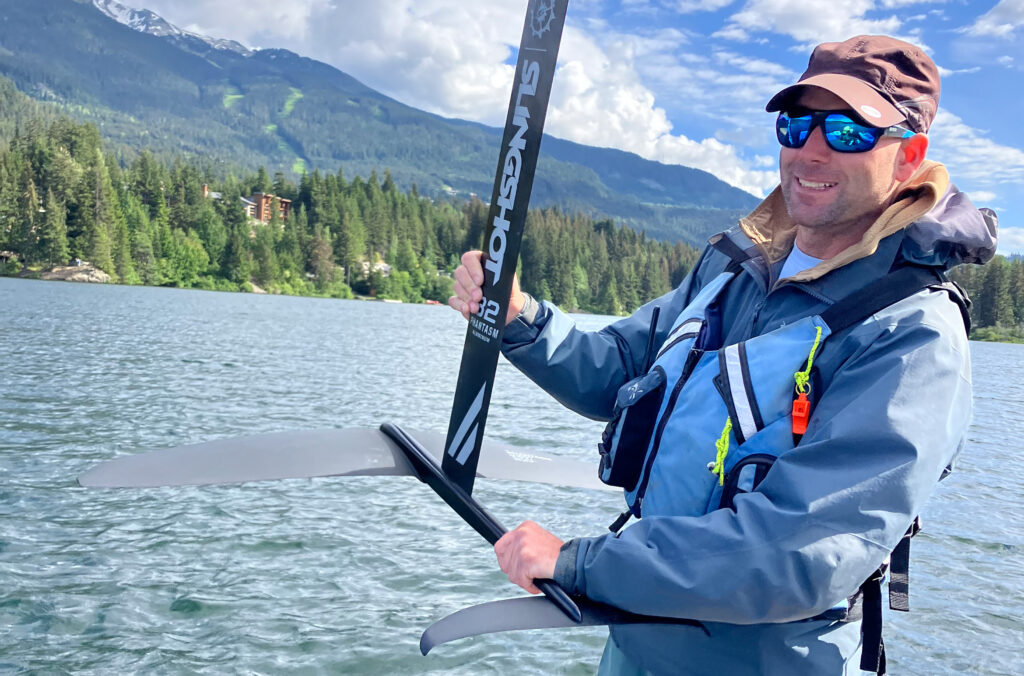
Francois grew up sailing on the Great Lakes with his parents and learnt to sail when he was eight years old. Crowned the 2023 ILCA 7 US Masters National Champion, he spent many years coaching “all over”, but saw an opportunity to start his own sailing school in Whistler because of Alta Lake’s special location.
“Alta Lake is in a geographic aspect of the valley where it narrows, creating a bit of a funnel,” he explains. “The temperature in the valley is what we call a thermal, so whenever Pemberton gets a couple degrees warmer than Whistler, which it typically does every afternoon, then the wind comes. It’s rare to have no wind.”
The wide expanse of fresh water, combined with the reliable wind, makes Whistler’s Alta Lake the perfect place to learn to wing foil.
Taking a Wing Foiling Lesson in Whistler
While Whistler Sailing recommends wing foiling to people who already have a background in sailing or similar sports, each lesson can be tailored to the individual’s abilities. Which is lucky for someone like me, who has some experience paddle-boarding but no experience with wind sports. Today I’ll be learning everything from scratch.
When I arrive at Whistler Sailing, Francois greets me with warm enthusiasm, easing my nerves a little. After I sign my waiver, he shows me to an old wooden cabin where I put on my swimwear, as well as the wetsuit, booties, PFD and helmet provided. I leave my towel and dry clothes in the cubby holes in the cabin and take only what I’ll need with me during the three-hour lesson: a drink bottle, snack bars, extra sunscreen and my asthma puffer.
INSIDER TIP: At this point, you’re still about an hour away from getting into the water, so for comfort and to prevent overheating, leave your arms and torso out of the wetsuit for now!
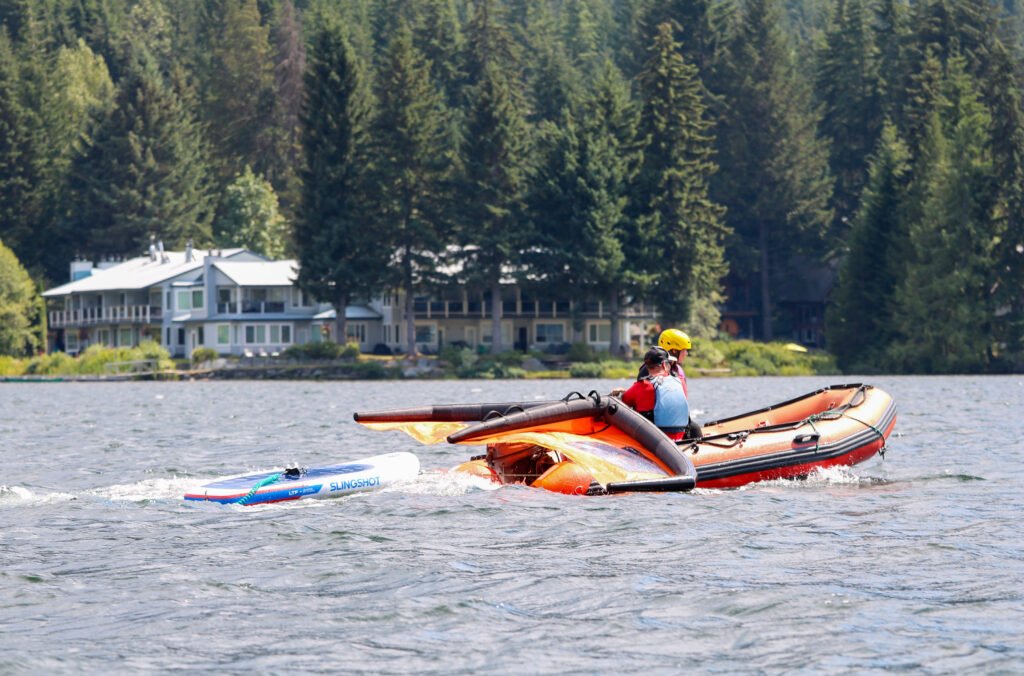
On the dock, Francois and I load into “Bruce”, a rubber safety boat named after the affable shark in the Disney film, Finding Nemo. He introduces me to one of the other wing foil instructors, Egon.
“What’s it like doing a wing foil lesson as a complete beginner?” I ask him, nervously.
Egon takes a moment, then replies, “It’s like your first deep powder day on skis or a snowboard.”
Casting my mind back, I remember my first deep powder day vividly. It involved a lot of falling, sinking, sweating, and watching other people fly past me, cutting sick lines and having fun.
As we cross the lake towards what Francois calls the “floating classroom”, I take a deep breath and look up at the blue sky. An osprey spirals upward on a thermal, and I remember a friend telling me that of all the sports he does – surfing, skiing, mountain biking – wing foiling is the closest he’s ever felt to flying.
Reading the Wind
We arrive at a wooden dock that has been pre-transported and anchored at the south end of the lake, and I realize that all the equipment I’ll need for my lesson is already waiting for me on the water. I didn’t have to carry anything!
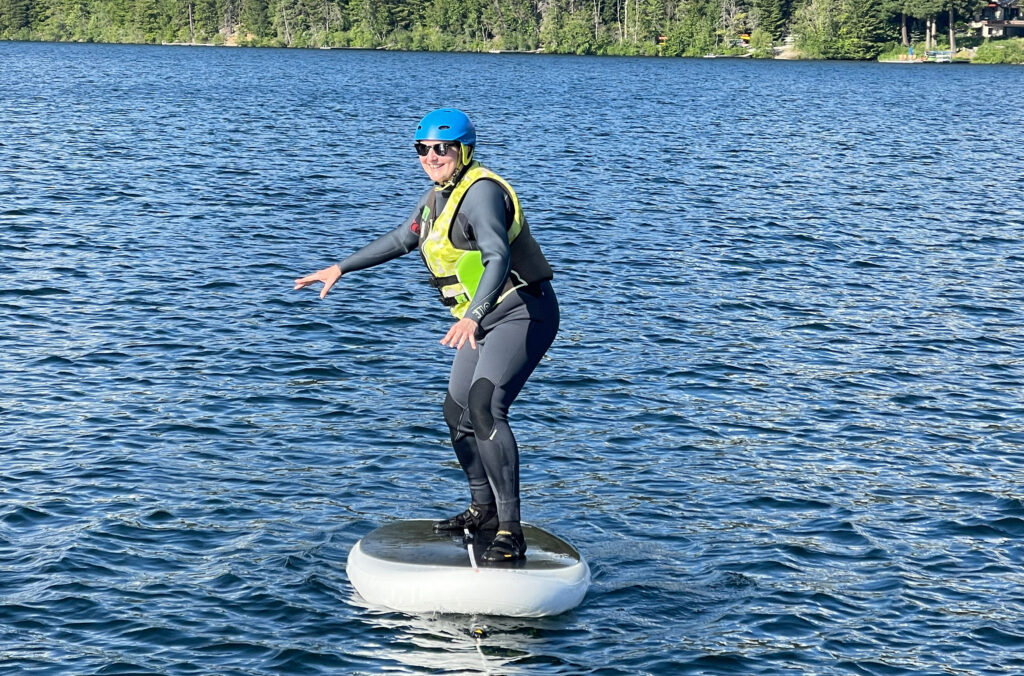
First, Francois takes me through the basics of reading the wind, including how to spot incoming gusts and changes in direction. He then gives me an in-depth explanation of how each piece of gear works.
I’m relieved to learn that, because of the aerodynamics of the wing, if at any point I’m feeling off-balance, I can just let go of it. It’s attached to a leash around my wrist like a boogie board, so I won’t lose it, and rather than blowing away like a kite, it will simply drop to the surface of the water where the wind will flip it upside down, reversing the lift qualities, and allowing it to calmly float next to me until I’m ready to try again.
Handling the Wing
Before the lesson, I’d had visions of not being strong enough to control the wing and having it drag me out of control around the lake, but those nightmares are now put to bed. The other good news is that the boards the foils attach to can also accommodate a centre fin, making them more stable and beginner-friendly, like a shortened stand-up paddle board.
Francois explains that I’ll need to learn how to handle the wing before I can add in the complexity of riding the foil. With all my anxieties alleviated, I listen closely as Francois explains how to hold the wing and how to position it in relation to the wind direction. I practise on the wooden dock, feeling the power of the wind when I find the right angle.
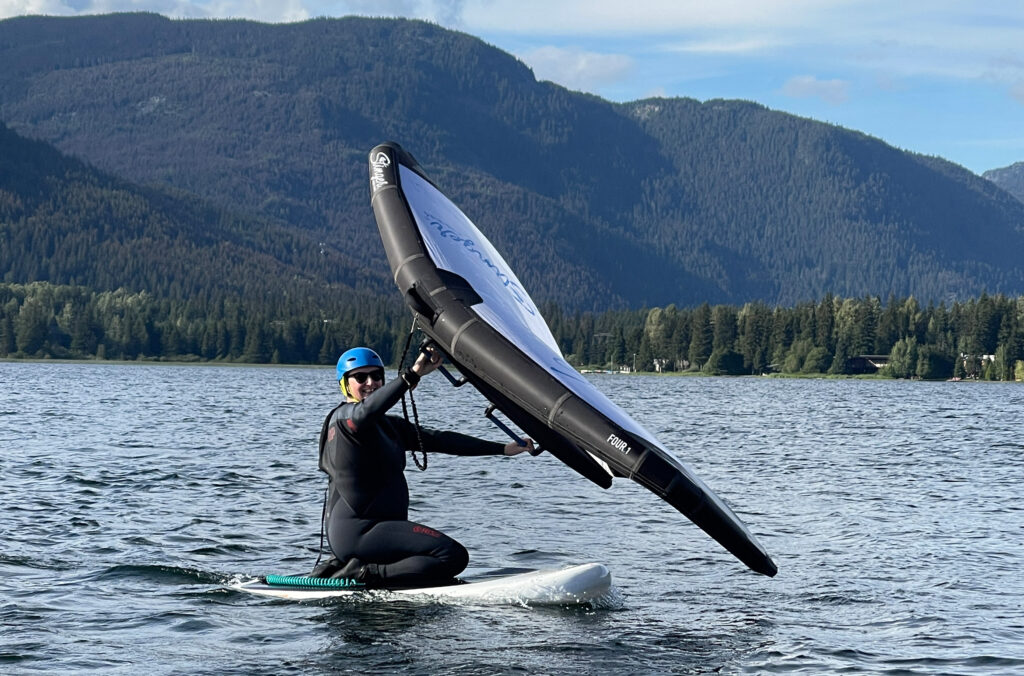
Next, I need to learn how to position myself on the board. To gauge my existing skill level, Francois encourages me to try standing up straight away. After a shaky moment on my feet, he changes tack and proceeds with instructions on how to kneel in the correct position instead. I faithfully follow Francois’ instructions, and after a few minutes, I’m handed the wing and released from my moorings. I’m free! And determined to make it to the other side of the lake.
Why Fight the Wind?
Francois quickly jumps into the safety boat and follows me closely, calmly calling out suggestions, while I try to remember everything I’ve just learnt. It’s challenging, but when it comes together and I start moving at a steady pace, I can imagine never wanting to paddle again. Why fight the wind when you can use it to your advantage?!
Already, I can picture myself flying above the water on a foil, effortlessly crossing back and forth across the lake. Unfortunately, when it’s time for me to change direction in real life, I can’t quite get the angles right. I try to “tack” upwind, but find I don’t have the strength, or perhaps the precision, to make it work.
Francois explains that it’s easier to “jib” downwind, but even this I find tricky. He laughs kindly and says that most people have a favoured direction, just like snowboarding. By the time I figure it out, my muscles are spent. My dreams of flying will have to wait for another day.
View this post on Instagram
Dreams of Flying
Pulling alongside, Francois loads me and my equipment into the safety boat, and we head back to the floating classroom. If I were in a lesson with someone who wanted to keep practising, the wooden dock would be the perfect place to relax and watch on, allowing two people of different skill or fitness levels to still enjoy a lesson together.
Cruising back to the sailing club in the safety boat, watching the sun drop behind the mountains, I’ve learnt enough about wing foiling to know that there’s plenty of fun to be had as a beginner if you have the right instruction and support. I’ll definitely be back to try again!