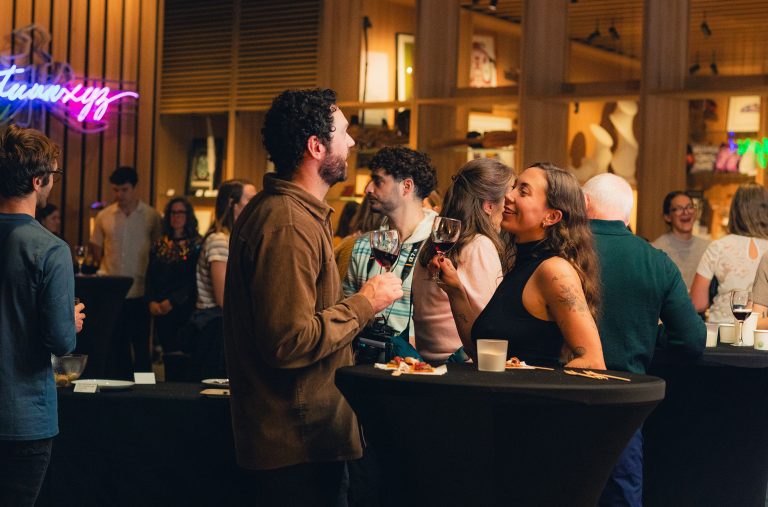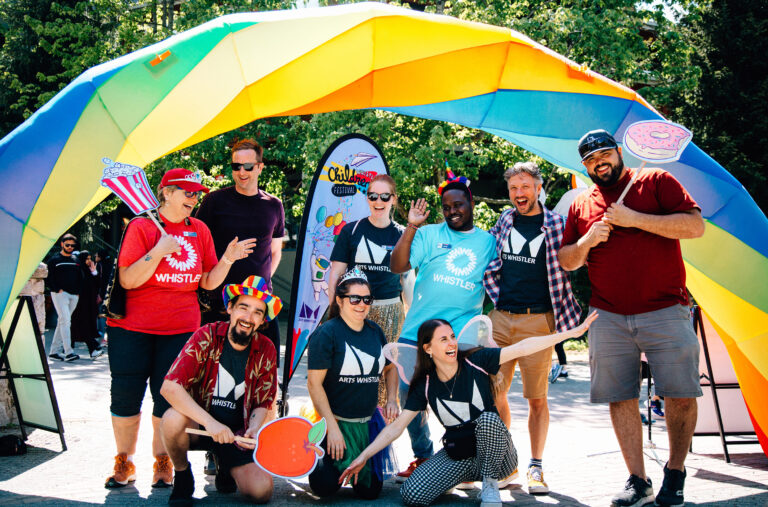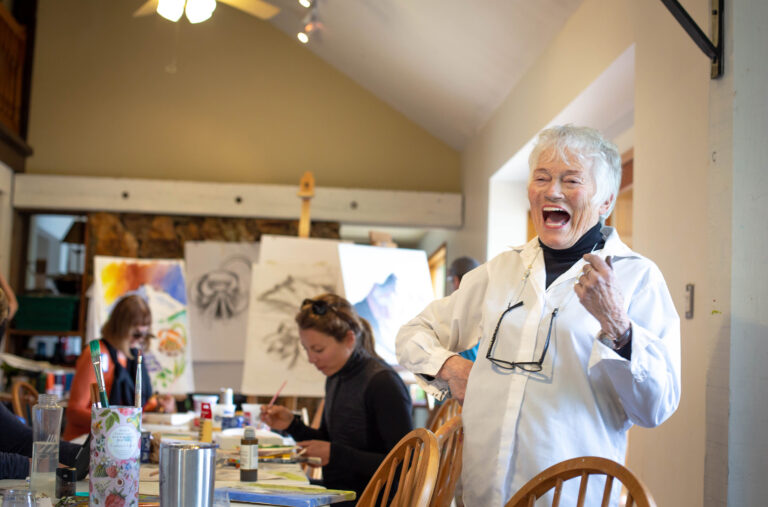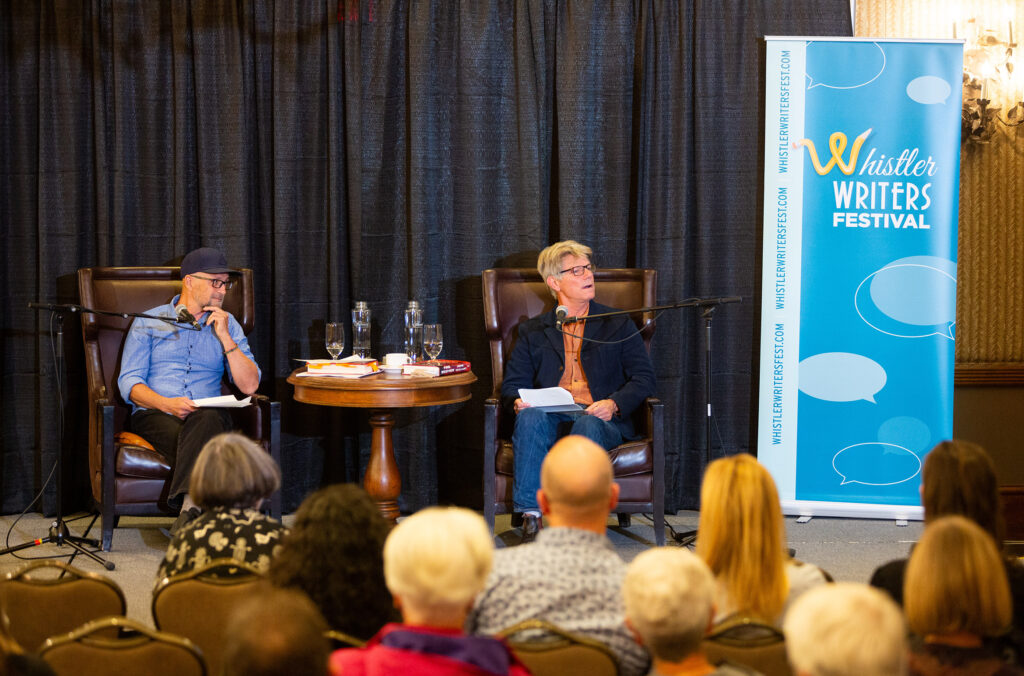
The protagonist in the storyline of the Whistler Writers Festival has always been the character of care: a tale defined by its enduring spirit of inclusivity.
Evolving from a living room gathering with one invited author to an annual four-day event with school programs that attract an average of 1,800 guests and 60 presenting authors and publishers, the Whistler Writers Festival has developed to become both a literary destination and integral expression of one community’s many voices.
This year the festival takes place November 5 to 8, 2026.
Once Upon a Time…
Stella Harvey moved to Whistler 26 years ago with her husband. He was the skier; she was the one seeking a writing community. Harvey tells how she asked Whistler’s beloved first librarian, Joan Richoz, if there was a local writing group. Richoz, unaware of any, turned to Harvey and said, “Why don’t you start one?”
Harvey took up the challenge and placed an advertisement in the local newspaper. In response, 20 people showed up at her house for the first gathering of what would be the inaugural meeting of a writers group that continues to this day.
“There were people who were in my living room that first meeting that are still here and have gone on to publish, and are still part of the group.”
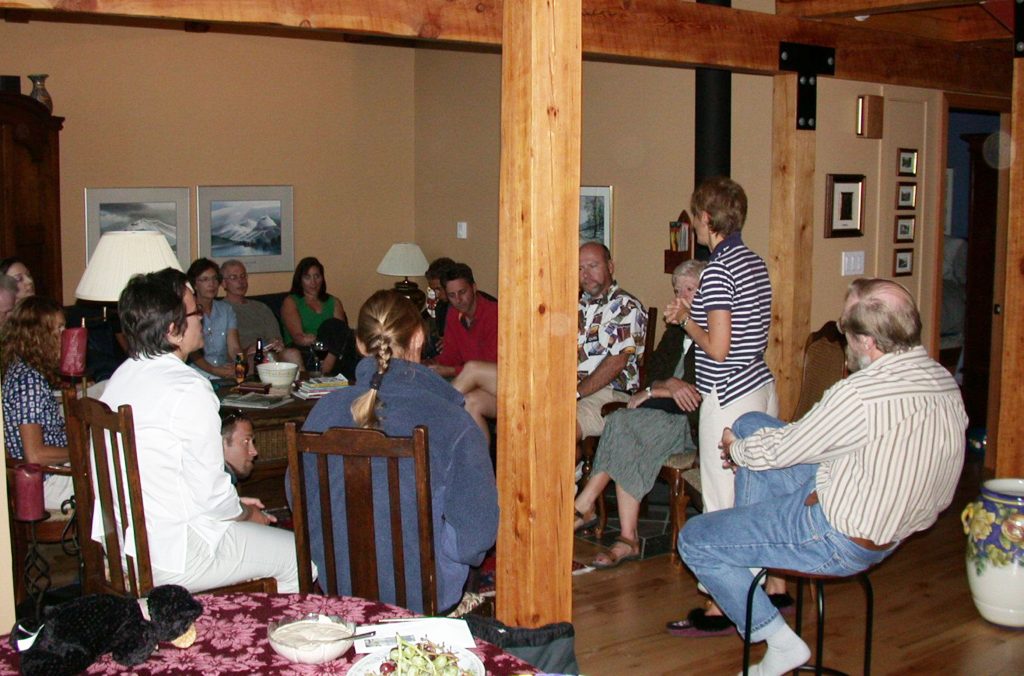
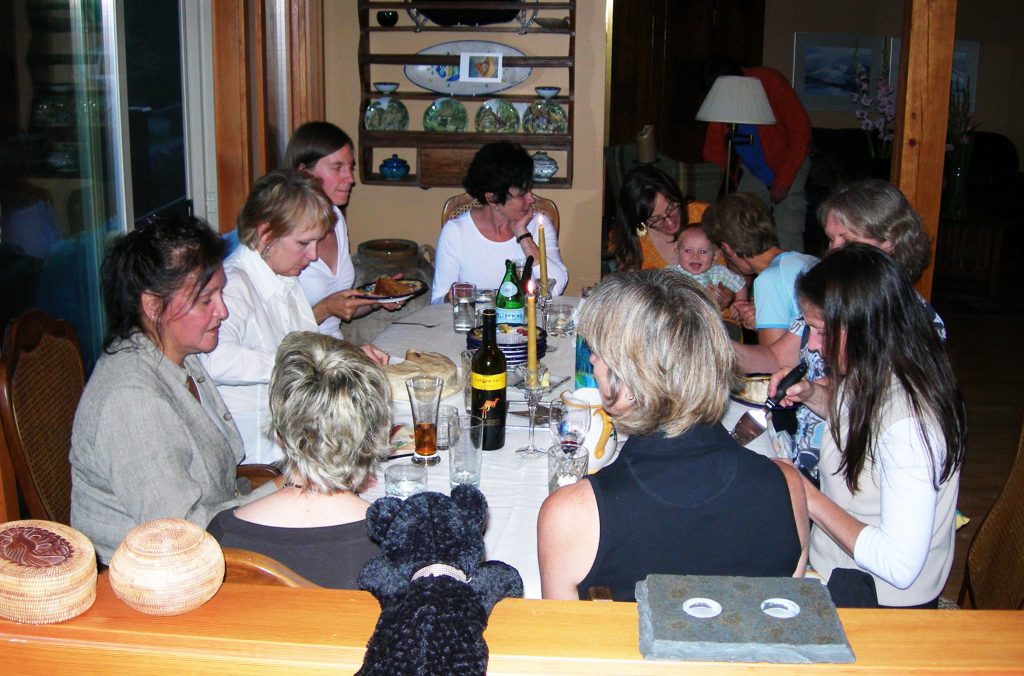
Facilitating the group, Harvey became inspired to host developmental craft sessions for the group of Whistler writers. In 2002, Harvey invited poet and novelist Andreas Schroeder to lead a workshop. “The first festival was in my house,” relays Harvey. Twelve writers attended, 25 years ago. “And then from there, it grew.”
The Next Chapters: Growing Gains
The first incarnation of the Whistler Writers Festival was divided between Harvey’s house and The Point Artist-Run Centre. “As the first few years started, we wanted to attract more than writers,” Harvey reflects. The offerings were expanded not just to include writing workshops but also readings by invited authors: enlarging the audience to writers and readers.
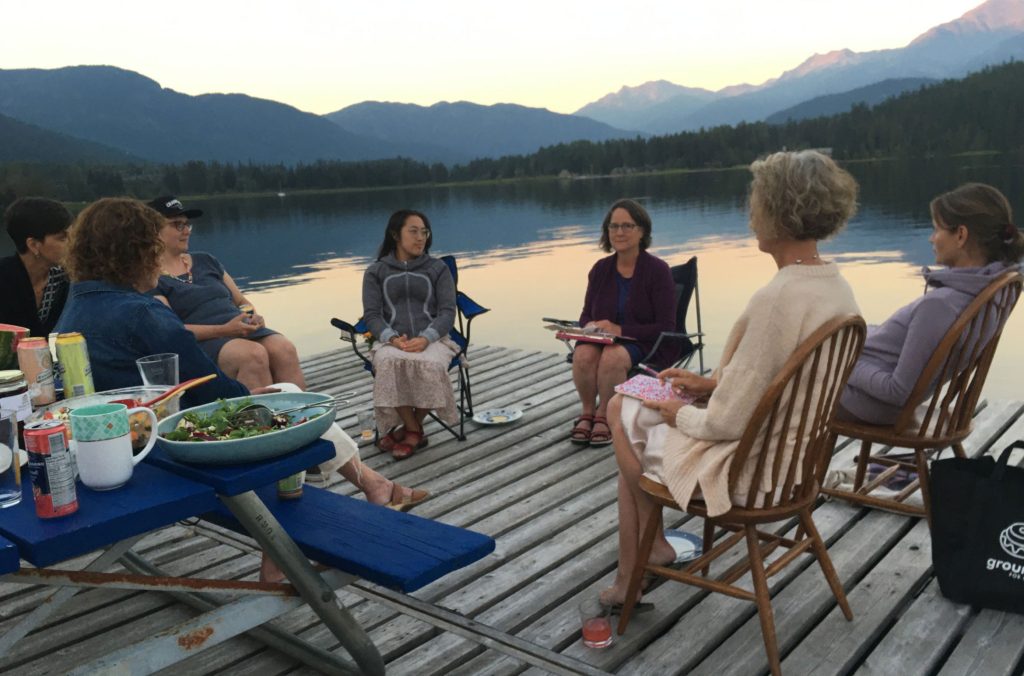
And the community was behind this growing initiative, from the beginning. Support from sponsors and venues, in addition to grant funding, was beginning to come in from local to national sources. The Whistler Writers Festival grew and so began to move around town. It has been held at Base II on Blackcomb, the Ski Patrol Cabin in Creekside, the Spruce Grove community buildings, the Squamish Lil’wat Cultural Centre, the Aava Hotel, the Maury Young Art Centre and its most recent home: the Fairmont Chateau Whistler.
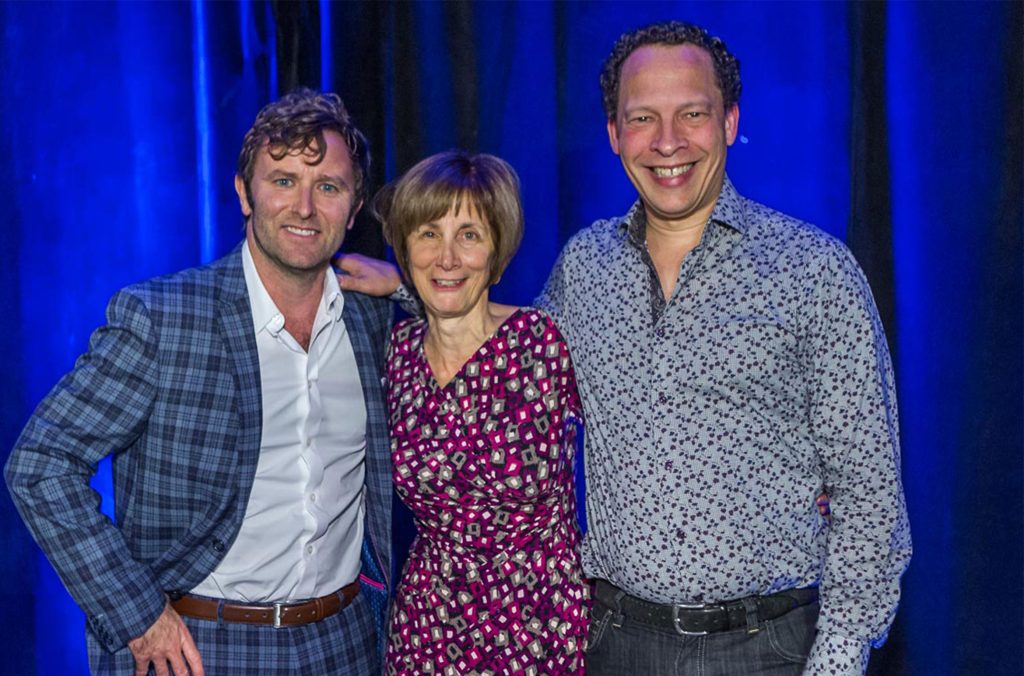
Hundreds of authors, 99% of whom have been Canadian, from international bestsellers and prestigious award winners to local voices, have been included in an eclectic and often experimental range of programming, including Richard Wagamese, Lawrence Hill, Julian Brave NoiseCat, Maude Barlow, Vincent Lam, Lorna Crozier, Robert Bringhurst, Russell Wangersky, Miriam Toews, Patrick DeWitt, Darrel J. McLeod and Omar El Akkad to name a few.
The Page Turner
As much as the Whistler Writers Festival has grown, it has remained bespoke and intimate. Harvey headed up the annual event for 20 years, handing over the reins of Artistic and Executive Director to Rebecca Wood Barrett five years ago.
Wood Barrett happened to be one of the initial people who first showed up to Harvey’s newspaper appeal for a writers group. Wood Barrett has been a part of the festival from the beginning and is continuing the legacy that Harvey established, founded on Harvey’s repeated utterance, and evidenced in the programming: “inclusivity is really important to me.”
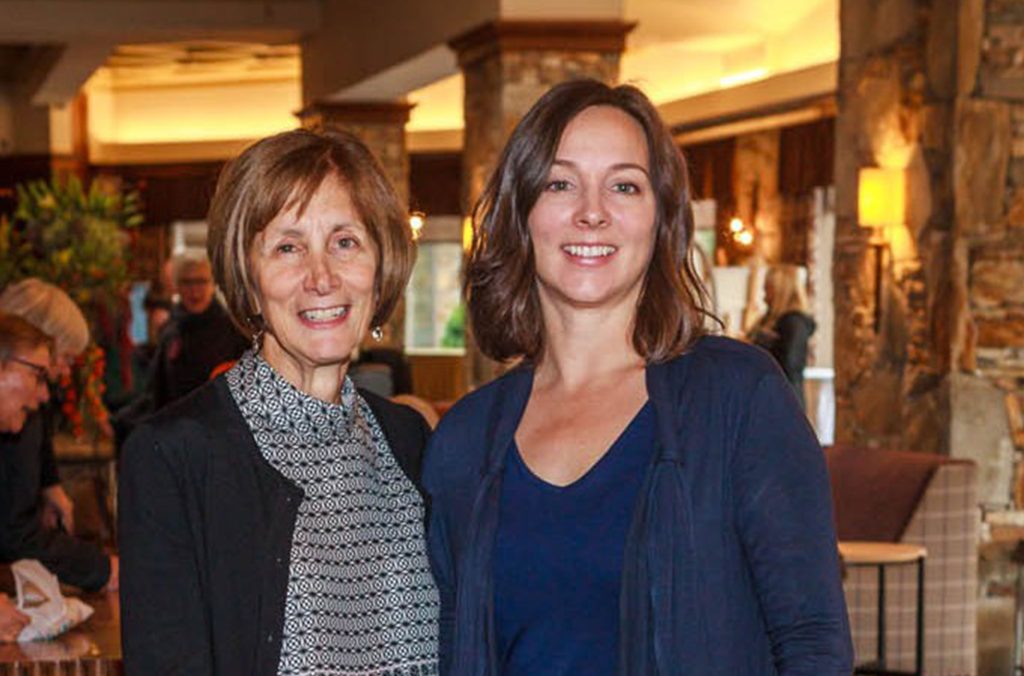
Wood Barrett, an award-winning author herself, maintains, “We always want every audience member, every guest author, every storyteller, volunteer, and staff member to feel like they’re in the right place.” With her genuine spirit of generosity, Harvey says of Wood Barrett’s festival vision: “I’m so appreciative that Becky is putting her own mark on it. Changing it as she sees fit.”
Wood Barrett displays such admiration for her mentor and the legacy she has inherited:
“And I think today we are still doing the same thing. The festival is a place where people can meet new friends and experience new ideas and perspectives. A friend last year brought her mother, and she said she’d never met a trans person before and she’d never heard an Indigenous storyteller before. And I thought that was wonderful.” Wood Barrett continues, “Some of those stories will also be very familiar for some people. They’ll say, ‘I feel like I have been seen or my struggles are not only my own.’”
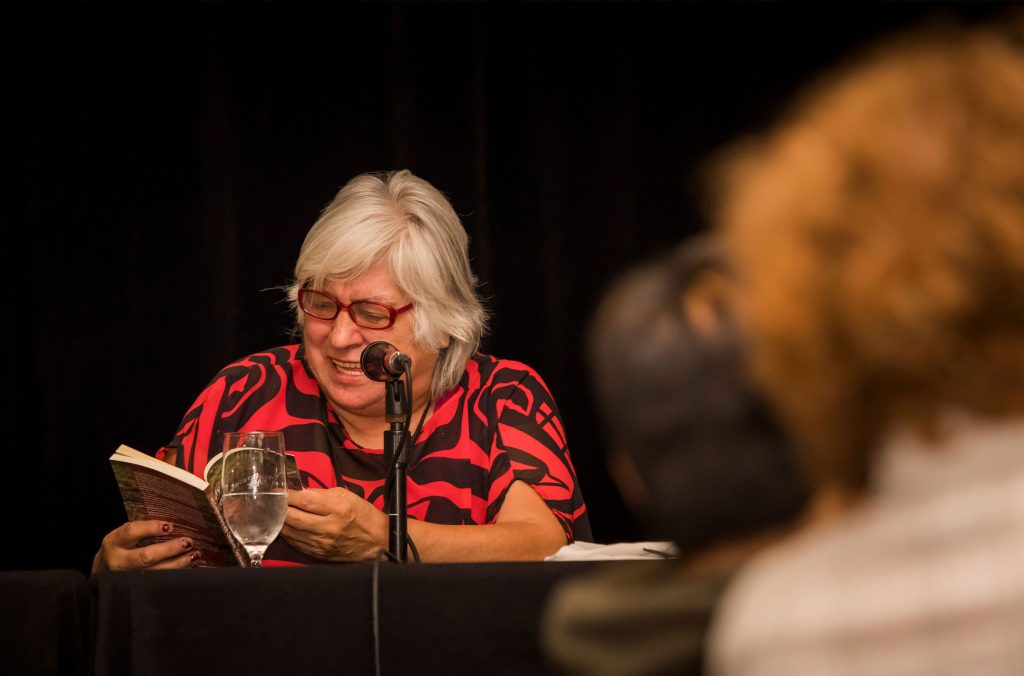
The Whistler Writers Festival offers an opportunity to be touched by words, by ideas, by innovation and imagination. As Wood Barrett encapsulates, “vulnerability can happen because it’s a safe space.”
The Programme
This year the festival celebrates 25 Years of Stories!
The lineup includes the following new events and interactive workshops: Celebrating Sea to Sky Stories; Duelling Editors; The Body Writes: Exploring Rhythm in Storytelling; Closing Doors: How Using Generative AI Can Impact Your Book, and The Literary Salon: A Cure for Drowning.
Audience demographics are evenly split between the regional Sea to Sky area and literary-destination visitors. There are several book groups from Vancouver and Seattle who have established yearly rituals of attendance.
The Whistler Writers Festival has long been aware of cultural and accessibility barriers to both attendance and comfort and has intentionally offered free events, used a diversity of venues and partnered with different groups to broaden accessibility.
“I think that is part of how we’ve been able to reach out to different audiences. And especially the last couple of years, our team has very much tried to sort of figure out who the different groups are, or what the different interests might be, and try to reach out to those groups.”
The Whistler Writers Festival is committed to fostering relationships with many communities and continues to support the reciprocal building of trust.
Authors in the Schools
“We have quite a large school audience, which isn’t really in the public eye. So the program is not always well known. But we involve students in Squamish, Whistler, Pemberton, and Mount Currie, grades 4 to 12,” comments Wood Barrett.
Each year, 420 books by three selected authors are delivered to 20 schools throughout the Sea to Sky Corridor. The delivery of books is followed up by the authors visiting the schools.
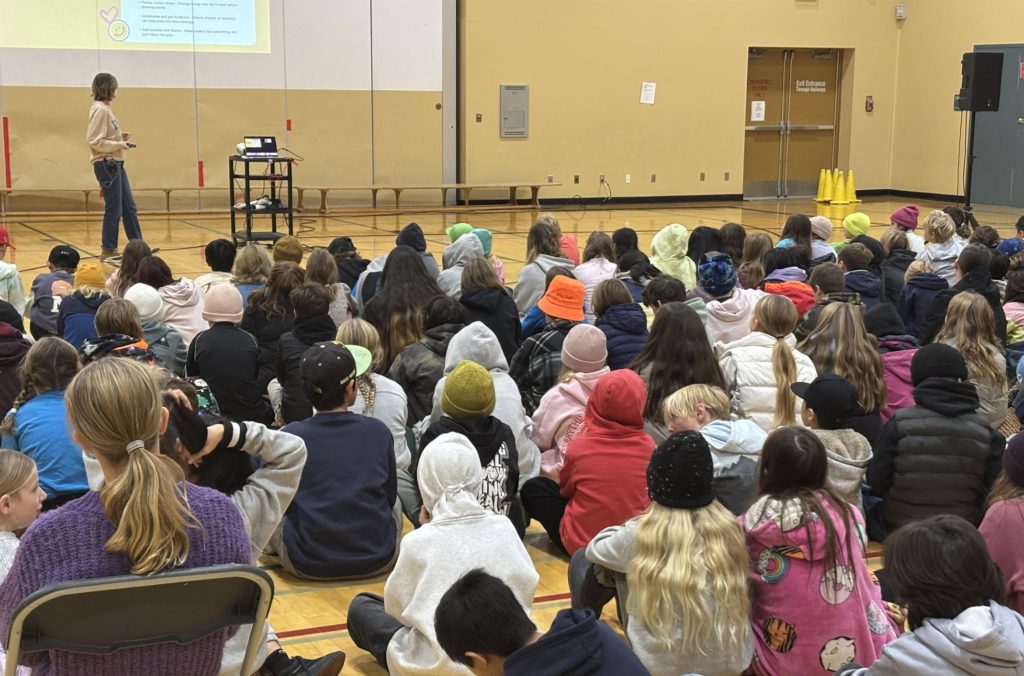
In 2013, the first Authors in School Program began, and the late Richard Wagamese was the renowned writer to inaugurate the initiative. Harvey, with tears in her eyes, reflects on a presentation by Wagamese, author of Indian Horse, to a group of Grade 12 students.
“I was abused in every possible way you could imagine,” the author began in the inaugural session. He proceeded to outline some of those ways, and I worried that perhaps this was too much for the students.
“At 16, a friend told me I didn’t have to take it anymore. I left foster care and headed for the big city, the streets of Toronto.” The students, who upon arrival at the SLCC had pushed, shoved and joked with each other, were now spellbound.
“You’re further ahead than I am,” the author said. “You’re in grade 12. You’ll graduate this year. You know where I got my education?” They shook their heads. “I was cold and hungry, and I saw a building that I might go into for a few hours to warm up. Do you know what that building was?” Again, silence.
“It was a library,” the author said. “A librarian noticed me and suggested books I might like. Every day, she brought me others to read. This is how I began to write and tell my stories. One librarian, one person, took an interest.“
And taking an interest and supporting the sharing of stories is what has earmarked the Whistler Writers Festival from the beginning.
Writer-in-Residence Program
The festival also started a Writer-in-Residence Program in 2007, where, for the process of several months, a small cohort of writers works with an esteemed writer who mentors them through the process of writing their own manuscripts.
This year, for the 25th anniversary of the Whistler Writers Festival, Stella Harvey is the celebrated author stepping into this role. Part of the Festival programming this year also involves a book launch of Harvey’s fourth novel, Disruption, published by Signature Editions.
It feels fitting that Harvey should be honoured so, in this celebratory year for the festival. Along with spearheading the festival as a volunteer for 20 years and facilitating the still-ongoing local writers group, she won the Whistler Champion of Arts and Culture award (2015) and the Whistler Citizen of the Year Award (2022) for her efforts to promote the literary arts in Whistler, and the Rotary Foundation’s Paul Harris Fellow award. She has also mentored students in The Writers Studio at Simon Fraser University for the past nine years.
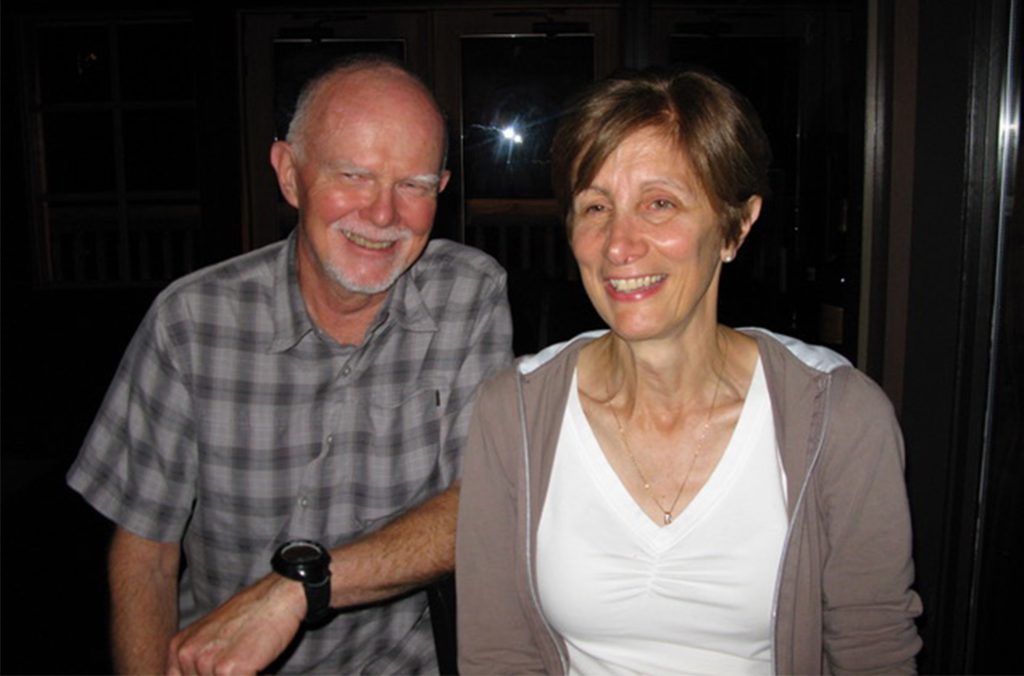
Harvey planted the seeds, let them flower and continues to be part of the blooming of a local event of literary stature and significance. Harvey, however, remains one of the most humble people one could ever meet, and quickly points out: “I don’t think anyone succeeds alone.” Harvey embodies and epitomizes what community is and can be.
The Plot in Present Tense
“We’re holding steadfast to bringing people together, along with trying to stay relevant and bring authors, books, storytellers that are exciting and have diverse thoughts, diverse stories to tell,” says Wood Barrett.
The Artistic and Executive Director is joined by another part-time employee, the Program and Project Coordinator, and a short-term contracted Marketing Specialist to execute the annual event. An enthusiastic Board of Directors and 50 volunteers all come together to make it happen.
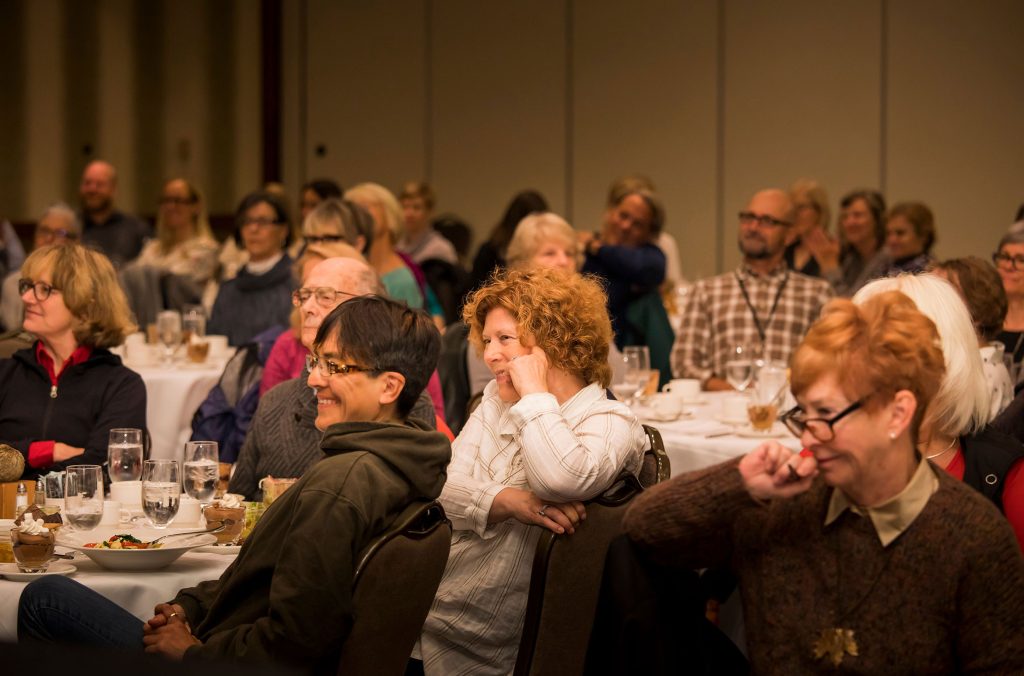
As much as the festival has grown over the years, so too has it seen its struggles: as artistic funding has been cut back significantly in this country. The festival has been faced with cutting certain aspects of its programming (including the beloved Literary Cabaret, a signature offering for over a decade) and changing up its offerings.
Not only has the festival necessarily needed to steadfastly apply itself to diversifying its revenue, but it has also had to stay at the forefront of changing trends and challenges to the literary world when it comes to AI and trying to understand its potential impacts.
The Whistler Writers Festival remains relevant because it has always been, and continues to be, part of valuable conversations. It’s a festival that values words and their impact, and the ability to bring people together through the sharing of stories.
Add your voice, your ears and your heart to the conversation this fall.