Whistler has a distinct vibe. It’s an exhilarating and magnetic resort destination that’s known for its big mountain skiing, trailblazing biking scene, and stunning alpine vistas. And a lot of people will tell you they came here for these things. BUT if you dig a bit, they’ll usually tell you that the reason they stayed is that they found a deeper connection, a sense of community.
And that doesn’t always happen by accident. There are people, organizations and businesses that deliberately cultivate community, and that’s who we want to showcase in this series. Join our host, Mike Douglas, a member-at-large of Protect Our Winters Canada, pro skier, enviro nerd and Whistler local, as he shines a light on how Whistler cultivates its unique sense of community.
In video #6, we join Rebecca Wood Barrett, Artistic & Executive Director of the Whistler Writers Festival. Rebecca discusses how a writers festival is for readers too, that safe spaces for new ideas and perspectives are critical and how books can blow your mind.
Is everyone at the Whistler Writers Festival a writer?
A lot of them are, but the festival is for readers, writers, and storytellers of all kinds. What we do is bring everyone together to have conversations about different ideas and perspectives.
We actively work at making sure the authors and books are diverse and varied: we have literary fiction, oral storytelling, poetry, memoir, creative non-fiction, thrillers, graphic novels, historical fiction and fantasy – we really like to expose people to the gamut of storytelling.
We envision a future where all people can experience empathy, understanding, and transformation through reading, writing, and the exchange of ideas. We truly believe that sharing stories can change the world.
How has the Whistler Writers Festival grown over time?
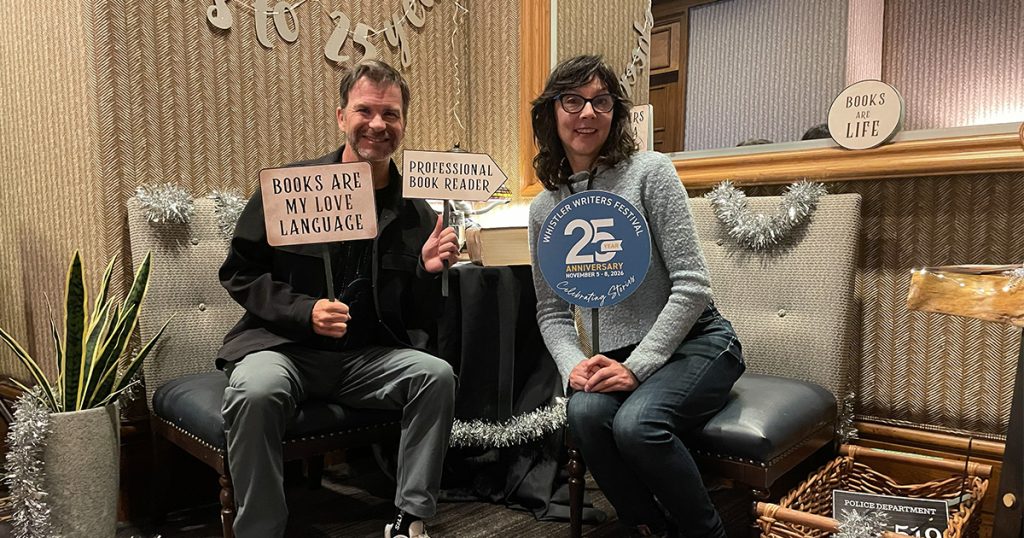
We’re in our 25th year as a festival, growing from a group of 20 in founder Stella Harvey’s living room to welcoming 1,800+ people annually to Whistler in the fall. What hasn’t changed is that we still believe that sharing stories can change people’s lives.
All those years ago, I was a budding, much-younger writer, and I eagerly absorbed the words of the festival’s first guest author and workshop teacher, Andreas Schroeder. Andreas regaled us with two very similar oral stories. He sat on a stool in the living room and pretended to fish, casting his imaginary line into the audience sitting on the couches. Afterwards, he said one version was an anecdote, and the other was a story, and asked whether we could tell the difference.

What I learned was that in the story (unlike the anecdote) the character of the fisherman had changed, and thus had a ‘character arc,’ which elevated the story to a level beyond the anecdote.
More than two decades later, I still remember that illuminating moment. This is the power of a story. It sticks with you. And that’s no small feat in today’s reality, where our attention is bombarded and fragmented by digital demands and messages. Stories hold up and become a part of us, part of our memories.
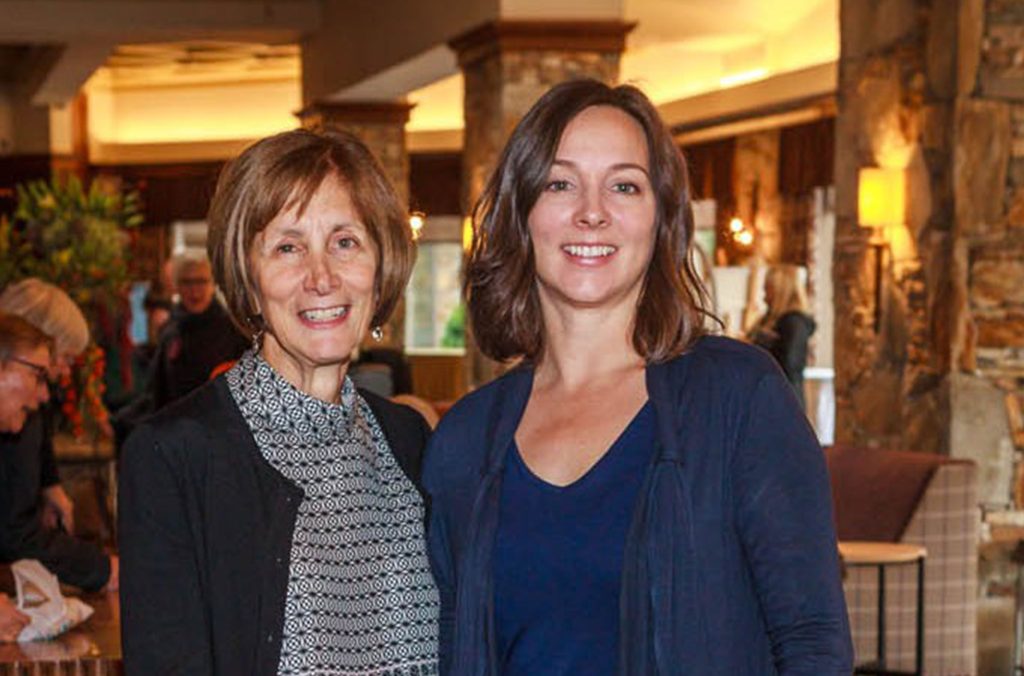
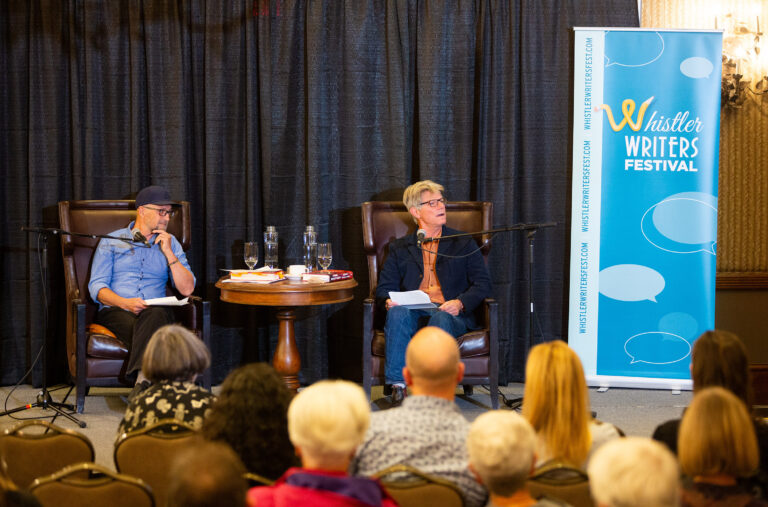
My other wonderful memory is the friendly, intimate, accessible and inclusive atmosphere at that first, modest festival event as everyone shared a potluck meal together. These are values that we continue to embrace today, even though the festival is much larger, and the atmosphere buzzes with up to 1800 attendees at 25 events in venues around Whistler.
As I reflect back over the last 25 years, it’s the people who have come to our events and been part of our programs who are the reason the literary and storytelling arts in the Sea to Sky have continued to thrive.
Tell us more about the Whistler Writing Society.
Although we’re known for the Whistler Writers Festival, the Society does a lot more throughout the year. Think of it as the literary arts in action!
It was founded in 2001 by Stella Harvey, became a non-profit organization in 2005 and a charitable organization in 2016. Our group includes over 100 members living in the Sea to Sky Corridor.
From its inception, the group has promoted the literary arts, providing a forum for writers to develop their craft within the community and sponsoring literary events for readers and writers.
We run writing mentorship programs, craft workshops and reading events throughout the year, like one-day writing retreats and open mic events. These are open to locals and visitors, the curious and the brave – join us!
We also run the Authors in Schools program throughout the Sea to Sky, where we bring in award-winning Canadian authors and almost 500 of their books into classrooms in Squamish, Whistler and Pemberton.
The inaugural event with the late Richard Wagamese included grade 12 English classes studying his novel Indian Horse, followed by a session with Mr. Wagamese and the four area schools at the Squamish Lil’wat Cultural Centre.
Students heard him speak, read and answer their questions, and as a result of the program, Xet’olacw Community School students have since organized a book club for youth in their community focused on reading books by Indigenous authors.
How do these events and programs create a sense of community?
We work hard to provide a welcoming, open and safe space for all people to come and engage with and enjoy the literary arts. That’s at the forefront of what we’re doing.
Writing and reading can be a solitary endeavour, but it doesn’t have to be. We’ve found that time and time again, by getting readers, writers and storytellers together, the sharing of that communal knowledge and energy unlocks things people didn’t even have on their radar.
Wherever we can, we’ve tried to create different opportunities for people to connect. We have intermissions with food and drink, or live, pre-show music where participants can meet and chat. Many events are organized with cabaret-style seating at tables instead of theatre-style to foster conversations with friends – old and new. Our festival team and volunteers are all involved in introducing authors to community members so they feel right at home.
We’ve had authors say that we’re the friendliest, most welcoming festival they’ve been to. I also want to give credit to our audiences, who are highly engaged. Guest authors pick up on that energy, and it creates a positive feedback loop, which makes them willing to be vulnerable and go further in sharing their thinking, even if the ideas and their truths are uncomfortable.
Author Evelyn Lau said, “…your Festival audience is one of the best out there. On stage, I could feel their responsiveness, their rapt attention, their enthusiasm.”
How have you fostered inclusivity and accessibility at the festival?
The Whistler Writing Society welcomes everyone to our events, where our goal is to make participants feel safe, included, and accepted.
Accessibility is an essential element of our community, and all festival venues are accessible for those using mobility aids. Courtesy seating is available for anyone with mobility challenges, physical disabilities or chronic pain.
On request, we provide options for accessibility for those with hearing impairment. Hybrid events with a livestream component offer captions for the Deaf or hard of hearing.
Because the nature of some of our events can bring up emotional content, we have a dedicated safe space for people to retreat to if needed, and our volunteers know where to guide people to.
Why are books important?
Reading lights up your whole brain, develops critical thinking and empathy. In an age with many distractions, reading a book is more important than ever – you can go on mind-expanding journeys reading a great book.