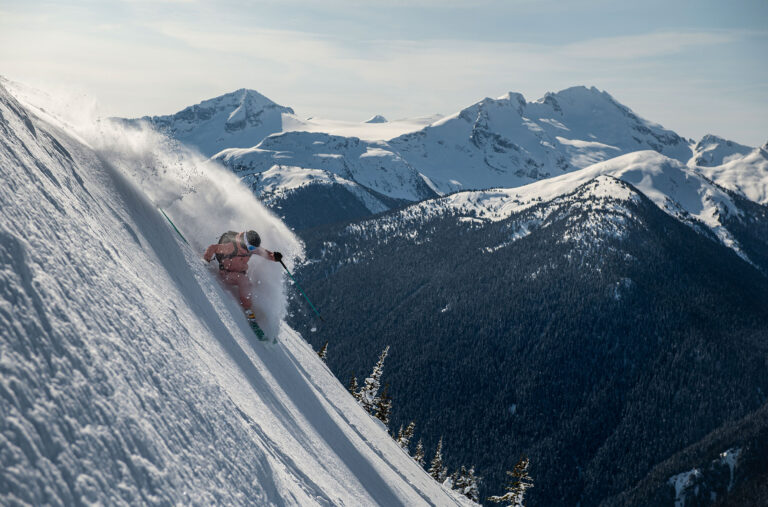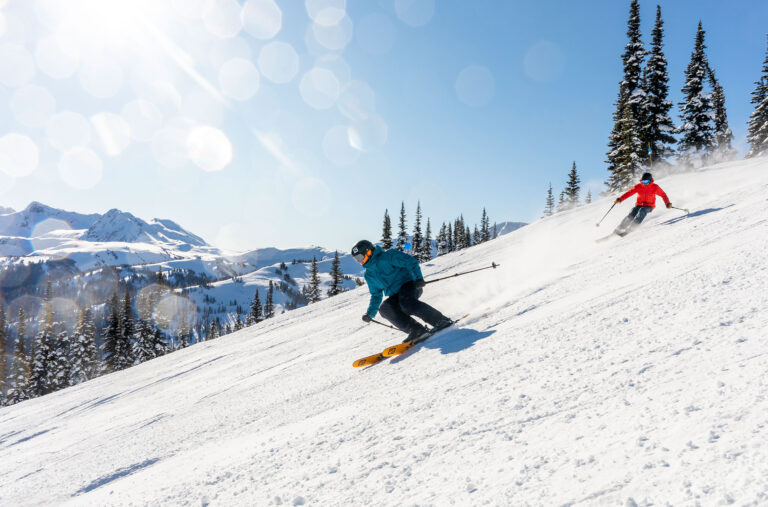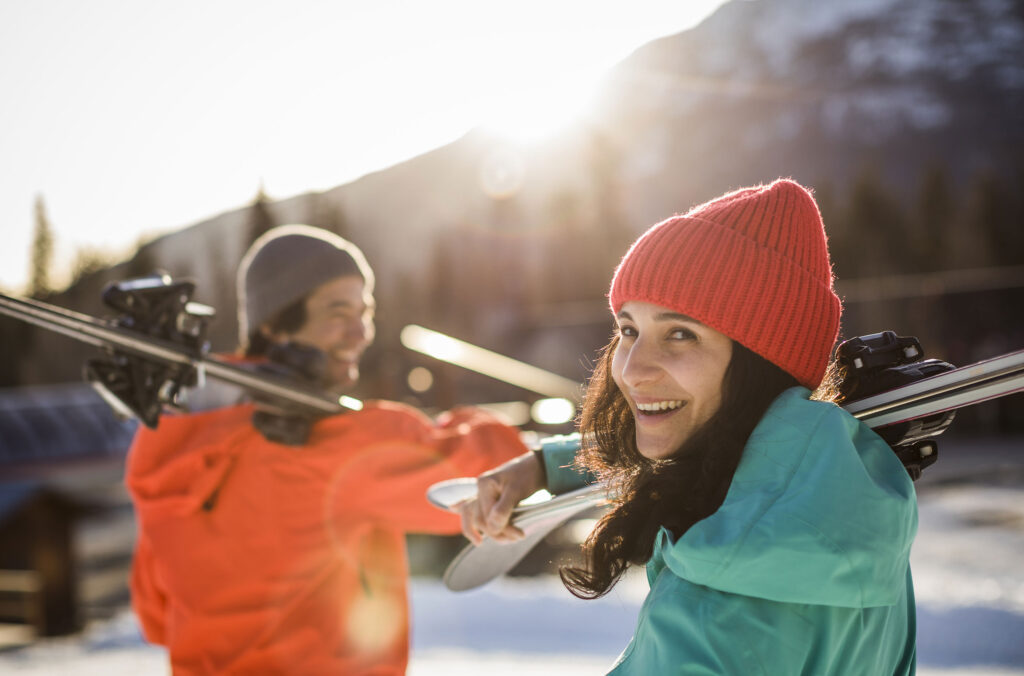
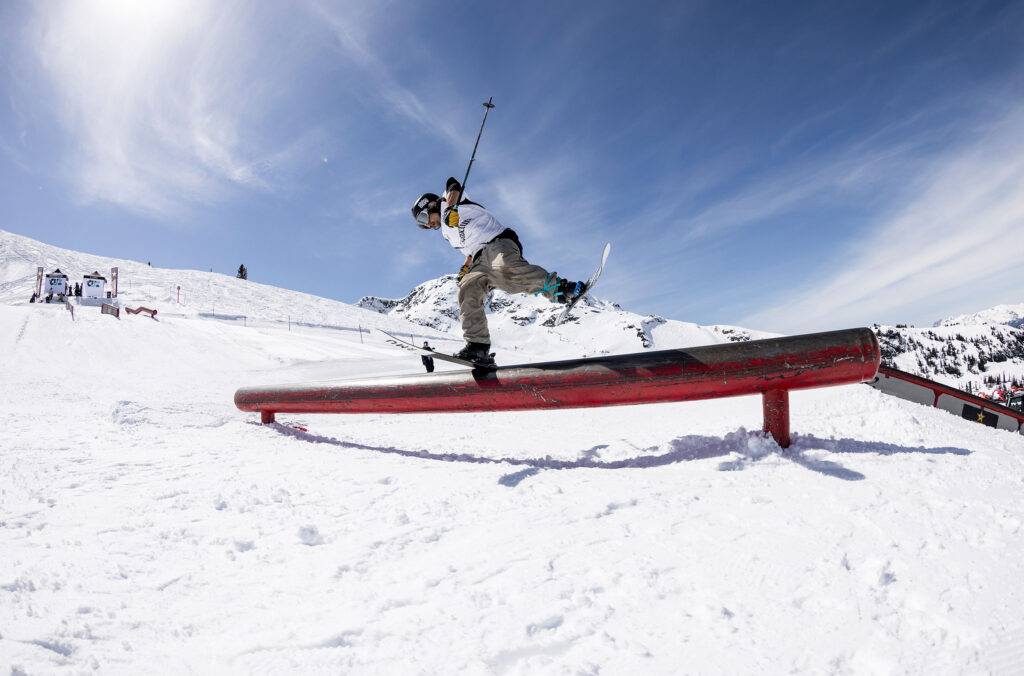
With over a mile of vertical and 8,200 acres of open, skiable terrain, Whistler offers some of the best spring skiing in North America (not to mention THE best après). March is historically a snow-filled month in Whistler, where you get that paradoxical combination of sunny days and fresh powder. Whistler Blackcomb also has one of the longest ski seasons in the world, with skiing and riding happening in April and May, which means you can take full advantage of those longer, sunny spring days.
It’s also a good time to snag a deal on accommodation in late spring, and with fewer crowds and soft snow, people in the know hit the slopes in the spring. Here’s how to make the most of spring skiing in Whistler.
1. Crack-of-Noon Club
In spring, the best skiing in Whistler often starts late morning or midday once the snow softens.
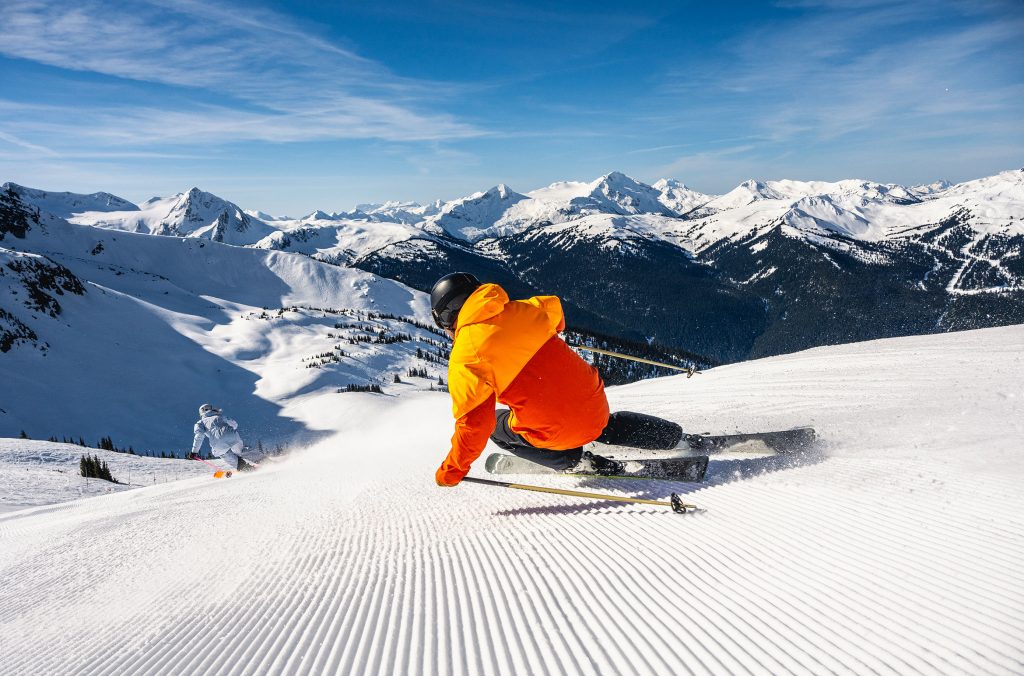
One of the best things about spring skiing is that you can sleep in and not feel guilty. On your average spring day, the snow will be fast and hard until the sun hits it long enough to soften things up.
This means there’s nothing wrong with sleeping in and uploading just in time for the fresh “corn” at noon. But be wary! With such big mountains, it will often snow up in the alpine, and you can have real pow and spring corn on the same day. It’s worth it to nominate someone to set an alarm and check the early snow report just in case.
2. Mountain Picnics
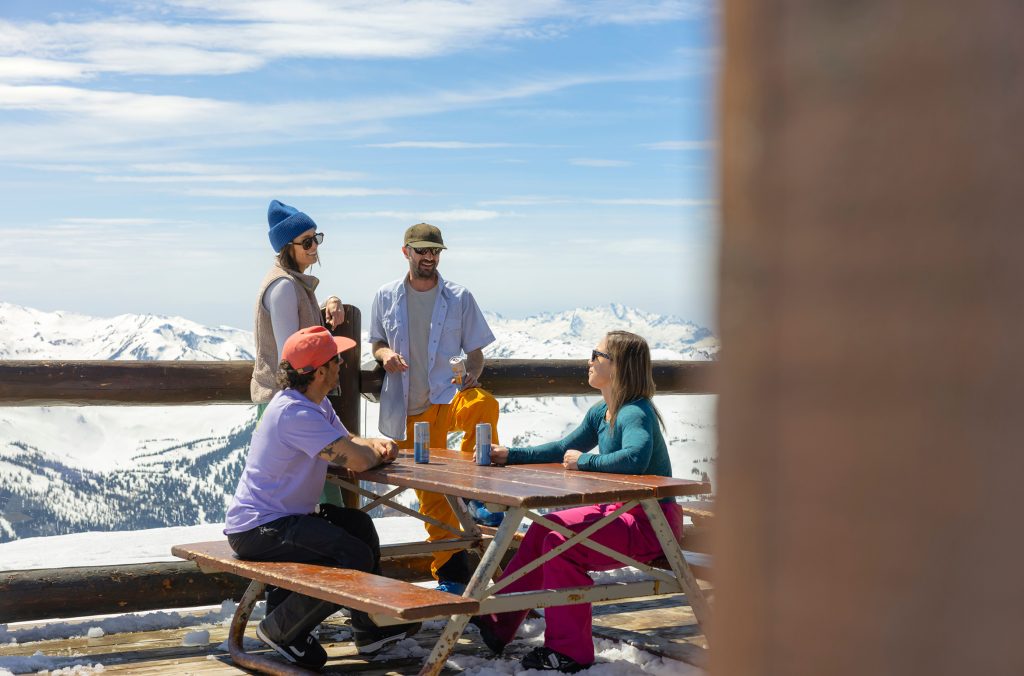
Spring skiing in Whistler is ideal for outdoor breaks, whether that’s a sunny on-mountain patio or a DIY picnic on a warm rock with a view.
The sunny days of spring are really best enjoyed outdoors, so it makes sense to hit the patio of the on-mountain restaurants, but this time of year can also be seen as an excuse to pack a bag lunch and bask on a warm rock somewhere scenic.
Bonus points if you have a 70’s-style wineskin (full of water, of course… staying hydrated is important in the warmer spring months).
3. Dress for Spring Skiing Success
Layering is essential for spring skiing in Whistler, with lighter pants, a shell jacket, and removable insulation for changing temperatures.
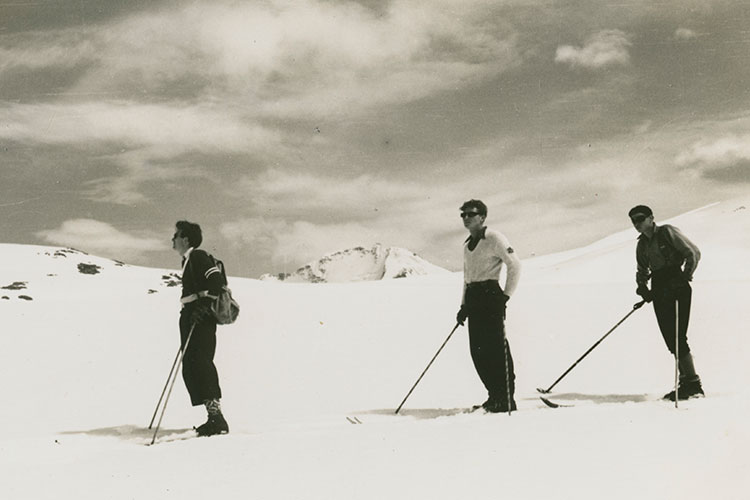
More than ever, spring is about proper layering. Go for light pants if possible; you can ski harder to fend off the morning chills of those first few runs. Conversely, wearing a too-insulated jacket can turn your afternoon runs into an unzipped, alpine sauna. Yuck.
A shell outer layer is best, then you shed your warm layer as the day progresses. A small backpack is great for this (also for holding the lunch and wineskin).
Take a read of Bikinis, Jodhpurs and Lycra – It Must be Spring in Whistler for more fashion inspiration.
4. Pack Some Protection
Sun protection is critical when spring skiing in Whistler because snow reflects up to 80% of UV rays, increasing the risk of sunburn and snowblindness.
Sunscreen sunscreen sunscreen. The snow reflects about 80% of the sun’s UV rays right back up at you, so don’t forget to screen the underside of your nose and chin. Reapply sunscreen at least once as the day progresses, and if anyone has any of that old zinc oxide kicking around from the 1980s, rock it with pride.
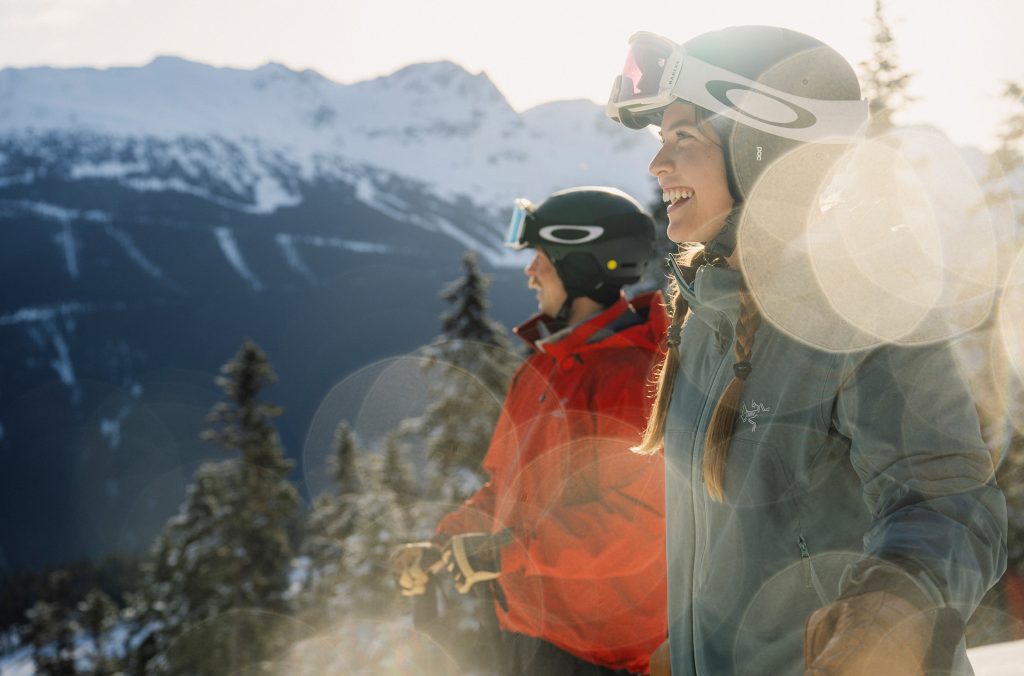
Also: sunglasses, or goggles if you are the “hey, check out my sick goggle tan” sort. That same bouncing UV radiation can cause photokeratitis (aka snowblindness) if you don’t have proper eyewear. Snowblindness is essentially a sunburn on the cornea of your eye and is about as painful as that sounds.
5. Stay on Point: Watch Terrain and Weather
Successful spring skiing in Whistler depends on following the sun, understanding terrain exposure, and staying alert to rapidly changing mountain weather.
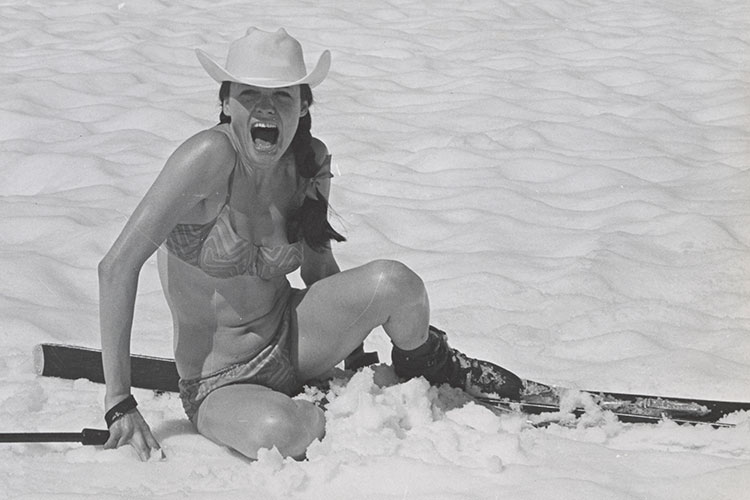
Know the mountain, what aspects get the sun first and will therefore soften up first? Also, where are the cornices? Have any debris chunks (aka “Death Cookies”) broken off and rolled into your run? Stay on point. Also, watching the local weather is important because even on a nice day, spring squalls can blow into the mountains pretty quickly. And that will suck if you are riding in your bikini.
Read this post for some ideas on where to start on a spring day in Whistler, Sun Seeking on Skis.
6. Whistler Spring Après-Ski
Spring après-ski in Whistler is at its best on sunny patios, where longer days, warmer temperatures, and fewer crowds create a relaxed, celebratory vibe.
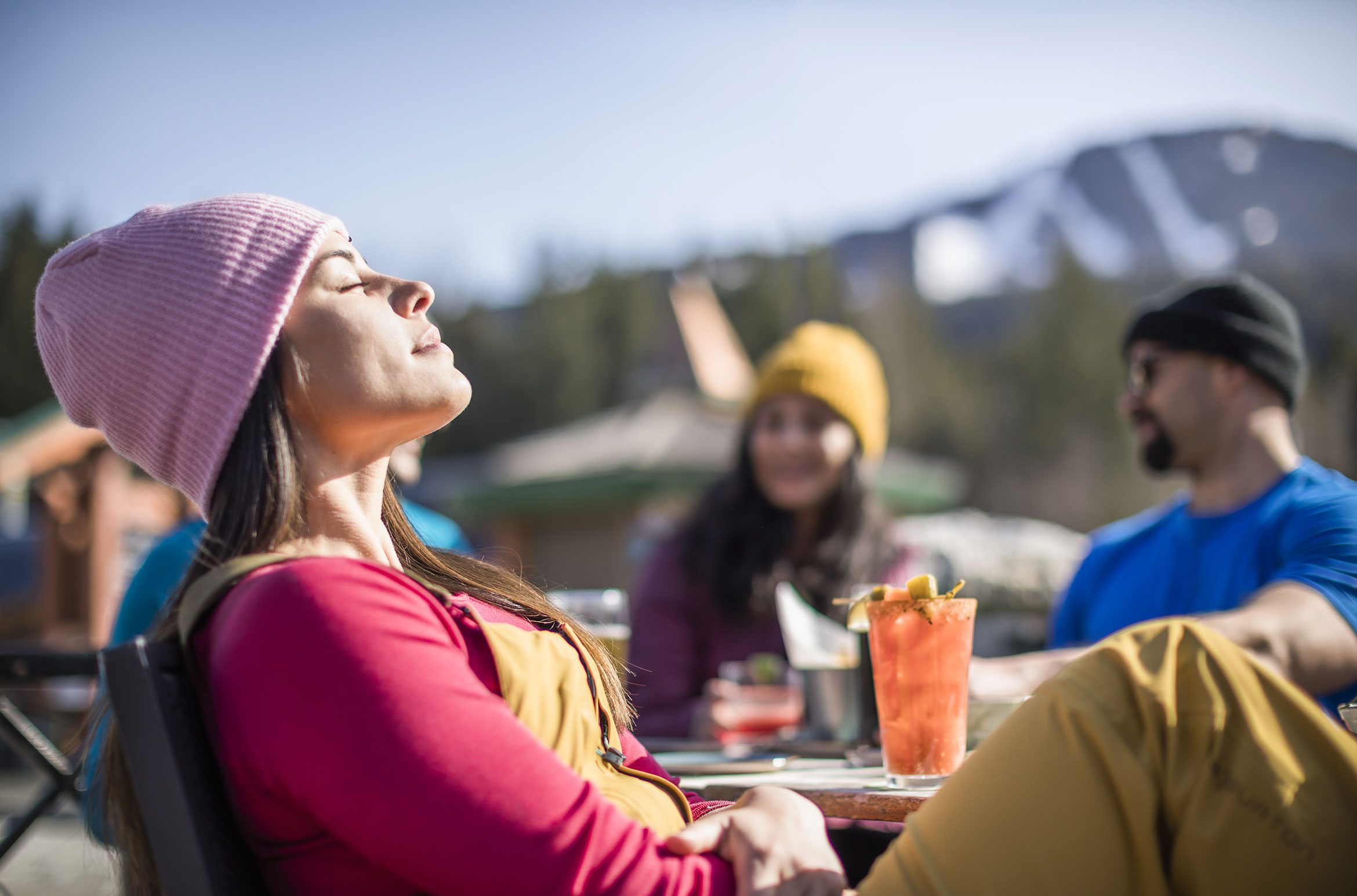
When the sun hits the snow, you can bet it’s also bathing Whistler’s patios in sunlight as well (Fun fact: the Village was laid out specifically to maximize sunshine on the outdoor seating areas). So make sure you replenish your vitamin D and rehydrate at one of Whistler’s après-ski spots where the spring vibe is strong. Check out our Guide to Spring Après for a more in-depth look at the good times.
The key to a great ski day is to celebrate it, and if you happen to end up singing and dancing in your ski boots, that’s not the worst way to end a day now, is it?
Whistler Spring Skiing FAQ
Is spring skiing good in Whistler?
It’s not good, it’s great. Whistler Blackcomb has one of the longest ski seasons in the world.
When is the best time for spring skiing in Whistler?
March and April are the key months for spring skiing in Whistler, with the days getting longer and sunnier the later in the season you go.
What should I wear for spring skiing in Whistler?
Layers. It can still be cool in the morning, so wear layers and take a small backpack for when the sun arrives.
Is Whistler good for après-ski in spring?
Whistler has so many sunny patios for you to choose from when it comes to apres. It’s a town that loves to celebrate a day well spent in the mountains.
Spring skiing in Whistler means sunny days, soft corn snow, fewer crowds, and legendary après. Sleep in, layer smart, protect yourself from the sun, and follow the sunshine around the mountain for the best conditions. See you on the sunny slopes!