As the Resort Municipality of Whistler (RMOW) marks its 50th anniversary, it is an opportunity to reflect not only on the growth of the community, but also on the deeper history of the land and the shared path we walk today. Long before Whistler was known as a resort town, it was home to ancient stories, teachings, and villages. At the heart of that history is the village of Spo7ez, once shared peacefully by the Squamish Nation and Lil’wat Nation, and a powerful symbol of cooperation, transformation, and relationship.
A Shared Legacy of the Squamish and Lil’wat Nations
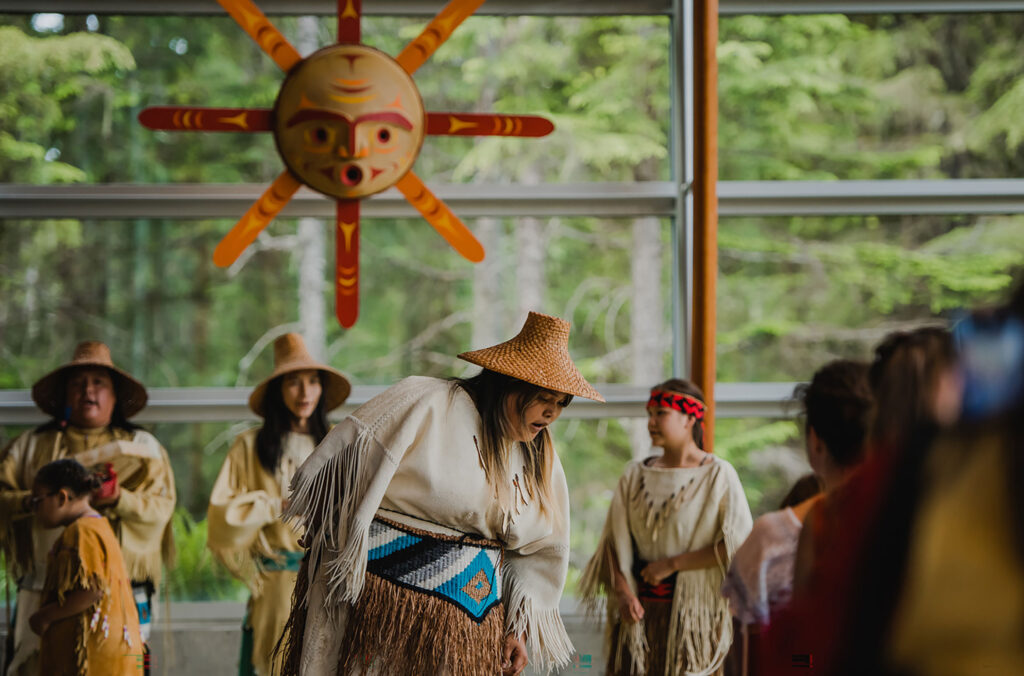
K̓alhwá7alap, my name is t’ec, also known as Georgina Dan, and I am a proud member of the Lil’wat Nation. I have been part of the Squamish Lil’wat Cultural Centre team since 2016, where I work as the Cultural Administration Coordinator. I also lead the Spo7ez Performance Team, supporting a range of cultural programs that share the stories, traditions, and living cultures of the Squamish Nation and Lil’wat Nation with visitors from near and far.
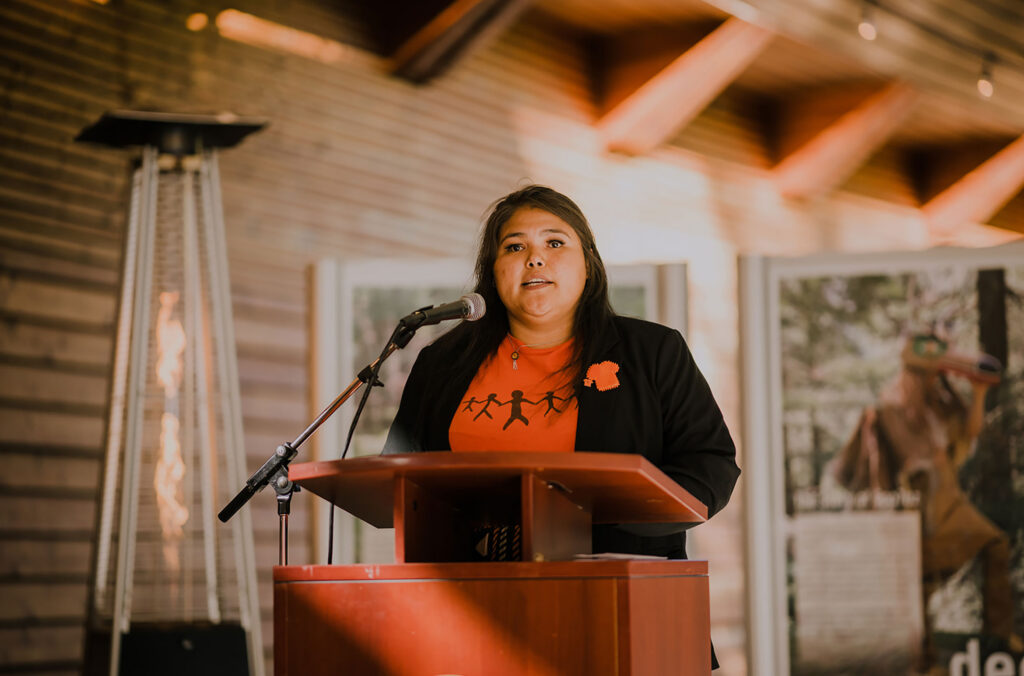
Being from the Lil’wat Nation gives me a personal connection to the histories, teachings, and languages that guide our work. It is an honour to share this culture, create opportunities for learning and understanding, and be part of a space where Indigenous voices are celebrated and respected.
While working at the Squamish Lil’wat Cultural Centre, I’ve learned the Thunderbird legend from both past and present Ambassadors. I’ve found that our words and teachings often shape each other, influencing the way we share stories and culture.
The Story of Spo7ez
Located where Rubble Creek and the Cheakamus River meet, Spo7ez was a thriving village where the Squamish Nation and Lil’wat Nation lived together in peace. The people traded, gathered, and gave thanks for the abundance gifted by the Creator. For many years, the village stood as a model of shared space and mutual respect.
But at a point in time, tensions grew. People stopped sharing, began mistreating each other, and as I remember the story being told:
“We very much lost our way as people and started fighting over everything.”
This simple truth captures the depth of what was lost — not just peace, but a way of being with one another.
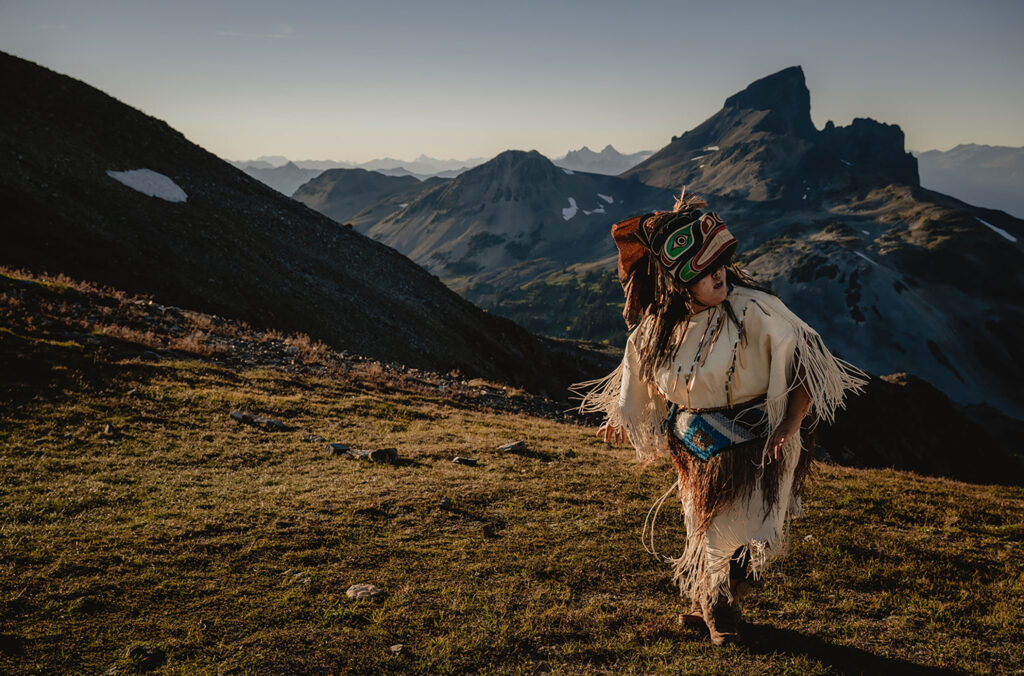
From high above Spo7ez, on the peak known as T’ak̲t’ak̲míyi7en tl’a Íń7inyáx̲a7en (the home of the Thunderbird, Sḵwx̱wú7mesh), Nq’el’qámtensa ti Skenknápa (the roost of the Thunderbird, Lil̓wat7úl) or Black Tusk, the powerful Thunderbird, a sacred being of transformation and strength, heard the arguments among the people. It rose from its resting place, spread its massive wings, and with a few thunderous flaps, sent a rockslide crashing down the mountain, devastating the village.
Hundreds of lives were lost as the rocks and water swept toward the sea. But among the survivors, something changed. The Squamish Nation and Lil’wat Nation came together again to support one another, to rebuild, and to survive. The Thunderbird’s message is clear: when we forget to live in balance and respect, we all suffer. But when we come together, we can thrive.
Rebuilding Relationships on Shared Land
In the decades leading up to the RMOW’s 50th anniversary, a new chapter of relationship-building began. In 1997, the RMOW reached out to the Lil’wat Nation to explore how the Nation could have a stronger presence within the community.
As discussions evolved, the Lil’wat Nation invited the Squamish Nation into the conversation, recognizing that both Nations had deep and overlapping ties to the land now known as Whistler. What followed was an act of leadership rooted in traditional values. The two Nations came together in 1999 to talk about stewardship, land use, and shared responsibility.
By 2001, they formalized their commitment with the signing of the Protocol Agreement, a unique and historic document that laid the foundation for a renewed partnership between the Squamish Nation, Lil’wat Nation, and RMOW. This agreement was not simply a bureaucratic step; it was a spiritual and cultural realignment. It marked a return to the teachings of Spo7ez: cooperation, mutual respect, and putting community ahead of individual gain.
The 2001 Protocol Agreement between the Squamish Nation, Lil’wat Nation and RMOW was one of the earliest of its kind in Canada, a living example of how ancestral wisdom can guide future planning, collaboration, and healing. This commitment has grown through key milestones over the years: the 2017 Memorandum of Understanding, the 2018 Protocol Agreement, and the 2020 Framework Agreement.
Each of these agreements represents important steps in strengthening partnerships and supporting Indigenous leadership, helping to guide collaborative work in the region
A Living Testament: The Squamish Lil’wat Cultural Centre
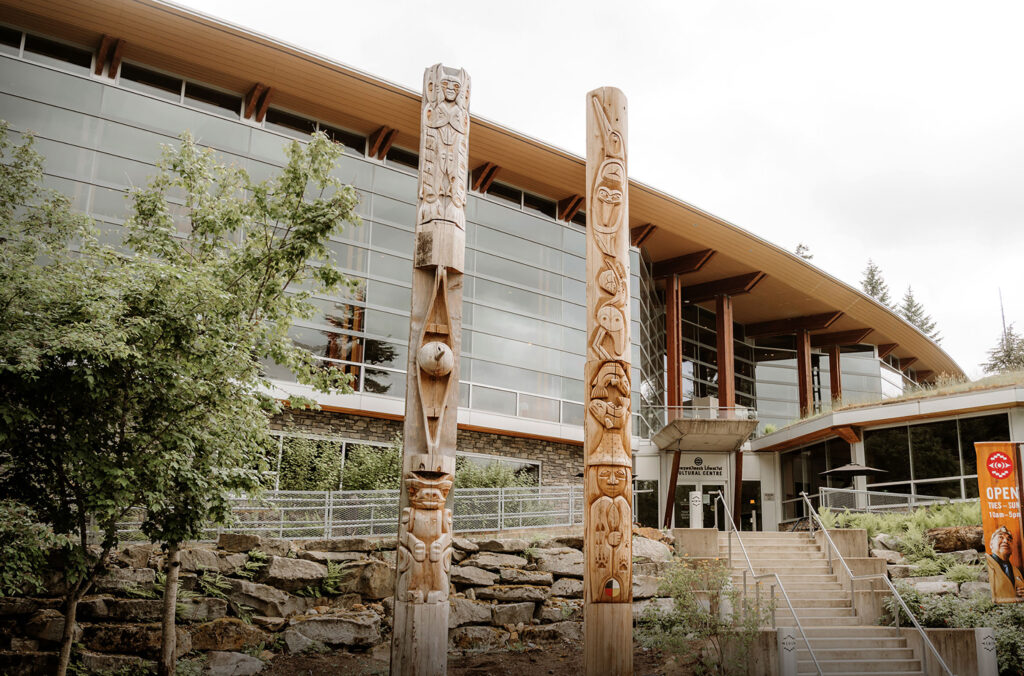
In July 2008, the Squamish Lil’wat Cultural Centre (SLCC) opened its doors on the shared territory of the Squamish Nation and Lil’wat Nation in Whistler. Created through a partnership between the RMOW and the provincial and federal governments, the Centre stands as a powerful example of reconciliation through action.
More than a museum, the SLCC is a living cultural space where learning happens through real connection. Here, visitors are invited to listen to the stories, songs, and teachings of the Sḵwx̱wú7mesh and Lil̓wat7úl Peoples, gaining insight into the vibrant languages, art forms, and knowledge systems that continue to thrive today.
The spirit of the Thunderbird legend lives on within these walls. It reminds us that when relationships are nurtured and voices are honoured, transformation becomes possible. The SLCC offers more than history; it offers a space to heal, reflect, and grow together.
View this post on Instagram
At the heart of this space is the Indigenous Youth Ambassador (IYA) Program, which found its permanent home with the opening of the Cultural Centre. The IYA Program provides Squamish Nation and Lil’wat Nation youth with hands-on training in cultural tourism, empowering them to become confident stewards of their heritage. Through guided tours, cultural demonstrations, and personal storytelling, these young ambassadors share their connections to culture while building bridges with people from all over the world.
For many, this program is more than just a job. It is a space for intergenerational learning, a chance to reconnect with language and protocol, and an opportunity to share what it means to be Indigenous in a modern world. The SLCC is not just preserving culture; it is growing culture, led by youth who embody resilience, pride, and purpose.
Looking Ahead, Together
The continued efforts between the SLCC, Tourism Whistler, and the RMOW reflect a shared commitment to Indigenous visibility, voice, and leadership in the region. Together, we are helping reshape the visitor experience into one that honours the past while building meaningful connections in the present.
As the RMOW celebrates 50 years, it is worth remembering that true progress is not measured only in infrastructure or visitor numbers. It is also found in the strength of relationships, the respect for original caretakers of the land, and the shared stories that guide our way forward.
The story of Spo7ez teaches us that we must choose cooperation over conflict, respect over division, and unity over isolation. The Thunderbird still watches, and its teachings still echo. May we continue to honour those teachings, together.
Watch the video below for an animated representation of the Thunderbird Legend by artist Levi Nelson of the Lil’wat Nation, with t’émt’em slúlum Snowbird Song sung by the SLCC Ambassadors, from the wife of Chief Billy, Squamish Nation.
View this post on Instagram