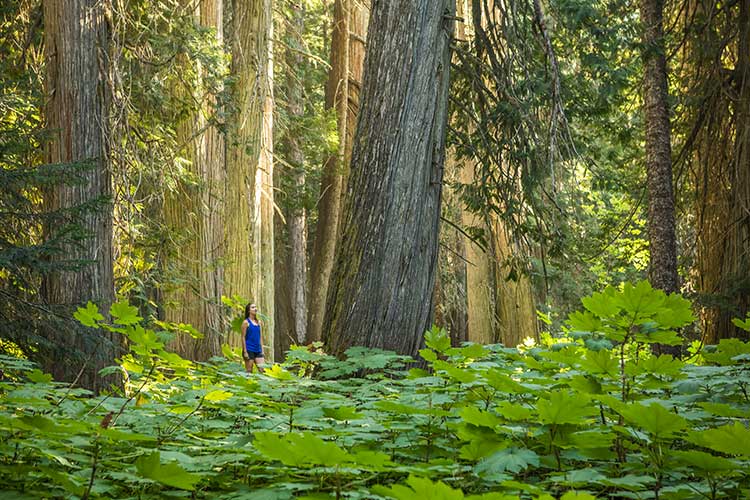
Areas of natural beauty around the globe face a problem. They are being loved to death. Whistler attracts three million people a year, and what a new campaign by the Don’t Love It To Death (DLITD) team wants us to think about is, can we love Whistler better?
“Nature is more than a backdrop for our adventures. It’s a home for all life, large and small. We can’t keep loving it to death. Let’s care for nature together and leave something to pass on.” Don’t Love It To Death.
But what does “Love It. Better.” mean?
DLITD asked four BC residents who are connected to their communities, wildlife and nature, how they move through the land with intention, and give back as much as they take. The series features Kate Zessel, a graphic designer and illustrator, and Kelkelokik (Sandy Ward), a Lil̓wat7úl athlete, guide, and advocate, who both live in the Sea to Sky Corridor. We caught up with Zessel to discuss the campaign and how we can all love the land better.
“Awareness comes with just spending more time out there. Picking up things if you see them. Having an awareness of where you’re putting your feet, understanding how to use your equipment, and knowing the places you’re going.” Kate Zessel.
Meet Kate Zessel | Graphic Designer & Illustrator
Zessel grew up in Vancouver. Almost every Friday after school, her dad would shove her and her siblings in the car and bring them to Whistler. She used to have FOMO about leaving the city, but now she’s thankful.
Zessel went to business school in Victoria, but managed to sit and draw every day. When she called home, she’d tell her dad – I miss the mountains. She would remember how her body would relax when they got to Squamish, and she could see the Tantalus Range. And she started to wonder why she only let herself feel this way on weekends.
So, when she finished her Graphic Design degree at the Art Institute in Vancouver, she moved to Whistler. A budding designer, she quickly realized that creating relationships was key in this tight-knit mountain town. Networking was how she could stay relevant, top of mind, and get her art in places industry professionals were going. It wasn’t easy; Kate suffered from imposter syndrome, but she credits her dedication as what helped her break through. That, and a friendship blind date with local photographer and adventurer, Abby Cooper.
“I mixed work and play in a way I’d never done before, and began translating that into art pieces,” explains Zessel. “I started going on sponsored trips where I’d be creating art for stickers, t-shirts and yoga mats, and Abby would be taking photos. It took constant networking to do this, but I ended up doing work for brands like Lululemon, Smartwool and Arc’teryx.”
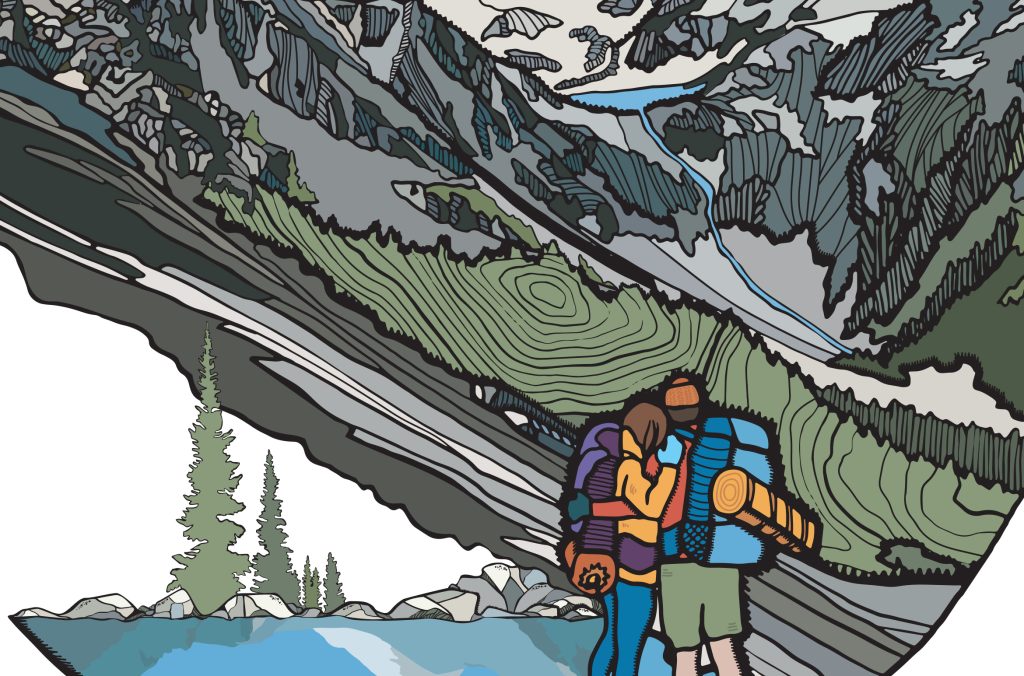
When you look at Zessel’s work, you can see her reverence for the mountains. Her pieces feature landscapes, peaks, and animals, designed to evoke a connection between the viewer and nature. For Zessel, her art is designed to make people put themselves inside of it, to remember an experience or inspire the next one. That’s what makes her the perfect person to comment on how we can all love the spaces and places we journey to, better.
Q&A with Kate Zessel
Why is it important to respect and protect natural spaces?
Because they’re not going to be here forever.
You might not feel like you can fix some of the huge problems we’re facing, but you can play a part. The small things matter, and what we do as individuals matters. The first person who took me to a hut in the backcountry drilled into me about how I was part of respecting and protecting the area. We need to pass on teachings like these.
I’m alarmed at the state of some local spaces, like Joffre Lake. I’m all for people having access to nature, but they need to be educated and respectful. I found a tree with beer cans all over it while I was out snowmobiling in a different area, which was unbelievable. We have to maintain these areas together, so we can all enjoy them for years to come.
What can we do to love places better?
Awareness comes with spending more time outside. We need to see ourselves, not as visitors passing through, but as part of the landscape itself. The more time you spend outside, the more you notice. And the more you notice, the more you care.
Then we can lead by example. None of my friends is chucking garbage out of their cars or dropping it on the trail. And if we see it, we pick it up. We’re aware of where we’re putting our feet, we’ve researched where we’re going and the equipment we need to protect it and ourselves.
Ultimately, we need to have hope.
We have to believe we can do better. There’s so much science, and there are companies that are doing the right thing; we need to support them. In some instances, we have to force people to change, like changing the materials outerwear is made from or getting rid of plastic bags. Then others follow suit, and then it becomes the norm.
For me, partnering with Protect Our Winters and DLITD means I can help change policy that affects larger change. Working for companies like Arc’teryx, which are changing the way they work for the better, is another way I can be impactful.
What do you want future generations to know or feel about this place?
I hope the world we have now is similar to what they have, that we haven’t ruined it.
I want them to experience the beauty of these things that we get to experience. I don’t hope for a future that looks like The Jetsons, with flying cars and cities, but one where they still have access to the mountains. Let’s shut down Joffree and let it recoup. Throw some dirt, play outside.
Technology and AI are a big part of our future, and many positive things will come of them, but I hope we don’t lose sight of this place, in the mountains, in nature.
Find more of Kate Zessel’s artwork on her website.
Top 6 Things to Do, So You Don’t Love It to Death:
- Practice fire safety. A single spark can change everything in the mountains. Obey campfire prohibitions, follow campfire best practices, and download the BC Wildfire app before you head out. Whistler Alert is the official emergency notification system used by the Resort Municipality of Whistler to communicate with residents and visitors during emergencies via text message, phone and email. We encourage you to sign up for it while you’re here (just in case). When you register, you will be asked to provide your contact number and the date you plan to leave Whistler so that you don’t receive alerts when you’re back home.
- Go prepared. Follow the BC AdventureSmart Three Ts: Training, Trip Planning, and Taking the Essentials. Take a look at our hiking and backcountry safety blog for more adventure safety tips.
- Pack it in, pack it out. Familiarise yourself with the 7 Principles of Leave No Trace, including how to properly dispose of human waste.
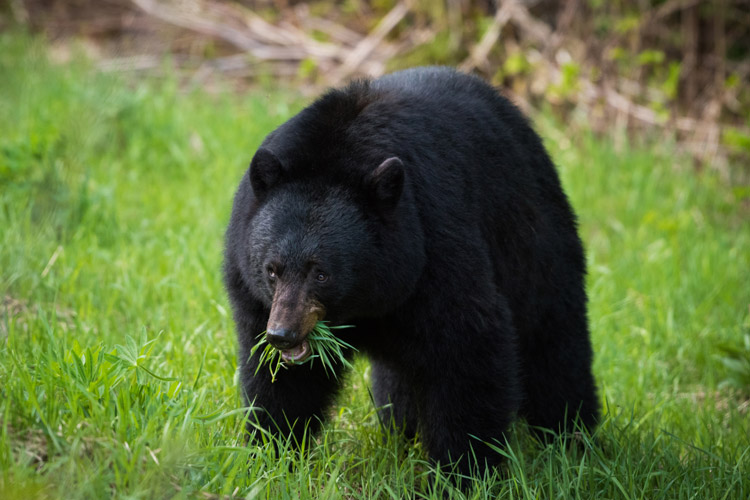
- Keep wildlife wild. Give animals space, keep pets on leash and never feed or approach wildlife. Whistler is bear country. Take a read of our Bear Aware blog post so you can act responsibly on behalf of these beautiful, wild creatures.
- Spread the love. Visit popular trails and parks at off-peak times and explore lesser-known spots. There’s a lot to do and see in Whistler, research your options and consider having a Plan B, for those busier days.
- Reduce the spread of invasive species. Follow the Play, Clean, Go principles and stay on marked trails. Before and after every outing, clean your gear, footwear, pets and vehicles of plant fragments, seeds and mud.
If you were inspired by Kate’s video, take a look at the rest of the series on the DLITD YouTube channel. Here’s the video featuring Lil̓wat7úl athlete, guide, and advocate Kelkelokik (Sandy Ward).
The people who call these places home are counting on you. DLITD challenges each of us to think of something we can do differently that helps with the above. What will you do or change?
Learn more about each of these impacts on the DLITD website.
If you’re visiting Whistler, please take a look at our responsible travel page for information on how you can leave a lighter footprint when you’re here, as well as our sustainability page, which documents Whistler’s commitments to the environment.