In Whistler, the locals always get fired up when the snow starts flying and a new season arrives. This year, however, there are even more reasons to get excited. Whistler Blackcomb is celebrating 60 years since the first lifts started turning on Whistler Mountain for skiers to access the same bowls, peaks, steeps and deeps that continue to deliver that pure winter stoke today.
The Resort Municipality of Whistler turns 50 this year, Whistler Heliskiing is 45, and next spring will be the 30th anniversary of the World Ski & Snowboard Festival, the season-ender party celebrating sport, art, music and all facets of the culture that’s flourished in these mountains.
So, to get in on the fun, The Whistler Insider is digging deep into the annals of local lore to feature five mountain culture moments or ideas that started in the mountains and valleys of Whistler. Big mountains, it seems, beget big ideas, which can have big impact. Check it out:
1. Blackcomb Hosts the First-Ever Snowboard Cross
Since 2006, snowboard cross has been one of the most exciting sports at the Winter Olympics, with four racers simultaneously carving, speeding, and launching through a course of bermed corners, rollers, and jumps. But did you know the first ever “boardercross” (as the sport was originally called) took place in Whistler?
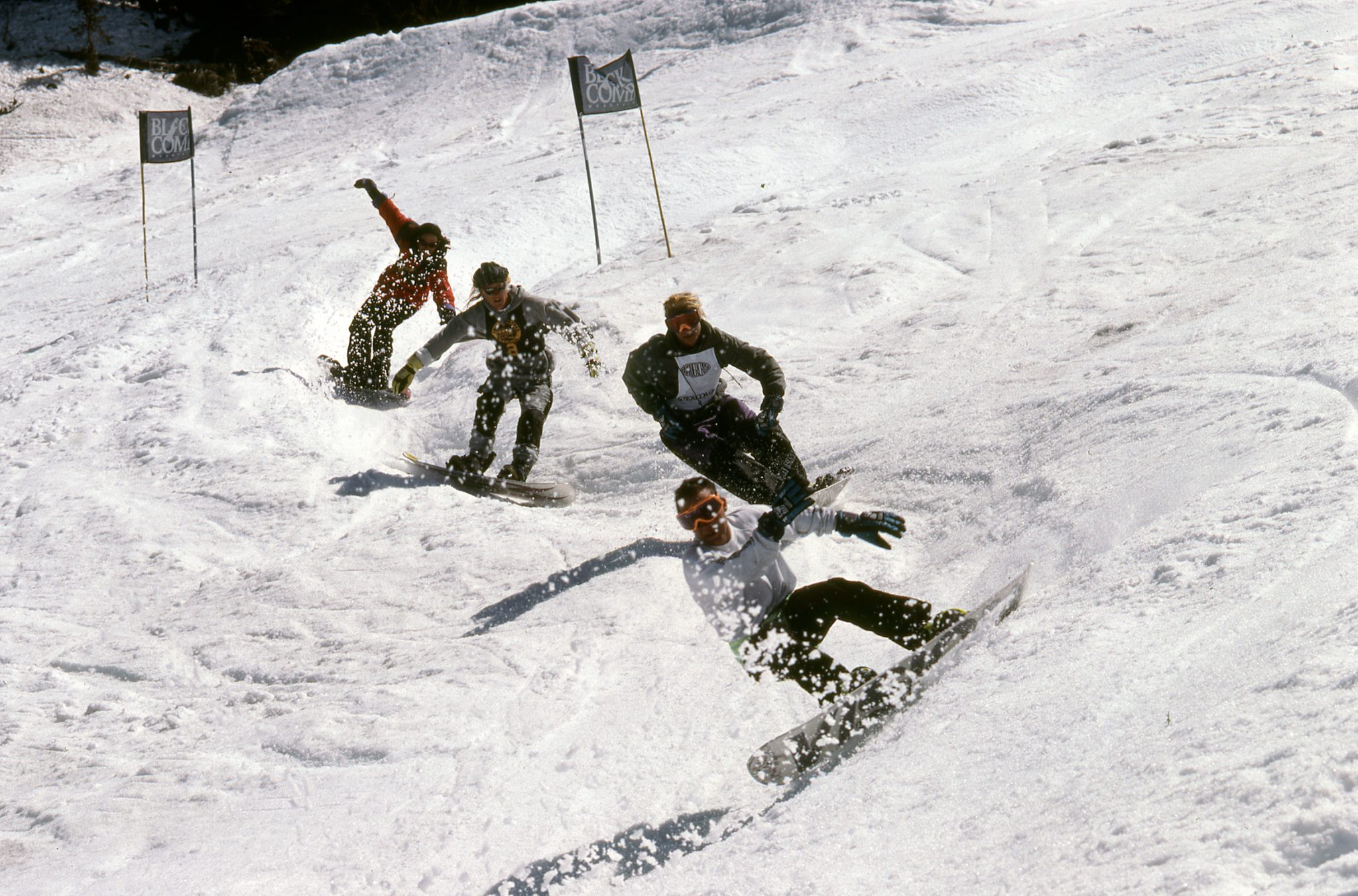
In the spring of 1991, legendary ski filmmaker Greg Stump (The Blizzard of Aahhhs, Groove Requiem) was in town shooting for his World of Extremes television show. Drawing inspiration from the high-flying excitement of motocross racing, Stump and partners Eric Kalacis and Steve Rechtschaffner dreamed up a tough-and-tumble race course and got the green light to build it with the Blackcomb Mountain grooming team. Jay Ihaski, a snowcat driver who snowboarded and understood the sport, built a course, Stumpy fired up his cameras, and scores of local snowboarders showed up to shred, jostle, and race into the history books.
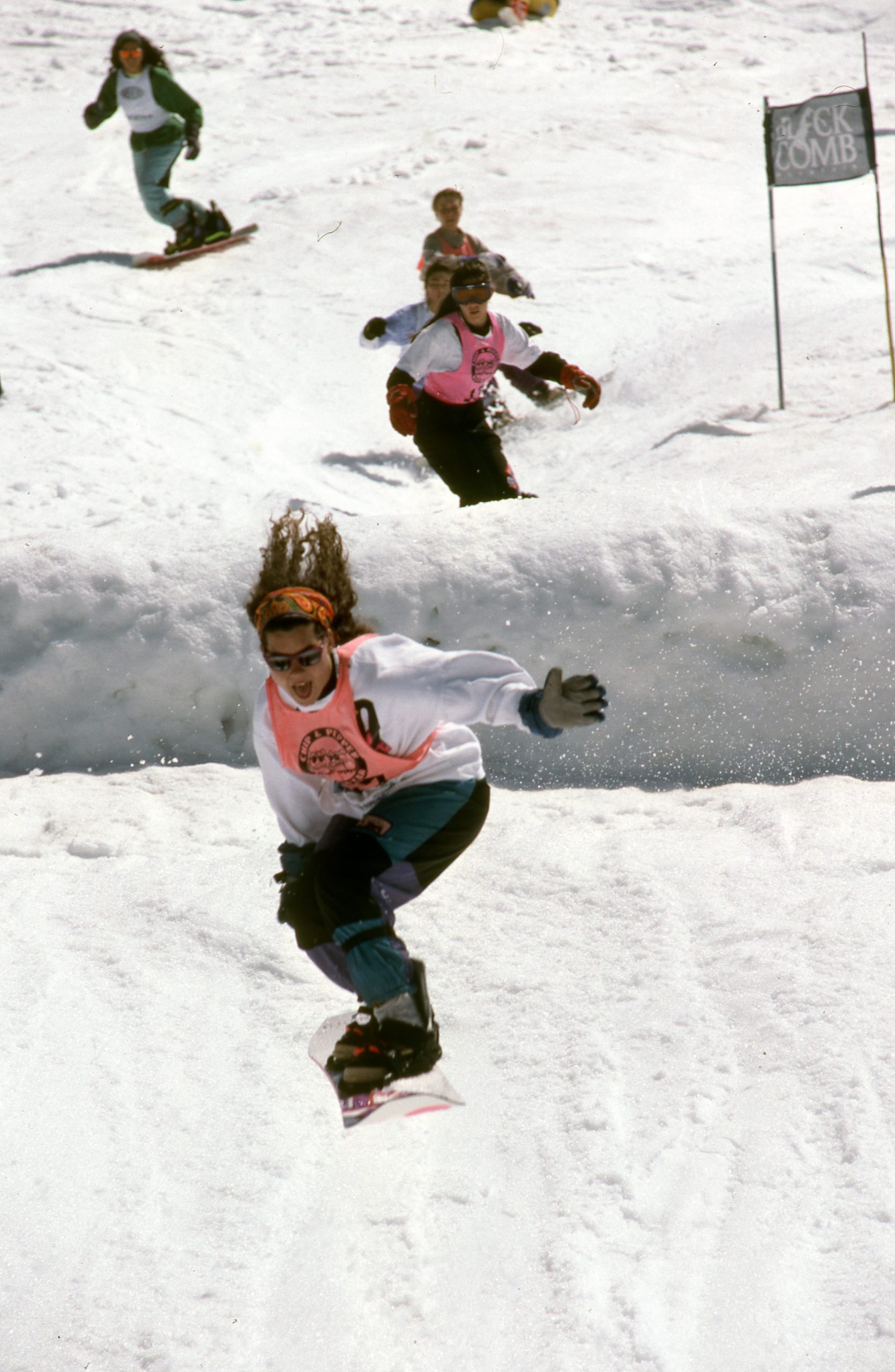
With big features and multiple racers on course at the same time, snowboard cross makes an exciting spectator event. Boosted by continued enthusiasm from Kalacis and Rechtschaffner, the niche sport grew quickly to include professional race series, the X Games, a spin-off for skiers (ski cross) and, ultimately, acceptance into the Winter Olympics. Less than two decades after Jay Ihaski built that first-ever snowboard cross track on the sunny slopes of Blackcomb, Squamish’s Maelle Ricker would win the women’s snowboard cross just down the road at the 2010 Winter Olympic and Paralympic Games. Full circle moment!
2. Twin-Tip Revolution
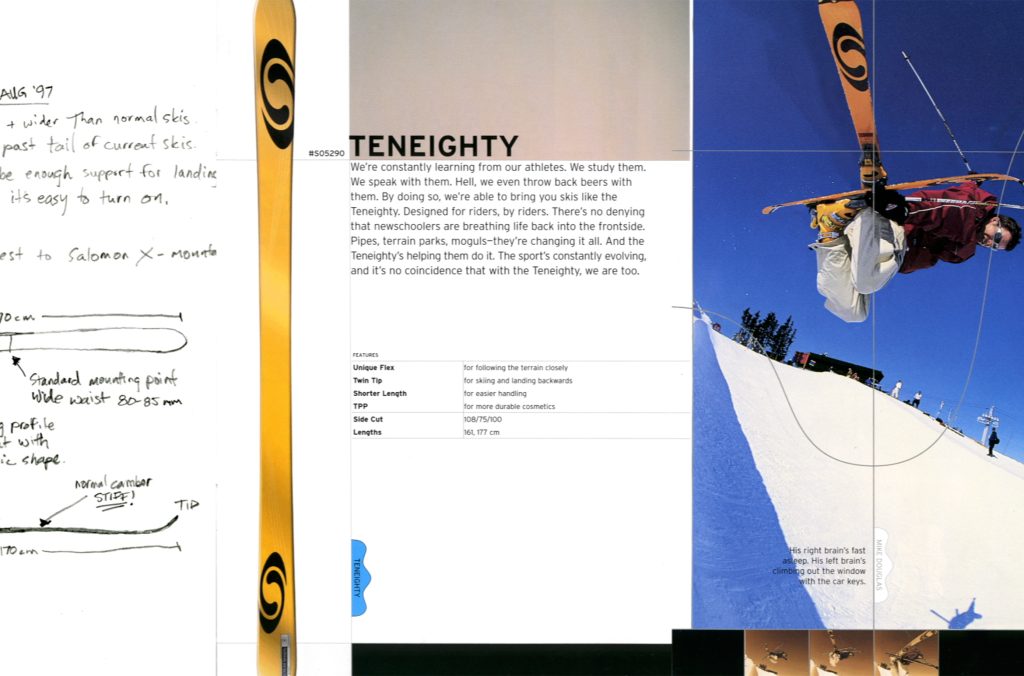
It’s difficult to imagine what ski culture would be like if Whistler’s Mike Douglas and his friends hadn’t pushed so hard to create the first modern twin-tip ski, but it would certainly be a lot less exciting and nowhere near as fun.
Competitive freesyle skiers on the World Cup circuit in the mid 1990s, Douglas and teammates JP Auclair, JF Cusson, Vincent Dorian, and Shane Szocs were watching snowboarding dominate almost every part of mountain culture. Fat skis were around (mainly at heliski lodges), and the steep and deep, “extreme” skiing was maturing, but on the ski hills and in the magazines and videos, it was clear the snowboarders were having more fun.
Skiers were long used to getting big air, either through gymnastic flips and twists of Aerial freestyle events, or the soaring excitement of ski jumping, but on the mogul courses, which include two jumps per run, skiers like Douglas were limited in what tricks they could do by International Ski Federation rules – no inverts! These skiers wanted to flip upside down; they wanted to grab their boards and shred the “no skiers allowed” snowboard terrain parks and halfpipes. And they wanted to land or take off backwards.
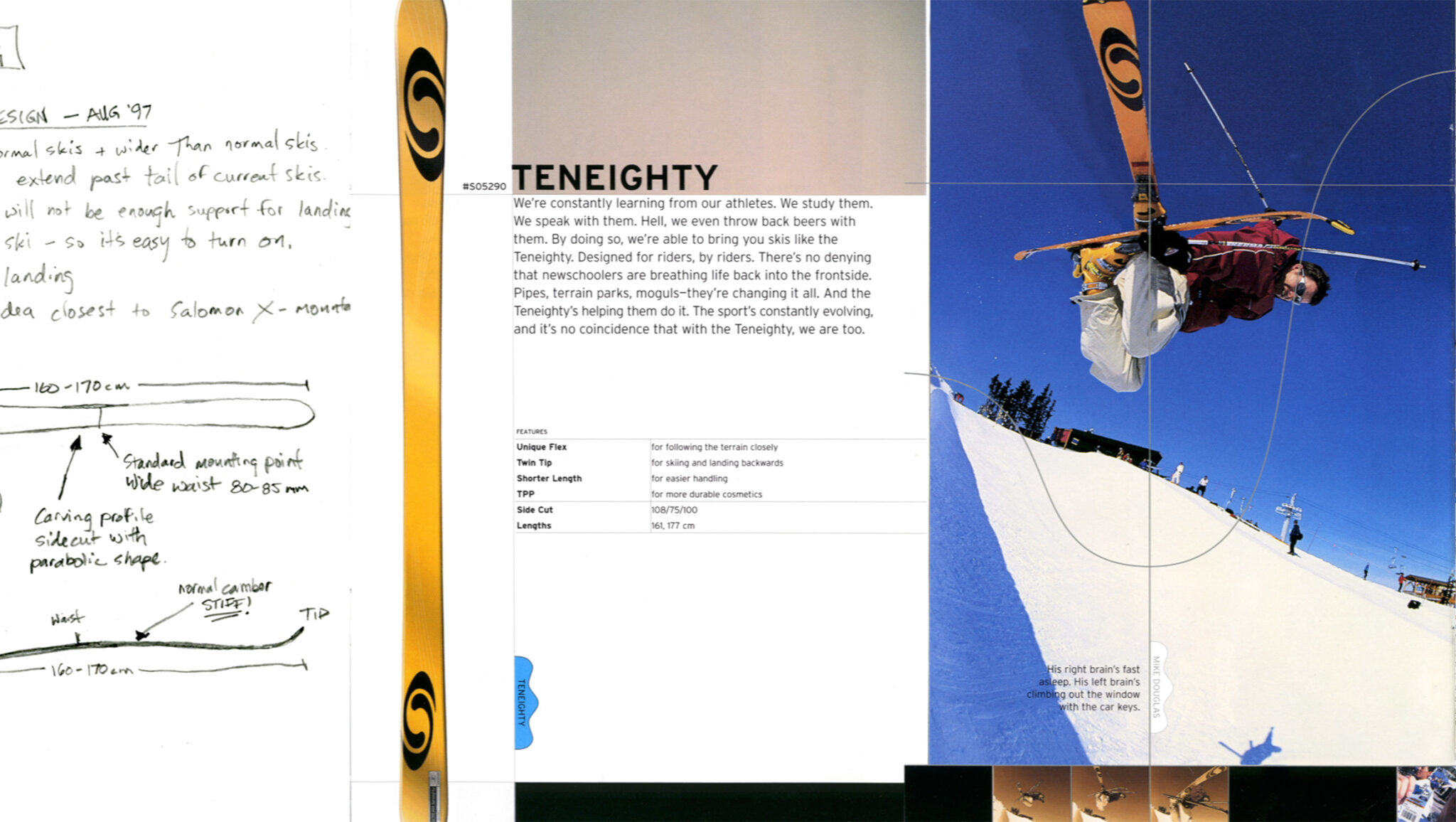
Douglas edited together a promotion video of himself and his friends having the kind of stylish (and visibly exciting) fun the snowboarders were having and, working with Salomon Japan, developed the Ten-Eighty ski, the first modern twin tip. Flooded with new energy, personalities, and opportunity, skiing had been saved.
Skiers and snowboarders share the terrain parks now. Whistler kids who grew up with twin tips like Sean Pettit and Kye Peterson helped pioneer bringing terrain park tricks into the natural backcountry terrain, and ski half pipe and slopestyle have joined snowboarding at the Olympics (shout out to the late Sarah Burke for helping make that happen). And most importantly, everyone is having a good time.
3. Whistler Adaptive Sports Program & Sit-Ski Trailblazers
The mountain landscapes around Whistler can and will change lives. They inspire us and humble us and give us the opportunity to have the kinds of experiences we’ve always dreamed of. So, it’s important that everyone gets the opportunity to take part.
Canada’s first adaptive ski program started in Alberta, but since 1999, the Whistler Adaptive Sports Program has been providing BC residents and guests with mobility issues, disabilities, and neurodiversity with access to the mountain sports we love and the joys and benefits of recreating outside in one of the greatest mountain towns on the planet.
It began with skiing, but Whistler Adaptive has grown to include snowboarding, mountain biking, water and paddle sports, hiking and rock climbing, Nordic skiing and more. In 2025, Whistler Adaptive Sports programs gave over 3,000 lessons across 18 adaptive sports to resort visitors and locals alike, ensuring no one is exempt from enjoying the magic of the mountains.
Adaptive athletes in Whistler have responded to the support by setting and resetting the bar on what’s possible. In 2012, skier and three-time Paralympic medal winner Josh Dueck amazed the world by becoming the first sit-skier to land a backflip on snow.
In 2021, visually impaired skier Mac Marcoux ( a six-time Paralympic medalist and five-time world champion) came to Whistler Blackcomb with his guide Tristan Rodgers to freeski some of the mountain’s most iconic and burly lines, including The Coffin, an ultra-steep and narrow test piece off Whistler Peak.
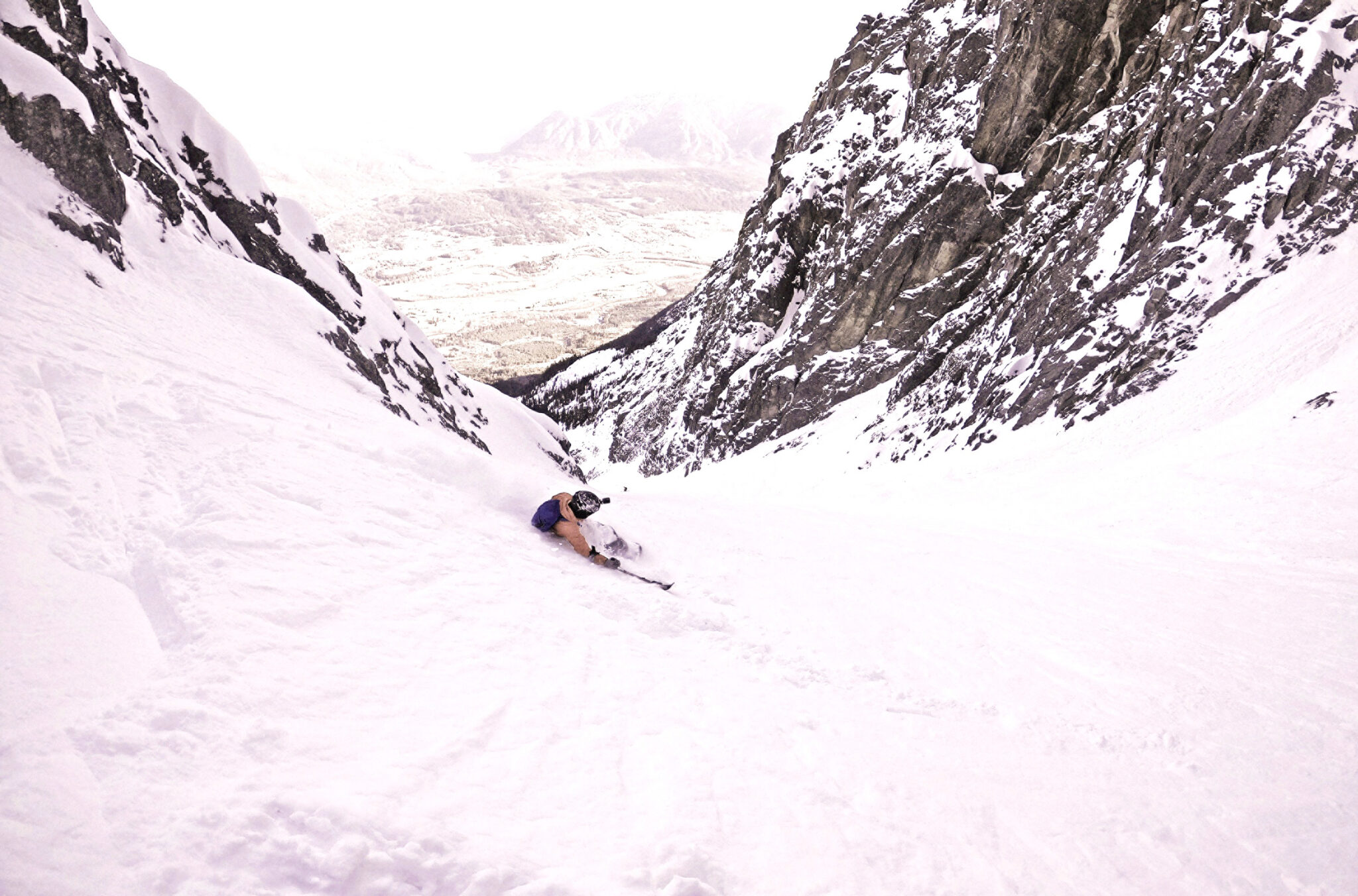
And in 2023, local Paralympian sit skier Alex Cairns upped the ante on his already impressive array of backcountry ski descents when he became the first sit skier to ski Ts̓zil/Mount Currie, recognized as one of the 50 greatest ski lines in North America.
4. Ski Cross Dominance
The sport of ski cross is much like snowboard cross: four athletes on course at the same time, lots of jumps, banks and rolls, and the first person to cross the line wins (incidental contact is allowed, but no, you are not allowed to jab other competitors with your ski poles).
Ski cross made its Olympic debut right here at home during the 2010 Winter Games, with Whistler’s Ashleigh McIvor taking home the gold. Four years later, at the games in Sochi, Russia, another Whistler racer, Marielle Thompson, captured gold (while Canadian teammate Kelsey Serwa nabbed silver). Four years later in Korea, it was Kelsey’s turn atop the podium with Canadian Britney Phelan placing second.)
View this post on Instagram
The golden streak finally ended in 2022, though Marielle did get a silver medal at the games in Beijing. Inaugural golden girl Ashleigh McIvor told The Whistler Insider in 2014 that while ski racing experience plays a big role in ski cross success, growing up being able to rip all Whistler’s varying terrain and conditions also makes a difference.
“Whistler has some of the best skiing on the planet, and we get lots of big storms,” McIvor says. “Growing up here, you learn to ski in all kinds of conditions and all kinds of terrain.”
Who will stand atop the podium at the upcoming winter games in 2026? Time will tell, but get those Canadian flags and facepaints out because there is a good chance the Whistler athletes will be coming in hot.
5. Air Jordan
In a town built by outcasts, visionaries and renegade thinkers, Whistler has had no shortage of larger-than-life personalities and characters. Which means it’s never been easy to have your name memorialized on the ski hill. Seppo Makinen was a legendary logger who ran the crews that cleared many of the runs on Whistler Mountain, so it makes sense that he has his name on a run and the iconic back bar in the Roundhouse.
Or Peter Xhignesse, an early member of the Blackcomb ski patrol (and the mountain’s first avalanche forecaster). It was “Ziggy” who first hiked in and scoped out all the terrain on the south side of Blackcomb and convinced the powers that be to consider opening it up with the 7th Heaven t-bar in 1984. (Whistler followed with the Peak Chair a few years later.) Unlocking the 7th heaven zone created the stunning, high-alpine skiing and vistas that helped Whistler catch the eyes of the world and evolve into the shred destination it is today. And the run Xhiggy’s Meadow remains as a testament to that vision, and Peter the visionary.
The other way to make your mark on the ski hills is to do something so awesome or badass that it changes the way people perceive, connect to, and talk about the mountain. Jordan Williams didn’t expect to be immortalized that fateful day in 1985 (or so) when he lined up a large double-drop cliff on West Ridge on Whistler Mountain, but nothing was the same afterwards.
“I’d been hiking and skiing the peak since I was a kid and looking at that particular drop for probably ten years,” Jordan told Whistler Vibes magazine in January of 2006. “In the end, I did it to impress a girl.”
Riding a set of 210-centimetre GS skis, Jordan says the first drop of the cliff went ok, but the second (higher) section didn’t quite go as planned. “I came off a bit right and didn’t clean the landing. A week later, I did it again and stomped it.”
The new construction of Whistler’s Peak Chair in 1986 provided an apt audience on the morning of big pow days, when skiers and snowboarders will rush to get first tracks into “Air Jordan” while hundreds of enthusiastic pow-lovers cheer from the lift line and clank their poles in approval. Air Jordan will make you famous, at least for a few seconds.
“I worry for people who are doing it for guts and glory instead of actually understanding what they need to do,” Williams says, “But I admire the new riders and skiers too. It’s amazing what people can do these days.”
Very true, Whistler’s Marcus Goguen has been hitting Air Jordan since he was ten or eleven years old (and it shows), but the oral history of a ski town will always honour those who go first.
View this post on Instagram
And, of course, the list goes on. Whistler’s history is rich with iconic characters, ideas and accomplishments. Check out these stories on 10 Trailblazing Innovations that Shaped Whistler (and the World) or 10 of Whistler’s Key Dreamers and Freethinkers. One thing is certain: with some big birthday and anniversary celebrations happening this year (the Whistler Film Festival turns 25 as well) and a full winter ahead, there are good times on the horizon.
And good times inspire good ideas…what is Whistler capable of this winter? What dreams do you have?