The Whistler community cares deeply for the environment and acknowledges that we all have a role to play in preserving the area’s natural beauty. The Municipality’s Big Moves Strategy sets out a plan to act on climate change and reduce emissions by 50% below 2007 levels by 2030, and in the long-term, reach net zero. To achieve this target, Whistler is collectively taking action to move beyond the car, reduce visitor travel emissions, decarbonize passenger and commercial vehicles, reduce building emissions, and shift towards lower carbon consumption.
We know that this kind of work is an ongoing journey as we all learn how we can contribute to a more sustainable future. Join our Changemaker host, Mike Douglas, a member-at-large of Protect Our Winters Canada, pro skier, enviro nerd and Whistler local, as he shines a light on what’s happening in Whistler to move the dial.
In video #7, we touch base with Alison Jenkins, Sustainability Manager at Whistler Blackcomb. She chatted with Mike about innovative food waste procedures, recycling bike tires and reaching a goal of net zero by 2030.
How do you work on food waste diversion at Whistler Blackcomb?
Our restaurants divert approximately 90% of waste from landfills. We serve drinks and food in durable dishware, and where we can’t, we use compostable or recyclable packaging. We also sort the waste, so all our guests have to do is return their trays to rolling racks. Our team sorts the food waste and packaging into various streams: food scraps and compostables, refundable beverage containers, mixed containers, paper, flexible plastics and landfill.
We then weigh and record all waste streams so we can monitor our diversion rate and continue to work on reducing it. Our food and beverage team has an environmental committee with representatives from every restaurant, and there is a friendly rivalry when reviewing monthly diversion rates.
View this post on Instagram
How do you leverage technology?
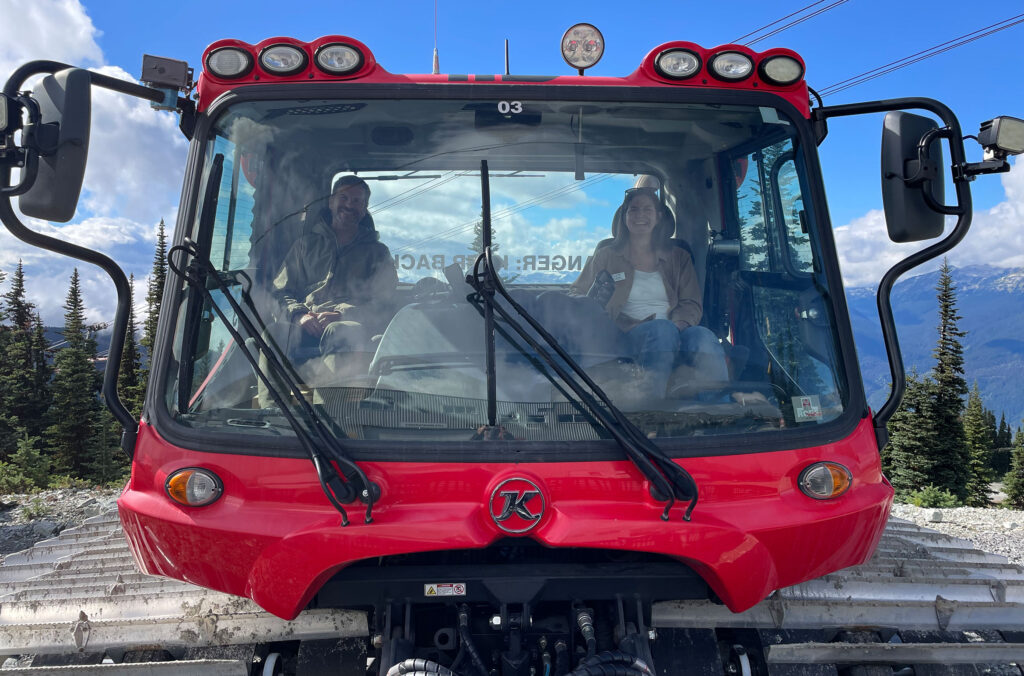
We leverage technology to be energy efficient in our operations. For example, we use a software called SNOWSat in our snowcats so we can monitor idle time, and drivers can see if they’re within the target range. This reduces the maintenance frequency, unnecessary fuel consumption and emissions.
Many of our buildings have automation systems to help them run as energy efficiently as possible. Things like temperature setbacks at night, ventilation and lighting are programmed and can be controlled and monitored remotely.
We also recently acquired a new electric van that our team will be using for mountain operations deliveries, which speaks to the resort’s focus on reducing carbon emissions from vehicles.
How do you recycle things like skis and bikes?
We focus on extending the life of our skis and boards by selling well-maintained rentals at our stores at the end of the season. For bikes, we do tube and tire recycling and have collection points in our maintenance facilities and in Skier’s Plaza. We’re also thinking about circularity when we design and order our team uniforms, which we’re proud to say are PFAS-free.
What else plays a part in your sustainability picture?
Local partnerships play a huge part in our social sustainability. We recently partnered with the Squamish Lil’wat Cultural Centre to bring Indigenous items onto our menus, their art to the PEAK 2 PEAK Gondola cabins, and we have a cultural sharing component at our Fire & Ice shows. We work with Whistler Adaptive Sports and were proud to have welcomed the Invictus Games in February 2025.
View this post on Instagram
Employee engagement is essential for a successful sustainability program. We have Commitment to Zero Ambassadors in every department who ensure sustainability is integrated into daily operations and talked about in team meetings.
What else has to happen for you to hit that net-zero operating footprint target?
To hit that goal in 2030, we need to focus on reducing waste through our supply chain by working with suppliers and partners and continuing to leverage technology and innovation in energy use.
This Whistler Blackcomb video is the seventh in the Whistler Changemaker series. To view more, visit our sustainability page.